• Fri frakt över 249 kr
  • •
  • Snabba leveranser
  • •
  • Billiga böcker
Kundservice

Du är på sajten för privatpersoner.

Företag, bibliotek eller offentlig verksamhet?

Du handlar på classic.bokus.com, där alla dina funktioner finns intakta.
Till classic.bokus.com
Bokus logotyp. Gå till startsidan.
  • Erbjudanden
  • Student
  • Topplistor
  • Barn & ungdom
  • Bokus Play
  • E-böcker
  • Ljudböcker
  • Pocketböcker
  • Spel & pussel

Upp till 25% på utvalda nyheter →

Sidfot

Mina sidor

    Hjälp

    • Kundservice
    • Vanliga frågor och svar
    • Frakt och leverans
    • Retur vid ångerrätt
    • Reklamera vara
    • Betalning
    • Köpvillkor
    • Allmänna villkor
    • Information om webbplatsens tillgänglighet

    Om Bokus

    • Om oss
    • Pressrum
    • För studenter
    • För företag
    • För bibliotek och offentlig verksamhet
    • För leverantörer
    • Hållbarhet

    Populärt

    • Aktuella erbjudanden
    • Presentkort
    • Studentlitteratur
    • Nya böcker
    • Topplistor
    • Signerade böcker
    • Engelska böcker

    Inspiration

    • Boktips
    • BookTok
    • Populära bokserier
    • Barnbokskaraktärer
    • Populära författare
    Logotyp för Bokus
    Följ oss på Facebook (extern länk)Följ oss på Instagram (extern länk)Följ oss på YouTube (extern länk)Följ oss på TikTok (extern länk)
    bokus @ CookiesAnpassa cookiesIntegritetspolicyKöpvillkor
    Till Citymail hemsida (extern länk)Till Budbee hemsida (extern länk)Till Postnord hemsida (extern länk)Till Schenker hemsida (extern länk)Till Early Bird hemsida (extern länk)Till Walleys hemsida (extern länk)
    1. Filosofi och religion
    2. Filosofi
    3. Filosofiska discipliner

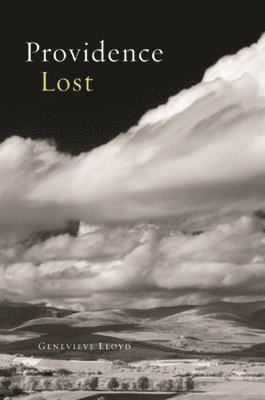
    Providence Lost

    AvGenevieve Lloyd

    Inbunden, Engelska, 2008

    444 kr

    Beställningsvara. Skickas inom 10-15 vardagar. Fri frakt över 249 kr.

    Beskrivning

    To the ancient Greeks, providence was the inherent purpose and rational structure of the world. In Christian thought, it became a benign will “providing” for human well-being. And in our own ever more secular times—is providence lost? Perhaps, but as Genevieve Lloyd makes clear in this illuminating work, providence still exerts a powerful influence on our thought and in our lives; and understanding how can help us clarify the functioning—or, increasingly, disfunctioning—of concepts of freedom and autonomy that define our modernity. Such an understanding is precisely the goal of this book, which traces a succession of transformations in the concept of providence through the history of Western philosophy. Beginning with early versions of providence in ancient Greek thought, Lloyd follows the concept through its convergence with Christian ideas, to its role in seventeenth-century philosophical accommodations of freedom and necessity. Finally, she shows how providence was subsumed into the eighteenth-century ideas of progress that eventually rendered it philosophically superfluous. Incorporating rich discussions of thinkers from Euripides to Augustine, Descartes and Spinoza to Kant and Hegel, her lucid and elegantly written work clearly and forcefully brings the history of ideas to bear on our present confusion over notions of autonomy, risk, and responsibility. Exploring the interplay among philosophy, religion, and literature, and among intellect, imagination, and emotion in philosophical thought, this book allows intellectual historians and general readers alike to grasp what it actually means that providence can be lost but not escaped.

    Produktinformation

    • Utgivningsdatum:2008-11-01
    • Mått:140 x 210 x 30 mm
    • Vikt:650 g
    • Format:Inbunden
    • Språk:Engelska
    • Antal sidor:384
    • Förlag:Harvard University Press
    • ISBN:9780674031531

    Utforska kategorier

    • Filosofiska discipliner inom Filosofi och religion

    Mer om författaren

    Genevieve Lloyd is Emeritus Professor of Philosophy, University of New South Wales, and Research Associate in Philosophy, Macquarie University, Sydney.

    Recensioner i media

    In a wonderfully clear treatment, Lloyd filters changing understandings of freedom, responsibility, and necessity through the lens of providence. Showing just how much hinges on the presence or absence of notions of fate and providence, she is able to engage the question of how moral responsibility—for example, under conditions of uncertainty—has borne a complex relationship to the understanding of freedom of action. She stresses the role of the imagination and the passions in understanding such freedom, but above all she makes it clear in what way the abandonment of the notion of providence in the modern era is a distinctive feature of modernity, most notably in its understanding of the temporality of action. Nevertheless, as she shows, the exclusion of providence also puts us closer to the concerns of classical Greek ethics than to our more immediate sources of moral theory.

    Innehållsförteckning

    • * Introduction * Euripides, Philosopher of the Stage * The World of Men and Gods * Agreeing with Nature: Fate and Providence in Stoic Ethics * Augustine: Divine Justice and the "Ordering" of Evil * The Philosopher and the Princess: Descartes and the Philosophical Life * Living with Necessity: Spinoza and the Philosophical Life * Designer Worlds * Providence as Progress * Providence Lost * Notes * Acknowledgments * Further Reading * Index