• Fri frakt över 249 kr
  • •
  • Snabba leveranser
  • •
  • Billiga böcker
Kundservice

Du är på sajten för privatpersoner.

Företag, bibliotek eller offentlig verksamhet?

Du handlar på classic.bokus.com, där alla dina funktioner finns intakta.
Till classic.bokus.com
Bokus logotyp. Gå till startsidan.
  • Erbjudanden
  • Student
  • Topplistor
  • Barn & ungdom
  • Bokus Play
  • E-böcker
  • Ljudböcker
  • Pocketböcker
  • Spel och pussel

5% studentrabatt – använd koden KURSBOK27 →

Sidfot

Mina sidor

    Hjälp

    • Kundservice
    • Vanliga frågor och svar
    • Frakt och leverans
    • Retur vid ångerrätt
    • Reklamera vara
    • Betalning
    • Köpvillkor
    • Allmänna villkor
    • Information om webbplatsens tillgänglighet

    Om Bokus

    • Om oss
    • Pressrum
    • För studenter
    • För företag
    • För bibliotek och offentlig verksamhet
    • För leverantörer
    • Hållbarhet

    Populärt

    • Aktuella erbjudanden
    • Presentkort
    • Studentlitteratur
    • Nya böcker
    • Topplistor
    • Signerade böcker
    • Engelska böcker

    Inspiration

    • Boktips
    • BookTok
    • Barnbokskaraktärer
    • Populära författare
    Logotyp för Bokus
    Följ oss på Facebook (extern länk)Följ oss på Instagram (extern länk)Följ oss på YouTube (extern länk)Följ oss på TikTok (extern länk)
    bokus @ CookiesAnpassa cookiesIntegritetspolicyKöpvillkor
    Till Citymail hemsida (extern länk)Till Budbee hemsida (extern länk)Till Postnord hemsida (extern länk)Till Schenker hemsida (extern länk)Till Early Bird hemsida (extern länk)Till Walleys hemsida (extern länk)
    1. Ekonomi och Ledarskap
    2. Nationalekonomi
    3. Ekonomisk historia

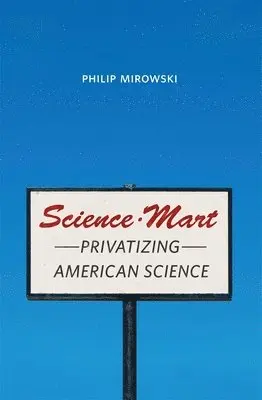
    Science-Mart

    Privatizing American Science

    AvPhilip Mirowski

    Inbunden, Engelska, 2011

    536 kr

    Beställningsvara. Skickas inom 10-15 vardagar. Fri frakt över 249 kr.

    Beskrivning

    This trenchant study analyzes the rise and decline in the quality and format of science in America since World War II.During the Cold War, the U.S. government amply funded basic research in science and medicine. Starting in the 1980s, however, this support began to decline and for-profit corporations became the largest funders of research. Philip Mirowski argues that a powerful neoliberal ideology promoted a radically different view of knowledge and discovery: the fruits of scientific investigation are not a public good that should be freely available to all, but are commodities that could be monetized.Consequently, patent and intellectual property laws were greatly strengthened, universities demanded patents on the discoveries of their faculty, information sharing among researchers was impeded, and the line between universities and corporations began to blur. At the same time, corporations shed their in-house research laboratories, contracting with independent firms both in the States and abroad to supply new products. Among such firms were AT&T and IBM, whose outstanding research laboratories during much of the twentieth century produced Nobel Prize–winning work in chemistry and physics, ranging from the transistor to superconductivity.Science-Mart offers a provocative, learned, and timely critique, of interest to anyone concerned that American science—once the envy of the world—must be more than just another way to make money.

    Produktinformation

    • Utgivningsdatum:2011-04-01
    • Mått:156 x 235 x 36 mm
    • Vikt:912 g
    • Format:Inbunden
    • Språk:Engelska
    • Antal sidor:464
    • Förlag:Harvard University Press
    • ISBN:9780674046467
    • Utmärkelser:Nominated for Rachel Carson Prize 2012

    Utforska kategorier

    • Ekonomisk historia inom Ekonomi och Ledarskap
    • Internationell ekonomi inom Ekonomi och Ledarskap
    • Naturvetenskapens filosofi inom Naturvetenskap och teknik

    Mer om författaren

    Philip Mirowski is Carl Koch Professor of Economics and the History and Philosophy of Science at the University of Notre Dame.

    Recensioner i media

    An important and intensely provocative book that explores fundamental questions about the political economy of science. Science-Mart challenges us to think more critically, more synthetically and more deeply about the growing commercialization of academic science by exploring the historical and ideological roots of that trend… Mirowski debunks the popular view that there is a linear, lockstep path leading from science and technology to economic growth, a claim that served as the mantra of those urging passage of the Bayh-Dole Act of 1980… Mirowski has shown that a political economist can bring significant new insights to the discussion of academic marketphilia.