• Fri frakt över 249 kr
  • •
  • Snabba leveranser
  • •
  • Billiga böcker
Kundservice

Du är på sajten för privatpersoner.

Företag, bibliotek eller offentlig verksamhet?

Du handlar på classic.bokus.com, där alla dina funktioner finns intakta.
Till classic.bokus.com
Bokus logotyp. Gå till startsidan.
  • Erbjudanden
  • Student
  • Topplistor
  • Barn & ungdom
  • Bokus Play
  • E-böcker
  • Ljudböcker
  • Pocketböcker
  • Spel och pussel

Pocketfynda! Hundratals böcker för 49 kr/st →

Sidfot

Mina sidor

    Hjälp

    • Kundservice
    • Vanliga frågor och svar
    • Frakt och leverans
    • Retur vid ångerrätt
    • Reklamera vara
    • Betalning
    • Köpvillkor
    • Allmänna villkor
    • Information om webbplatsens tillgänglighet

    Om Bokus

    • Om oss
    • Pressrum
    • För studenter
    • För företag
    • För bibliotek och offentlig verksamhet
    • För leverantörer
    • Hållbarhet

    Populärt

    • Aktuella erbjudanden
    • Presentkort
    • Studentlitteratur
    • Nya böcker
    • Topplistor
    • Signerade böcker
    • Engelska böcker

    Inspiration

    • Boktips
    • BookTok
    • Barnbokskaraktärer
    • Populära författare
    Logotyp för Bokus
    Följ oss på Facebook (extern länk)Följ oss på Instagram (extern länk)Följ oss på YouTube (extern länk)Följ oss på TikTok (extern länk)
    bokus @ CookiesAnpassa cookiesIntegritetspolicyKöpvillkor
    Till Citymail hemsida (extern länk)Till Budbee hemsida (extern länk)Till Postnord hemsida (extern länk)Till Schenker hemsida (extern länk)Till Early Bird hemsida (extern länk)Till Walleys hemsida (extern länk)
    1. Ekonomi och Ledarskap
    2. Industrier och branscher
    3. Arbetsmarknaden

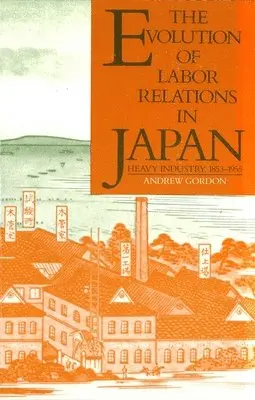
    Evolution of Labor Relations in Japan

    Heavy Industry, 1853–1955

    AvAndrew Gordon

    Häftad, Engelska, 1988

    Del 117 i serien Harvard East Asian Monographs

    200 kr

    Beställningsvara. Skickas inom 5-8 vardagar. Fri frakt över 249 kr.

    Beskrivning

    The century-long process by which a distinct pattern of Japanese labor relations evolved is traced through the often turbulent interactions of workers, managers, and, at times, government bureaucrats and politicians. The author argues that, although by the 1920s labor relations had reached a stage that foreshadowed postwar development, it was not until the 1940s and 1950s that something closely akin to the contemporary pattern emerged.The central theme is that the ideas and actions of the workers, whether unionized or not, played a vital role in the shaping of the system. This is the only study in the West that demonstrates how Japanese workers sought to change and to some extent succeeded in changing the structure of factory life. Managerial innovations and the efforts of state bureaucrats to control social change are also examined.The book is based on extensive archival research and interviewing in Japan, including the use of numerous labor-union publications and the holdings of the prewar elite’s principal organization for the study of social issues, the Kyochokai (“Association for Harmonious Cooperation”)—both collections having only recently been catalogued and opened to scholars. This is an intensive look at past developments that underlie labor relations in today’s Japanese industrial plants.

    Produktinformation

    • Utgivningsdatum:1988-04-15
    • Vikt:748 g
    • Format:Häftad
    • Språk:Engelska
    • Serie:Harvard East Asian Monographs
    • Antal sidor:524
    • Förlag:Harvard University, Asia Center
    • ISBN:9780674271319

    Utforska kategorier

    • Arbetsmarknaden inom Ekonomi och Ledarskap

    Mer om författaren

    Andrew Gordon is Lee and Juliet Folger Fund Professor of History, Edwin O. Reischauer Institute of Japanese Studies, Harvard University.

    Recensioner i media

    For those concerned with how modern Japanese society was formed, this book is indispensable. Its lesson is that Japanese or foreigners who want to know the secrets of Japanese industrial success would be well advised to study more Japanese history and institutions and pay less attention to the purveyors of Japan’s unique culture.