• Fri frakt över 249 kr
  • •
  • Snabba leveranser
  • •
  • Billiga böcker
Kundservice

Du är på sajten för privatpersoner.

Företag, bibliotek eller offentlig verksamhet?

Du handlar på classic.bokus.com, där alla dina funktioner finns intakta.
Till classic.bokus.com
Bokus logotyp. Gå till startsidan.
  • Erbjudanden
  • Nyheter
  • Student
  • Topplistor
  • Barn & ungdom
  • Bokus Play
  • E-böcker
  • Pocketböcker
  • Spel & pussel

10% rabatt på allt med kod: NYSTART10 →

Sidfot

Mina sidor

    Hjälp

    • Kundservice
    • Vanliga frågor och svar
    • Frakt och leverans
    • Retur vid ångerrätt
    • Reklamera vara
    • Betalning
    • Köpvillkor
    • Allmänna villkor
    • Information om webbplatsens tillgänglighet

    Om Bokus

    • Om oss
    • Pressrum
    • För studenter
    • För företag
    • För bibliotek och offentlig verksamhet
    • För leverantörer
    • Hållbarhet

    Populärt

    • Aktuella erbjudanden
    • Presentkort
    • Studentlitteratur
    • Nya böcker
    • Topplistor
    • Signerade böcker
    • Engelska böcker

    Inspiration

    • Boktips
    • BookTok
    • Populära bokserier
    • Barnbokskaraktärer
    • Populära författare
    Logotyp för Bokus
    Följ oss på Facebook (extern länk)Följ oss på Instagram (extern länk)Följ oss på YouTube (extern länk)Följ oss på TikTok (extern länk)
    bokus @ CookiesAnpassa cookiesIntegritetspolicyKöpvillkor
    Till Citymail hemsida (extern länk)Till Budbee hemsida (extern länk)Till Postnord hemsida (extern länk)Till Schenker hemsida (extern länk)Till Early Bird hemsida (extern länk)Till Walleys hemsida (extern länk)
    1. Samhälle och politik
    2. Politik och statsskick
    3. Internationella relationer

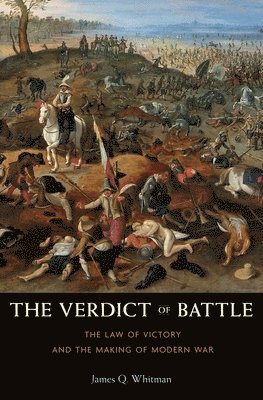
    Verdict of Battle

    The Law of Victory and the Making of Modern War

    AvJames Q. Whitman

    Häftad, Engelska, 2014

    276 kr

    Beställningsvara. Skickas inom 5-8 vardagar. Fri frakt över 249 kr.

    Beskrivning

    Today, war is considered a last resort for resolving disagreements. But a day of staged slaughter on the battlefield was once seen as a legitimate means of settling political disputes. James Whitman argues that pitched battle was essentially a trial with a lawful verdict. And when this contained form of battle ceased to exist, the law of victory gave way to the rule of unbridled force. The Verdict of Battle explains why the ritualized violence of the past was more effective than modern warfare in bringing carnage to an end, and why humanitarian laws that cling to a notion of war as evil have led to longer, more barbaric conflicts.Belief that sovereigns could, by rights, wage war for profit made the eighteenth century battle’s golden age. A pitched battle was understood as a kind of legal proceeding in which both sides agreed to be bound by the result. To the victor went the spoils, including the fate of kingdoms. But with the nineteenth-century decline of monarchical legitimacy and the rise of republican sentiment, the public no longer accepted the verdict of pitched battles. Ideology rather than politics became war’s just cause. And because modern humanitarian law provided no means for declaring a victor or dispensing spoils at the end of battle, the violence of war dragged on.The most dangerous wars, Whitman asserts in this iconoclastic tour de force, are the lawless wars we wage today to remake the world in the name of higher moral imperatives.

    Produktinformation

    • Utgivningsdatum:2014-11-24
    • Mått:156 x 235 x 21 mm
    • Vikt:454 g
    • Format:Häftad
    • Språk:Engelska
    • Antal sidor:336
    • Förlag:Harvard University Press
    • ISBN:9780674416871
    • Utmärkelser:Nominated for Distinguished Book Award - Military History 2013

    Utforska kategorier

    • Internationella relationer inom Samhälle och politik
    • Internationell rätt inom Juridik
    • Militärhistoria inom Historia och arkeologi

    Mer om författaren

    James Q. Whitman is Ford Foundation Professor of Comparative and Foreign Law at Yale Law School.

    Recensioner i media

    In the course of unearthing the jus victoriae tradition, Whitman offers a badly needed and faintly blasphemous revision of the laws of war. (In contrast to the monoglot bibliographies of most Anglo-American scholarship on the laws of war, Whitman engages with original texts in both ancient and modern languages.) To begin with, Whitman scrapes off several decades’ worth of received ideas from just war theory, now enjoying a revival… Most refreshingly, Whitman rejects the piety that the laws of armed conflict—currently euphemistically called ‘international humanitarian law’—are crafted in order to restrain lethal violence, rather than to facilitate and optimize its use. Whitman cautions against the widespread faith in the power of law to beat swords into humanitarian surgical instruments… The legal tradition rediscovered by James Whitman may eventually be useful in world politics, as in the multipolar future that is very slowly arising.