• Fri frakt över 249 kr
  • •
  • Snabba leveranser
  • •
  • Billiga böcker
Kundservice

Du är på sajten för privatpersoner.

Företag, bibliotek eller offentlig verksamhet?

Du handlar på classic.bokus.com, där alla dina funktioner finns intakta.
Till classic.bokus.com
Bokus logotyp. Gå till startsidan.
  • Erbjudanden
  • Nyheter
  • Student
  • Topplistor
  • Barn & ungdom
  • Bokus Play
  • E-böcker
  • Pocketböcker
  • Spel & pussel

10% rabatt på allt med kod NYSTART10 →

Sidfot

Mina sidor

    Hjälp

    • Kundservice
    • Vanliga frågor och svar
    • Frakt och leverans
    • Retur vid ångerrätt
    • Reklamera vara
    • Betalning
    • Köpvillkor
    • Allmänna villkor
    • Information om webbplatsens tillgänglighet

    Om Bokus

    • Om oss
    • Pressrum
    • För studenter
    • För företag
    • För bibliotek och offentlig verksamhet
    • För leverantörer
    • Hållbarhet

    Populärt

    • Aktuella erbjudanden
    • Presentkort
    • Studentlitteratur
    • Nya böcker
    • Topplistor
    • Signerade böcker
    • Engelska böcker

    Inspiration

    • Boktips
    • BookTok
    • Populära bokserier
    • Barnbokskaraktärer
    • Populära författare
    Logotyp för Bokus
    Följ oss på Facebook (extern länk)Följ oss på Instagram (extern länk)Följ oss på YouTube (extern länk)Följ oss på TikTok (extern länk)
    bokus @ CookiesAnpassa cookiesIntegritetspolicyKöpvillkor
    Till Citymail hemsida (extern länk)Till Budbee hemsida (extern länk)Till Postnord hemsida (extern länk)Till Schenker hemsida (extern länk)Till Early Bird hemsida (extern länk)Till Walleys hemsida (extern länk)
    1. Skönlitteratur
    2. Essäer

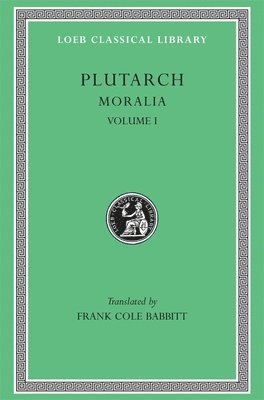
    Moralia, Volume I

    The Education of Children. How the Young Man Should Study Poetry. On Listening to Lectures. How to Tell a Flatterer from a Friend. How a Man May Become Aware of His Progress in Virtue

    AvPlutarch

    Inbunden, Engelska, 1927

    Del 197 i serien Loeb Classical Library

    330 kr

    Tillfälligt slut

    Fler format och utgåvor

    Inbunden

    356 kr

    Beskrivning

    Eclectic essays on ethics, education, and much else besides.Plutarch (Plutarchus), ca. AD 45–120, was born at Chaeronea in Boeotia in central Greece, studied philosophy at Athens, and, after coming to Rome as a teacher in philosophy, was given consular rank by the emperor Trajan and a procuratorship in Greece by Hadrian. He was married and the father of one daughter and four sons. He appears as a man of kindly character and independent thought, studious and learned.Plutarch wrote on many subjects. Most popular have always been the forty-six Parallel Lives, biographies planned to be ethical examples in pairs (in each pair, one Greek figure and one similar Roman), though the last four lives are single. All are invaluable sources of our knowledge of the lives and characters of Greek and Roman statesmen, soldiers and orators. Plutarch’s many other varied extant works, about sixty in number, are known as Moralia or Moral Essays. They are of high literary value, besides being of great use to people interested in philosophy, ethics, and religion.The Loeb Classical Library edition of the Moralia is in fifteen volumes, volume XIII having two parts. Volume XVI is a comprehensive Index.

    Produktinformation

    • Utgivningsdatum:1927-01-01
    • Mått:115 x 170 x 25 mm
    • Vikt:300 g
    • Format:Inbunden
    • Språk:Engelska, Klassisk grekiska
    • Serie:Loeb Classical Library
    • Antal sidor:512
    • Förlag:Harvard University Press
    • ISBN:9780674992177
    • Översättare:Frank Cole Babbitt

    Utforska kategorier

    • Essäer inom Skönlitteratur

    Mer om författaren

    Frank Cole Babbitt (1867–1935) was the Hobart Professor of Greek Language and Literature at Trinity College, Hartford.

    Recensioner i media

    This miscellany of essays makes Plutarch the Montaigne or Hazlitt of antiquity. He is best known for his Lives, a series of parallel biographies of heroic exemplification describing the great men of Greece and Rome. But the Moralia are as rich, and even more diverse, containing much to instruct and entertain. Written in Greek during the course of Plutarch’s life—he flourished about 100 CE—they had an enormous influence on western culture until a century or two ago. Some are classics in every sense of the word… This is agreeable and civilised stuff, refreshingly contemporaneous despite having been matured for two thousand years in the casks of literature.