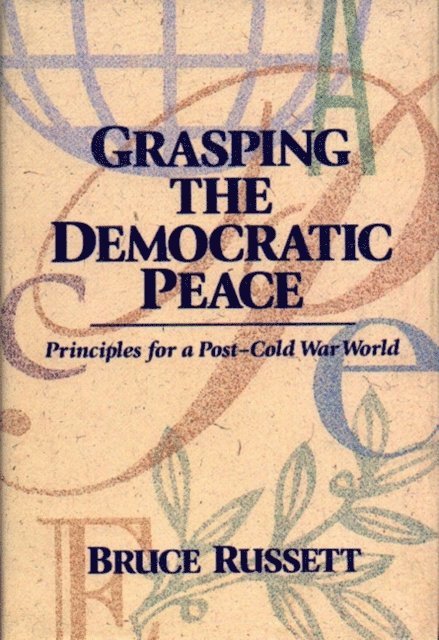
By illuminating the conflict-resolving mechanisms inherent in the relationships between democracies, Bruce Russett explains one of the most promising developments of the modern international system: the striking fact that the democracies that it comprises have almost never fought each other.
Bruce Russett is Dean Acheson Professor of International Relations and Political Science at Yale University and editor of the Journal of Conflict Resolution. His many works include Controlling the Sword: The Democratic Governance of National Security and The Prisoners of Insecurity: Nuclear Deterrence, the Arms Race, and Arms Control. In writing Grasping the Democratic Peace, he was accompanied by anthropologists Carol R. Ember and Melvin Ember and political scientists William Antholis and Zeev Maoz.
Recensioner i media
"Russett finds this [the proposition that democracies do not fight each other] to be an extraordinarily robust conclusion... [The book] presents a challenge to realists while providing a rigorous undergirding to what has become a widespread view."--Francis Fukuyama, Foreign Affairs "The ambition and scope of the study provides the illuminating and unexpected insights into the relationships between war and democracy."--Roland Dannreuther, Survival "The descriptive phase of scholarly research on the absence of war between democratic dyads has been largely completed, and attention is now shifting to alternative explanations for this well-confirmed empirical generalization. The best place to begin, both for a summary of the descriptive evidence and for an attempt to explain it, is Bruce Russett's Grasping the Democratic Peace."--Jack S. Levy, International Studies Review "In Grasping the Democratic Peace, Bruce Russett has published a powerful book clarifying the theoretical debate and producing additional support for the relative pacifism of democracies from previously untapped sources. The book will quickly claim a secure place in the literature for its insight and empirical originality. No student of international relations can fail to profit from a close read."---David A. Lake, The Journal of Politics "Bruce Russett's laudable book summarizes, dissects, and expands our understanding of the disinclination shown by democracies to fight each other, a finding that has spawned a minor cottage industry of analytic studies... the book combines rigor and relevance, maturity and originality."--American Political Science Review
Innehållsförteckning
Preface (1995)AcknowledgmentsCh. 1The Fact of Democratic Peace3The Emergence of Democratic Peace before World War I5The Spread of Democratic Peace9Democracy, War, and Other Ambiguous Terms11Some Alleged Wars between Democracies16Ch. 2Why Democratic Peace?24Alternative Explanations25Democratic Norms and Culture?30Structural and Institutional Constraints?38Distinguishing the Explanations40Ch. 3The Imperfect Democratic Peace of Ancient Greece43Democracy, Autonomy, and War in Ancient Greece43Who Fought Whom?51When and Why Did Democracies Fight Each Other?54Norms and Perceptions59Appendix: Greek City-States in the Peloponnesian War: Their Domestic Regimes and Who They Fought63Ch. 4The Democratic Peace since World War II72Who and When73What Influences Conflict?76Democracy Matters84Norms and Institutional Constraints86Appendix: States and Their Political Regimes, 1946-198694Ch. 5The Democratic Peace in Nonindustrial Societies99Warfare and Participation100Participation Matters105Some Examples111Appendix: Codes for Political Decision-making115Ch. 6The Future of the Democratic Peace119Covert Action against Other Democracies120The Discourse at the End of the Cold War124From the Inside Out129Strengthening Democracy and Its Norms131Can a Wider Democratic Peace Be Built?135Notes139References151Index167
By illuminating the conflict-resolving mechanisms inherent in the relationships between democracies, Bruce Russett explains one of the most promising developments of the modern international system: the striking fact that the democracies that it comprises have almost never fought each other.
Bruce Russett is Dean Acheson Professor of International Relations and Political Science at Yale University and editor of the Journal of Conflict Resolution. His many works include Controlling the Sword: The Democratic Governance of National Security and The Prisoners of Insecurity: Nuclear Deterrence, the Arms Race, and Arms Control. In writing Grasping the Democratic Peace, he was accompanied by anthropologists Carol R. Ember and Melvin Ember and political scientists William Antholis and Zeev Maoz.
Recensioner i media
"Russett finds this [the proposition that democracies do not fight each other] to be an extraordinarily robust conclusion... [The book] presents a challenge to realists while providing a rigorous undergirding to what has become a widespread view."--Francis Fukuyama, Foreign Affairs "The ambition and scope of the study provides the illuminating and unexpected insights into the relationships between war and democracy."--Roland Dannreuther, Survival "The descriptive phase of scholarly research on the absence of war between democratic dyads has been largely completed, and attention is now shifting to alternative explanations for this well-confirmed empirical generalization. The best place to begin, both for a summary of the descriptive evidence and for an attempt to explain it, is Bruce Russett's Grasping the Democratic Peace."--Jack S. Levy, International Studies Review "In Grasping the Democratic Peace, Bruce Russett has published a powerful book clarifying the theoretical debate and producing additional support for the relative pacifism of democracies from previously untapped sources. The book will quickly claim a secure place in the literature for its insight and empirical originality. No student of international relations can fail to profit from a close read."---David A. Lake, The Journal of Politics "Bruce Russett's laudable book summarizes, dissects, and expands our understanding of the disinclination shown by democracies to fight each other, a finding that has spawned a minor cottage industry of analytic studies... the book combines rigor and relevance, maturity and originality."--American Political Science Review
Innehållsförteckning
Preface (1995)AcknowledgmentsCh. 1The Fact of Democratic Peace3The Emergence of Democratic Peace before World War I5The Spread of Democratic Peace9Democracy, War, and Other Ambiguous Terms11Some Alleged Wars between Democracies16Ch. 2Why Democratic Peace?24Alternative Explanations25Democratic Norms and Culture?30Structural and Institutional Constraints?38Distinguishing the Explanations40Ch. 3The Imperfect Democratic Peace of Ancient Greece43Democracy, Autonomy, and War in Ancient Greece43Who Fought Whom?51When and Why Did Democracies Fight Each Other?54Norms and Perceptions59Appendix: Greek City-States in the Peloponnesian War: Their Domestic Regimes and Who They Fought63Ch. 4The Democratic Peace since World War II72Who and When73What Influences Conflict?76Democracy Matters84Norms and Institutional Constraints86Appendix: States and Their Political Regimes, 1946-198694Ch. 5The Democratic Peace in Nonindustrial Societies99Warfare and Participation100Participation Matters105Some Examples111Appendix: Codes for Political Decision-making115Ch. 6The Future of the Democratic Peace119Covert Action against Other Democracies120The Discourse at the End of the Cold War124From the Inside Out129Strengthening Democracy and Its Norms131Can a Wider Democratic Peace Be Built?135Notes139References151Index167