• Fri frakt över 249 kr
  • •
  • Snabba leveranser
  • •
  • Billiga böcker
Kundservice

Du är på sajten för privatpersoner.

Företag, bibliotek eller offentlig verksamhet?

Du handlar på classic.bokus.com, där alla dina funktioner finns intakta.
Till classic.bokus.com
Bokus logotyp. Gå till startsidan.
  • Erbjudanden
  • Nyheter
  • Student
  • Topplistor
  • Barn & ungdom
  • Bokus Play
  • E-böcker
  • Pocketböcker
  • Spel & pussel

10% rabatt på allt med kod: NYSTART10 →

Sidfot

Mina sidor

    Hjälp

    • Kundservice
    • Vanliga frågor och svar
    • Frakt och leverans
    • Retur vid ångerrätt
    • Reklamera vara
    • Betalning
    • Köpvillkor
    • Allmänna villkor
    • Information om webbplatsens tillgänglighet

    Om Bokus

    • Om oss
    • Pressrum
    • För studenter
    • För företag
    • För bibliotek och offentlig verksamhet
    • För leverantörer
    • Hållbarhet

    Populärt

    • Aktuella erbjudanden
    • Presentkort
    • Studentlitteratur
    • Nya böcker
    • Topplistor
    • Signerade böcker
    • Engelska böcker

    Inspiration

    • Boktips
    • BookTok
    • Populära bokserier
    • Barnbokskaraktärer
    • Populära författare
    Logotyp för Bokus
    Följ oss på Facebook (extern länk)Följ oss på Instagram (extern länk)Följ oss på YouTube (extern länk)Följ oss på TikTok (extern länk)
    bokus @ CookiesAnpassa cookiesIntegritetspolicyKöpvillkor
    Till Citymail hemsida (extern länk)Till Budbee hemsida (extern länk)Till Postnord hemsida (extern länk)Till Schenker hemsida (extern länk)Till Early Bird hemsida (extern länk)Till Walleys hemsida (extern länk)
    1. Filosofi och religion
    2. Religion och tro
    3. Buddhism

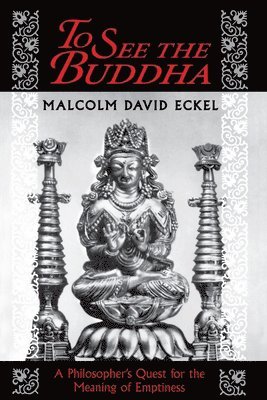
    To See the Buddha

    A Philosopher's Quest for the Meaning of Emptiness

    AvMalcolm David Eckel

    Häftad, Engelska, 1994

    619 kr

    Beställningsvara. Skickas inom 5-8 vardagar. Fri frakt över 249 kr.

    Beskrivning

    Malcolm David Eckel takes us on a contemporary quest to discover the essential meaning behind the Buddha's many representations. Eckel's bold thesis proposes that the proper understanding of Buddhist philosophy must be thoroughly religious--an understanding revealed in Eckel's new translation of the philospher Bhavaviveka's major work, The Flame of Reason. Eckel shows that the dimensions of early Indian Buddhism--popular art, conventional piety, and critical philosophy--all work together to express the same religious yearning for the fullness of emptiness that Buddha conveys.

    Produktinformation

    • Utgivningsdatum:1994-12-19
    • Mått:197 x 254 x 16 mm
    • Vikt:413 g
    • Format:Häftad
    • Språk:Engelska
    • Antal sidor:232
    • Förlag:Princeton University Press
    • ISBN:9780691037738

    Utforska kategorier

    • Buddhism inom Filosofi och religion

    Mer om författaren

    Malcolm David Eckel is Professor of the History of Religion at Boston University. He is the author of Jnanagarbha's Commentary on the Distinction between the Two Truths.

    Recensioner i media

    "Eckel has masterfully drawn on the richness of the Indian language of the senses to shed light on the multiple voices being heard in the philosophical chorus... Eckel has given us a truly fascinating way by which to rethink the Buddhist philosophical enterprise... To See the Buddha has done more than 're-vision the Buddha.' It has made some pioneering steps toward appreciating the Buddhist philosophical tradition as a polyphony of pious voices. In the end, we are reminded that Buddhist scholastics envisioned their world with the eyes of devout Buddhists. And Eckel has done much to make that world visible to us."--Daniel Boucher, Journal of the American Academy of Religion "Eckel has masterfully drawn on the richness of the Indian language of the senses to shed light on the multiple voices being heard in the philosophical chorus."--Journal of the American Academy of Religion

    Innehållsförteckning

    • AbbreviationsAcknowledgmentsIntroduction1Ch. 1The Story of the Asuras' Cave11Ch. 2The Structure of Bhavaviveka's Thought22Philosophy as a Cognitive Quest23The Three-Part Structure of Bhavaviveka's Argument29Points of Transition from One Stage in the Argument to Another42Bhavaviveka's Ironical Point of View44Ch. 3Interpreting the Signs of the Buddha51Hsuan-tsang's Encounter with the Indian Landscape51The Buddha as a Place Where an Absence Is Present65Ch. 4The Diachronic Dimension of the Buddha's Absence73The Buddha's Previous Vows74The Buddha's Manifestations84The Buddha's Sustaining Power90Ch. 5The Synchronic Dimension of the Buddha's Absence95The Dharma Body97The Eternal Buddha109Ch. 6Bhavaviveka's Theory of the Buddha114The Ultimate Buddha: A Negative Version of the Two-Body Theory115The Conventional Buddha: A Positive Version of the Two-Body Theory122The Three-Body Theory125Ch. 7Buddhahood and the Language of the Senses131Hsuan-tsang's Encounter with the Pirates131Bhavaviveka and the Philosopher's Eyes137Structural Similarities Between Different Kinds of Vision141The Ranking of the Different Senses147Translation: Bhavaviveka's Account of the Buddha in Chapter III of The Verses on the Essence of the Middle Way with the Commentary in The Flame of Reason1531The Ultimate Buddha1582The Bodhisattva Path1723The Conventional Buddha189Notes197Bibliography242Index259