• Fri frakt över 249 kr
  • •
  • Snabba leveranser
  • •
  • Billiga böcker
Kundservice

Du är på sajten för privatpersoner.

Företag, bibliotek eller offentlig verksamhet?

Du handlar på classic.bokus.com, där alla dina funktioner finns intakta.
Till classic.bokus.com
Bokus logotyp. Gå till startsidan.
  • Erbjudanden
  • Nyheter
  • Student
  • Topplistor
  • Barn & ungdom
  • Bokus Play
  • E-böcker
  • Pocketböcker
  • Spel & pussel

10% rabatt på allt med kod: NYSTART10 →

Sidfot

Mina sidor

    Hjälp

    • Kundservice
    • Vanliga frågor och svar
    • Frakt och leverans
    • Retur vid ångerrätt
    • Reklamera vara
    • Betalning
    • Köpvillkor
    • Allmänna villkor
    • Information om webbplatsens tillgänglighet

    Om Bokus

    • Om oss
    • Pressrum
    • För studenter
    • För företag
    • För bibliotek och offentlig verksamhet
    • För leverantörer
    • Hållbarhet

    Populärt

    • Aktuella erbjudanden
    • Presentkort
    • Studentlitteratur
    • Nya böcker
    • Topplistor
    • Signerade böcker
    • Engelska böcker

    Inspiration

    • Boktips
    • BookTok
    • Populära bokserier
    • Barnbokskaraktärer
    • Populära författare
    Logotyp för Bokus
    Följ oss på Facebook (extern länk)Följ oss på Instagram (extern länk)Följ oss på YouTube (extern länk)Följ oss på TikTok (extern länk)
    bokus @ CookiesAnpassa cookiesIntegritetspolicyKöpvillkor
    Till Citymail hemsida (extern länk)Till Budbee hemsida (extern länk)Till Postnord hemsida (extern länk)Till Schenker hemsida (extern länk)Till Early Bird hemsida (extern länk)Till Walleys hemsida (extern länk)
    1. Kultur
    2. Scenkonst och film
    3. Film

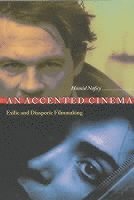
    Accented Cinema

    Exilic and Diasporic Filmmaking

    AvHamid Naficy

    Häftad, Engelska, 2001

    483 kr

    Beställningsvara. Skickas inom 5-8 vardagar. Fri frakt över 249 kr.

    Fler format och utgåvor

    E-bok

    660 kr

    Beskrivning

    In An Accented Cinema, Hamid Naficy offers an engaging overview of an important trend--the filmmaking of postcolonial, Third World, and other displaced individuals living in the West. How their personal experiences of exile or diaspora translate into cinema is a key focus of Naficy's work. Although the experience of expatriation varies greatly from one person to the next, the films themselves exhibit stylistic similarities, from their open- and closed-form aesthetics to their nostalgic and memory-driven multilingual narratives, and from their emphasis on political agency to their concern with identity and transgression of identity. The author explores such features while considering the specific histories of individuals and groups that engender divergent experiences, institutions, and modes of cultural production and consumption. Treating creativity as a social practice, he demonstrates that the films are in dialogue not only with the home and host societies but also with audiences, many of whom are also situated astride cultures and whose desires and fears the filmmakers wish to express. Comparing these films to Hollywood films, Naficy calls them "accented."Their accent results from the displacement of the filmmakers, their alternative production modes, and their style. Accented cinema is an emerging genre, one that requires new sets of viewing skills on the part of audiences. Its significance continues to grow in terms of output, stylistic variety, cultural diversity, and social impact. This book offers the first comprehensive and global coverage of this genre while presenting a framework in which to understand its intricacies.

    Produktinformation

    • Utgivningsdatum:2001-04-29
    • Mått:157 x 236 x 22 mm
    • Vikt:510 g
    • Format:Häftad
    • Språk:Engelska
    • Antal sidor:392
    • Förlag:Princeton University Press
    • ISBN:9780691043913

    Utforska kategorier

    • Film inom Kultur

    Mer om författaren

    Born in Iran, Hamid Naficy came to the United States in 1964 and is Associate Professor of Film and Media Studies at Rice University. He has published extensively on exile and diaspora theory, culture, television, and cinema as well as on Third World and documentary cinema. Naficy is currently completing his long-awaited book on the Iranian cinema.

    Recensioner i media

    "[Naficy] does a wonderful job of describing and bringing to life works as yet unseen and, equally admirable, prompts a desire to return to more familiar cinematic texts. [His] prose is engaging, and often eloquent."--Joel Gordon, Arab Studies Journal

    Innehållsförteckning

    • Acknowledgments xi List of Illustrations xiii Introduction 3 1.Situating Accented Cinema 10 Accented Filmmakers 10 Exilic Filmmakers 11 Diasporic Filmmakers 13 Postcolonial Ethnic and Identity Filmmakers 15 Mapping Accented Cinema's Corpus 17 Close-Up: Middle Eastern and North African Filmmakers 17 The Stylistic Approach 19 Accented Style 22 Language, Voice, Address 22 Embedded Criticism 26 Accented Structures of Feeling 26 Tactile Optics 28 Third Cinema Aesthetics 30 Border Effects, Border Writing 31 Themes 33 Authorship and Autobiographical Inscription 33 Close-Up: Atom Egoyan's Accented Style 36 2.Interstitial and Artisanal Mode of Production 40 Postindustrial Mode of Production 40 Accented Mode of Production 43 Interstitial Mode of Production 46 Multisource Funding and Coproduction 56 Close-Up: Atom Egoyan 56 Close-Up: Michel Khlei 58 Distribution to Academic Institutions 60 Close-Up: Women Make Movies 60 3.Collective Mode of Production 63 Ethnic Collectives: Asian Pacific American Film Collectives 63 Close-Up: Nancy Tong and Christine Choy's In the Name of the Emperor 66 Close-Up: Mira Nair's Salaam Bombay! 68 Close-Up: Trinh T. Minh-ha 70 Close-Up: Marva Nabili's Nightsongs 73 Iranian Accented Film Production and Reception 74 Interstitial Production 74 Close-Up: Ghasem Ebrahimian's The Suitors 81 Collective Exhibition and Exile Festivals 83 British Postcolonial Workshops and Collectives 87 Beur Cinema in France 95 4.Epistolarity and Epistolary Narratives 101 Film-Letters 101 Mode of Address 101 Communitarianism 105 Close-Up: Fernando Ezequiel "Pino" Solanas 106 Close-Up: Chantal Akerman 111 Inhibition and Prohibition 115 Close-Up: Elia Suleiman 116 Close-Up: Mona Hatoum 118 Orality and Acousticity 120 Calligraphic Texts 122 Close-Up: Trinh T. Minh-ha's Surname Viet Given Name Nam 123 Daughter-Texts 127 Telephonic Epistles 132 Simultaneity, Multifocality, and Paranoia 132 Close-Up: Fernando Solanas's Tangos: Exile of Gardel 133 Close-Up: Amir Naderi's Manhattan by Numbers 134 Close-Up: Atom Egoyan's Calendar 136 Letter-Films 141 Close-Up: Jonas Mekas 141 Close-Up: Chris Marker 146 5.Chronotopes of Imagined Homeland 152 Homeland's Utopian Chronotopes: Boundlessness-Timelessness 155 Nature 155 Close-Up: Gregory Nava's El Norte 156 Mountain, Monument 160 Close-Up: Nizamettin Aric's A Song for Beko 161 Home Land 166 Close-Up: Michel Khleifi's Wedding in Galilee 167 House 169 Close-Up: Amos Gitai's House 169 Close-Up: Andrei Tarkovsky 173 Close-Up: Atom Egoyan's The Adjuster 178 Homeland as Prison 181 Close-Up: Yilmaz Guney 181 6.Chronotopes of Life in Exile: Claustrophobia, Contemporaneity 188 Exile as Prison 191 Turkish Films in Germany 191 Close-Up: Tevfik Baser 193 Close-Up: Yilmaz Arslan's Passages 197 Iranian Filmmakers in Europe and the United States 199 Close-Up: Sohrab Shahid Saless 199 Close-Up: Houchang Allahyari's Fear of Heights 207 Close-Up: Erica Jordan and Shirin Etessam 's Walls of Sand 208 Close-Up: Jonas Mekas's The Brig 210 Thirdspace Play of Open and Closed Chronotopes 212 Close-Up: Nina Menkes's The Great Sadness of Zohara 214 Close-Up: Joris Ivens's A Tale of the Wind 216 7.Journeying, Border Crossing, and Identity Crossing 222 Journey and Journeying 222 Home-Seeking Journey 223 Journey of Homelessness 225 Close-Up: Emir Kusturica's Time of the Gypsies 226 Homecoming Journey 229 Close-Up: Fernando Solanas's South and The Journey 230 Close-Up: Ann Hui's Song of the Exile 233 Borders and Border Crossings 237 Border and Chicano Films 238 Tunnel 240 Close-Up: Gregory Nava's El Norte 240 Seaport and Airport 243 Close-Up: Amir Naderi's The Runner 243 Close-Up: Ghasem Ebrahimian's The Suitors 246 Hotels and Motels 248 Close-Up: Reza Allamehzadeh's The Guests of Hotel Astoria 249 Close-Up: Atom Egoyan's Speaking Parts 252 Close-Up: Caveh Zahedi's I Don't Hate Las Vegas Anymore 253 Trains and Buses 257 Close-Up: Parviz Sayyad's Checkpoint 258 Suitcase 261 Close-Up: Atom Egoyan's Next of Kin 262 Close-Up: Mitra Tabrizian's The Third Woman 266 The Ethics and Politics of Performed Identity 269 Diegetic Staging 271 Doppelgangers, Doubling, Duplicity 272 Self-Refiexivity 276 Self-Inscription 277 Close-Up: Miguel Littyn's General Statement on Chile 279 Film as Performance 282 Close-Up: Atom Egoyan's Films as Performance of Identity 283 Appendixes 289 Note 295 Bibliography 317