• Fri frakt över 249 kr
  • •
  • Snabba leveranser
  • •
  • Billiga böcker
Kundservice

Du är på sajten för privatpersoner.

Företag, bibliotek eller offentlig verksamhet?

Du handlar på classic.bokus.com, där alla dina funktioner finns intakta.
Till classic.bokus.com
Bokus logotyp. Gå till startsidan.
  • Erbjudanden
  • Nyheter
  • Student
  • Topplistor
  • Barn & ungdom
  • Bokus Play
  • E-böcker
  • Pocketböcker
  • Spel & pussel

10% rabatt på allt med kod: NYSTART10 →

Sidfot

Mina sidor

    Hjälp

    • Kundservice
    • Vanliga frågor och svar
    • Frakt och leverans
    • Retur vid ångerrätt
    • Reklamera vara
    • Betalning
    • Köpvillkor
    • Allmänna villkor
    • Information om webbplatsens tillgänglighet

    Om Bokus

    • Om oss
    • Pressrum
    • För studenter
    • För företag
    • För bibliotek och offentlig verksamhet
    • För leverantörer
    • Hållbarhet

    Populärt

    • Aktuella erbjudanden
    • Presentkort
    • Studentlitteratur
    • Nya böcker
    • Topplistor
    • Signerade böcker
    • Engelska böcker

    Inspiration

    • Boktips
    • BookTok
    • Populära bokserier
    • Barnbokskaraktärer
    • Populära författare
    Logotyp för Bokus
    Följ oss på Facebook (extern länk)Följ oss på Instagram (extern länk)Följ oss på YouTube (extern länk)Följ oss på TikTok (extern länk)
    bokus @ CookiesAnpassa cookiesIntegritetspolicyKöpvillkor
    Till Citymail hemsida (extern länk)Till Budbee hemsida (extern länk)Till Postnord hemsida (extern länk)Till Schenker hemsida (extern länk)Till Early Bird hemsida (extern länk)Till Walleys hemsida (extern länk)
    1. Skönlitteratur
    2. Litteraturvetenskap
    3. Litteraturvetenskap

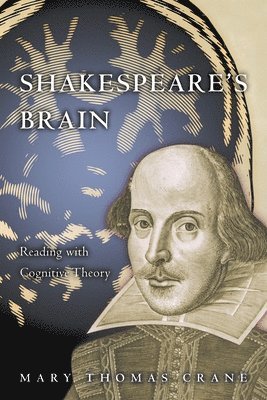
    Shakespeare's Brain

    Reading with Cognitive Theory

    AvMary Thomas Crane

    Häftad, Engelska, 2000

    626 kr

    Beställningsvara. Skickas inom 5-8 vardagar. Fri frakt över 249 kr.

    Fler format och utgåvor

    E-bok

    876 kr

    Beskrivning

    Here Mary Thomas Crane considers the brain as a site where body and culture meet to form the subject and its expression in language. Taking Shakespeare as her case study, she boldly demonstrates the explanatory power of cognitive theory--a theory which argues that language is produced by a reciprocal interaction of body and environment, brain and culture, and which refocuses attention on the role of the author in the making of meaning. Crane reveals in Shakespeare's texts a web of structures and categories through which meaning is created. The approach yields fresh insights into a wide range of his plays, including The Comedy of Errors, As You Like It, Twelfth Night, Hamlet, Measure for Measure, and The Tempest. Crane's cognitive reading traces the complex interactions of cultural and cognitive determinants of meaning as they play themselves out in Shakespeare's texts. She shows how each play centers on a word or words conveying multiple meanings (such as "act," "pinch," "pregnant," "villain and clown"), and how each cluster has been shaped by early modern ideological formations.The book also chronicles the playwright's developing response to the material conditions of subject formation in early modern England. Crane reveals that Shakespeare in his comedies first explored the social spaces within which the subject is formed, such as the home, class hierarchy, and romantic courtship. His later plays reveal a greater preoccupation with how the self is formed within the body, as the embodied mind seeks to make sense of and negotiate its physical and social environment.

    Produktinformation

    • Utgivningsdatum:2000-11-05
    • Mått:152 x 235 x 19 mm
    • Vikt:363 g
    • Format:Häftad
    • Språk:Engelska
    • Antal sidor:288
    • Förlag:Princeton University Press
    • ISBN:9780691069920

    Utforska kategorier

    • Litteraturvetenskap inom Skönlitteratur
    • Kognitiv psykologi inom Psykologi och pedagogik

    Mer om författaren

    Mary Thomas Crane is Associate Professor of English at Boston College. She is the author of Framing Authority: Sayings, Self, and Society in Sixteenth-Century England (Princeton) and coeditor, with Amy Boesky, of Form and Reform in Renaissance England: Essays in Honor of Barbara Kiefer Lewalski.

    Recensioner i media

    "Shakespeare's Brain will inevitably be described as a 'cognitive' analysis because it pays attention to cognitive aspects of meaning, but it is no less 'historical,' 'theoretical,' and 'nterpretive'. The book gives rich treatments of the historical aspects of the plays and their production, the history of criticism, and literary theory. To this richness it adds the embodied mind of the writer writing, and the ways in which the plays investigate what is involved in conceiving of oneself as an embodied mind. Shakespeare's Brain offers old wine (Shakespeare) in new bottles (cognitive science), giving us not only a picture of the future of cognitive literary study but also some valuable new interpretations of the plays."—Mark Turner, University of Maryland

    Innehållsförteckning

    • Acknowledgments ix Introduction Shakespeare's Brain: Embodying the Author-Function 3 Chapter 1 No Space Like Home: The Comedy of Errors 36 Chapter 2 Theatrical Practice and the Ideologies of Status in As You Like It 67 Chapter 3 Twelfth Night: Suitable Suits and the Cognitive Space Between 94 Chapter 4 Cognitive Hamlet and the Name of Action 116 Chapter 5 Male Pregnancy and Cognitive Permeability in Measure for Measure 156 Chapter 6 Sound and Space in The Tempest 178 Notes 211 Index 257