• Fri frakt över 249 kr
  • •
  • Snabba leveranser
  • •
  • Billiga böcker
Kundservice

Du är på sajten för privatpersoner.

Företag, bibliotek eller offentlig verksamhet?

Du handlar på classic.bokus.com, där alla dina funktioner finns intakta.
Till classic.bokus.com
Bokus logotyp. Gå till startsidan.
  • Erbjudanden
  • Nyheter
  • Student
  • Topplistor
  • Barn & ungdom
  • Bokus Play
  • E-böcker
  • Pocketböcker
  • Spel & pussel

10% rabatt på allt med kod NYSTART10 →

Sidfot

Mina sidor

    Hjälp

    • Kundservice
    • Vanliga frågor och svar
    • Frakt och leverans
    • Retur vid ångerrätt
    • Reklamera vara
    • Betalning
    • Köpvillkor
    • Allmänna villkor
    • Information om webbplatsens tillgänglighet

    Om Bokus

    • Om oss
    • Pressrum
    • För studenter
    • För företag
    • För bibliotek och offentlig verksamhet
    • För leverantörer
    • Hållbarhet

    Populärt

    • Aktuella erbjudanden
    • Presentkort
    • Studentlitteratur
    • Nya böcker
    • Topplistor
    • Signerade böcker
    • Engelska böcker

    Inspiration

    • Boktips
    • BookTok
    • Populära bokserier
    • Barnbokskaraktärer
    • Populära författare
    Logotyp för Bokus
    Följ oss på Facebook (extern länk)Följ oss på Instagram (extern länk)Följ oss på YouTube (extern länk)Följ oss på TikTok (extern länk)
    bokus @ CookiesAnpassa cookiesIntegritetspolicyKöpvillkor
    Till Citymail hemsida (extern länk)Till Budbee hemsida (extern länk)Till Postnord hemsida (extern länk)Till Schenker hemsida (extern länk)Till Early Bird hemsida (extern länk)Till Walleys hemsida (extern länk)
    1. Ekonomi och Ledarskap
    2. Nationalekonomi

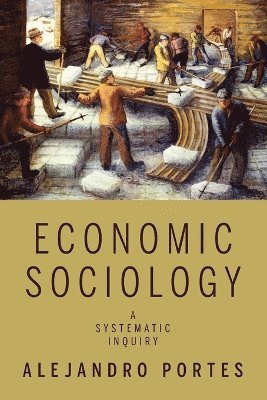
    Economic Sociology

    A Systematic Inquiry

    AvAlejandro Portes

    Häftad, Engelska, 2010

    559 kr

    Beställningsvara. Skickas inom 5-8 vardagar. Fri frakt över 249 kr.

    Fler format och utgåvor

    E-bok

    582 kr

    Beskrivning

    The sociological study of economic activity has witnessed a significant resurgence. Recent texts have chronicled economic sociology's nineteenth-century origins while pointing to the importance of context and power in economic life, yet the field lacks a clear understanding of the role that concepts at different levels of abstraction play in its organization. Economic Sociology fills this critical gap by surveying the current state of the field while advancing a framework for further theoretical development. Alejandro Portes examines economic sociology's principal assumptions, key explanatory concepts, and selected research sites. He argues that economic activity is embedded in social and cultural relations, but also that power and the unintended consequences of rational purposive action must be factored in when seeking to explain or predict economic behavior. Drawing upon a wealth of examples, Portes identifies three strategic sites of research--the informal economy, ethnic enclaves, and transnational communities--and he eschews grand narratives in favor of mid-range theories that help us understand specific kinds of social action.The book shows how the meta-assumptions of economic sociology can be transformed, under certain conditions, into testable propositions, and puts forward a theoretical agenda aimed at moving the field out of its present impasse.

    Produktinformation

    • Utgivningsdatum:2010-05-09
    • Mått:152 x 235 x 22 mm
    • Vikt:522 g
    • Format:Häftad
    • Språk:Engelska
    • Antal sidor:320
    • Förlag:Princeton University Press
    • ISBN:9780691142234
    • Utmärkelser:Short-listed for Choice Magazine Outstanding Reference/Academic Book Award 2010

    Utforska kategorier

    • Nationalekonomi inom Ekonomi och Ledarskap
    • Sociologi inom Samhälle och politik

    Mer om författaren

    Alejandro Portes is the Howard Harrison and Gabrielle Snyder Beck Professor of Sociology at Princeton University. His books include "Legacies: The Story of the Immigrant Second Generation".

    Recensioner i media

    One of Choice's Outstanding Academic Titles for 2010 "A pioneer in economic sociology, Portes presents one of the best systematic efforts in the burgeoning attempt to bring sociological inquiry to economic studies. Though economic sociologists are more than likely to be already familiar with Portes's work, the author's emphasis on theory accumulation, or 'usable theory,' as proposed by Dietrich Rueschemeyer, makes this book exceptional... An exemplary combination of theoretical sophistication and methodological rigor, Portes's book is a must read for all economic sociologists."--Choice "Portes has written a fine book that presents a good case for the sociological perspective of economic processes and outcomes."--Eric Cheney, Journal of Sociology & Social Welfare "[T]he book can be fruitfully used as student's handbook to teach economic sociology, comparative political economy and sociology of development."--Filippo Barbera, Sociologica "I would ... recommend Portesian sociology to anyone needing an intelligent, lucid and thought-provoking vision of what 'middle range' theory might offer economic sociology beyond the preoccupation with 'embeddedness.'"--Patrick McGovern, British Journal of Sociology "Economic Sociology represents a positive step away from the assumptions about formal rationality and maximizing of subjective utility dominant in certain social science areas influenced by mainstream economics, and widens the scope for future research on the interaction between social forces and economic processes."--Rafael Khachaturian, Science and Society

    Innehållsförteckning

    • List of Figures and Tables ix Preface xi Chapter One: Economic Sociology: Past Achievements and Present Challenges 1 Chapter Two: The Assumptions That Ground the Field 10 Chapter Three: Social Capital 27 Chapter Four: The Concept of Institutions 48 Chapter Five: The Concept of Social Class 71 Chapter Six: Social Class (Continued) 101 Chapter Seven: The Informal Economy 130 Chapter Eight: Ethnic Enclaves and Middleman Minorities 162 Chapter Nine: Transnational Communities 195 Chapter Ten: Markets, Models, and Regulation 220 Notes 237 Bibliography 261 Index 291