• Fri frakt över 249 kr
  • •
  • Snabba leveranser
  • •
  • Billiga böcker
Kundservice

Du är på sajten för privatpersoner.

Företag, bibliotek eller offentlig verksamhet?

Du handlar på classic.bokus.com, där alla dina funktioner finns intakta.
Till classic.bokus.com
Bokus logotyp. Gå till startsidan.
  • Erbjudanden
  • Nyheter
  • Student
  • Topplistor
  • Barn & ungdom
  • Bokus Play
  • E-böcker
  • Pocketböcker
  • Spel & pussel

10% rabatt på allt med kod: NYSTART10 →

Sidfot

Mina sidor

    Hjälp

    • Kundservice
    • Vanliga frågor och svar
    • Frakt och leverans
    • Retur vid ångerrätt
    • Reklamera vara
    • Betalning
    • Köpvillkor
    • Allmänna villkor
    • Information om webbplatsens tillgänglighet

    Om Bokus

    • Om oss
    • Pressrum
    • För studenter
    • För företag
    • För bibliotek och offentlig verksamhet
    • För leverantörer
    • Hållbarhet

    Populärt

    • Aktuella erbjudanden
    • Presentkort
    • Studentlitteratur
    • Nya böcker
    • Topplistor
    • Signerade böcker
    • Engelska böcker

    Inspiration

    • Boktips
    • BookTok
    • Populära bokserier
    • Barnbokskaraktärer
    • Populära författare
    Logotyp för Bokus
    Följ oss på Facebook (extern länk)Följ oss på Instagram (extern länk)Följ oss på YouTube (extern länk)Följ oss på TikTok (extern länk)
    bokus @ CookiesAnpassa cookiesIntegritetspolicyKöpvillkor
    Till Citymail hemsida (extern länk)Till Budbee hemsida (extern länk)Till Postnord hemsida (extern länk)Till Schenker hemsida (extern länk)Till Early Bird hemsida (extern länk)Till Walleys hemsida (extern länk)
    1. Historia och arkeologi
    2. Arkeologi
    3. Arkeologiska perioder och områden

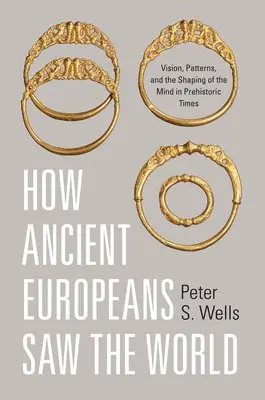
    How Ancient Europeans Saw the World

    Vision, Patterns, and the Shaping of the Mind in Prehistoric Times

    AvPeter S. Wells

    Inbunden, Engelska, 2012

    470 kr

    Beställningsvara. Skickas inom 5-8 vardagar. Fri frakt över 249 kr.

    Fler format och utgåvor

    Häftad

    259 kr

    E-bok

    642 kr

    Beskrivning

    The peoples who inhabited Europe during the two millennia before the Roman conquests had established urban centers, large-scale production of goods such as pottery and iron tools, a money economy, and elaborate rituals and ceremonies. Yet as Peter Wells argues here, the visual world of these late prehistoric communities was profoundly different from those of ancient Rome's literate civilization and today's industrialized societies. Drawing on startling new research in neuroscience and cognitive psychology, Wells reconstructs how the peoples of pre-Roman Europe saw the world and their place in it. He sheds new light on how they communicated their thoughts, feelings, and visual perceptions through the everyday tools they shaped, the pottery and metal ornaments they decorated, and the arrangements of objects they made in their ritual places--and how these forms and patterns in turn shaped their experience. How Ancient Europeans Saw the World offers a completely new approach to the study of Bronze Age and Iron Age Europe, and represents a major challenge to existing views about prehistoric cultures.The book demonstrates why we cannot interpret the structures that Europe's pre-Roman inhabitants built in the landscape, the ways they arranged their settlements and burial sites, or the complex patterning of their art on the basis of what these things look like to us. Rather, we must view these objects and visual patterns as they were meant to be seen by the ancient peoples who fashioned them.

    Produktinformation

    • Utgivningsdatum:2012-08-26
    • Mått:152 x 235 x 23 mm
    • Vikt:544 g
    • Format:Inbunden
    • Språk:Engelska
    • Antal sidor:304
    • Förlag:Princeton University Press
    • ISBN:9780691143385
    • Utmärkelser:Commended for PROSE Awards: Archeology & Anthropology 2012

    Utforska kategorier

    • Arkeologiska perioder och områden inom Historia och arkeologi

    Mer om författaren

    Peter S. Wells is professor of anthropology at the University of Minnesota. His many books include Barbarians to Angels: The Dark Ages Reconsidered and The Barbarians Speak: How the Conquered Peoples Shaped Roman Europe (Princeton).

    Recensioner i media

    Honorable Mention for the 2012 PROSE Award in Archeology & Anthropology, Association of American Publishers "[B]eautifully crisp and elegant... [Wells's] book deserves to be widely read and admired."--Peter Thonemann, Times Literary Supplement "With painstaking detail, Wells documents how objects tell the early European story, making a compelling case that historians ought to rethink the standard views."--Tom Siegfried, Science News "Archaeologist Wells takes a novel approach to exploring the way Bronze and Iron Age societies in Europe (2000BCE to 1CE) viewed themselves. Through analysing their artifacts, pottery, fibulae, swords and scabbards, and coins, as well as the arrangements of their graves and their public places, the author plausibly suggests that their views changed through time."--Choice "It is evident that Wells is constantly conscious of the fact that he is writing for a modem 'literate' person to who words are more important than visuals. He has explained every single object, without going on jargons. An interesting history of Europe."--R. Balashankar, Organiser "How Ancient Europeans Saw the World offers a completely new approach to the study of Bronze Age and Iron Age Europe, and represents a major challenge to existing views about prehistoric cultures."--World Book Industry "Wells presents thought-provoking ideas about Bronze Age and Iron Age Europeans. This book will stimulate further research on a very challenging topic, that is, the mindset of past populations. The extensive bibliography is very useful for archaeologists interested in this type of research."--Sarunas Milisauskas, Historian "This book is thought-provoking; its broad geographical scope is particularly relevant in this post-credit-crunch world where European integration is once more on the agenda."--Laura Slack, Time & Mind

    Innehållsförteckning

    • List of Illustrations vii Preface xi Acknowledgments xvii Part I: Theory and Method Chapter 1: Of Monsters and Flowers 1 Chapter 2: Seeing and Shaping Objects 18 Chapter 3: The Visual Worlds of Early Europe 34 Chapter 4: Frame, Focus, Visualization 52 Part II: Material: Objects and Arrangements Chapter 5: Pottery: The Visual Ecology of the Everyday 72 Chapter 6: Attraction and Enchantment: Fibulae 99 Chapter 7: Status and Violence: Swords and Scabbards 112 Chapter 8: Arranging Spaces: Objects in Graves 131 Chapter 9: Performances: Objects and Bodies in Motion 155 Chapter 10: New Media in the Late Iron Age: Coins and Writing 176 Part III: Interpreting the Patterns Chapter 11: Changing Patterns in Objects and in Perception 188 Chapter 12: Contacts, Commerce, and the Dynamics of New Visual Patterns 200 Conclusion Chapter 13: The Visuality of Objects, Past and Present 222 Bibliographic Essay 231 References Cited 249 Index 281