• Fri frakt över 249 kr
  • •
  • Snabba leveranser
  • •
  • Billiga böcker
Kundservice

Du är på sajten för privatpersoner.

Företag, bibliotek eller offentlig verksamhet?

Du handlar på classic.bokus.com, där alla dina funktioner finns intakta.
Till classic.bokus.com
Bokus logotyp. Gå till startsidan.
  • Erbjudanden
  • Nyheter
  • Student
  • Topplistor
  • Barn & ungdom
  • Bokus Play
  • E-böcker
  • Pocketböcker
  • Spel & pussel

Må bättre, för mindre! Upp till 50% rabatt på hälsoböcker

Sidfot

Mina sidor

    Hjälp

    • Kundservice
    • Vanliga frågor och svar
    • Frakt och leverans
    • Retur vid ångerrätt
    • Reklamera vara
    • Betalning
    • Köpvillkor
    • Allmänna villkor
    • Information om webbplatsens tillgänglighet

    Om Bokus

    • Om oss
    • Pressrum
    • För studenter
    • För företag
    • För bibliotek och offentlig verksamhet
    • För leverantörer
    • Hållbarhet

    Populärt

    • Aktuella erbjudanden
    • Presentkort
    • Studentlitteratur
    • Nya böcker
    • Topplistor
    • Signerade böcker
    • Engelska böcker

    Inspiration

    • Boktips
    • BookTok
    • Populära bokserier
    • Barnbokskaraktärer
    • Populära författare
    Logotyp för Bokus
    Följ oss på Facebook (extern länk)Följ oss på Instagram (extern länk)Följ oss på YouTube (extern länk)Följ oss på TikTok (extern länk)
    bokus @ CookiesAnpassa cookiesIntegritetspolicyKöpvillkor
    Till Citymail hemsida (extern länk)Till Budbee hemsida (extern länk)Till Postnord hemsida (extern länk)Till Schenker hemsida (extern länk)Till Early Bird hemsida (extern länk)Till Walleys hemsida (extern länk)
    1. Ekonomi och Ledarskap
    2. Nationalekonomi
    3. Ekonomisk historia

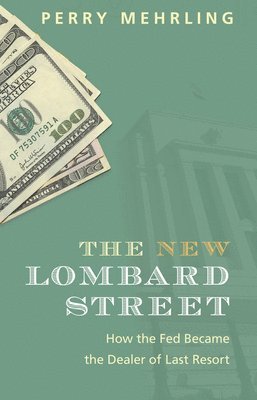
    New Lombard Street

    How the Fed Became the Dealer of Last Resort

    AvPerry Mehrling

    Inbunden, Engelska, 2010

    453 kr

    Beställningsvara. Skickas inom 5-8 vardagar. Fri frakt över 249 kr.

    Fler format och utgåvor

    Häftad

    360 kr

    E-bok

    498 kr

    Beskrivning

    Walter Bagehot's Lombard Street, published in 1873 in the wake of a devastating London bank collapse, explained in clear and straightforward terms why central banks must serve as the lender of last resort to ensure liquidity in a faltering credit system. Bagehot's book set down the principles that helped define the role of modern central banks, particularly in times of crisis--but the recent global financial meltdown has posed unforeseen challenges. The New Lombard Street lays out the innovative principles needed to address the instability of today's markets and to rebuild our financial system. Revealing how we arrived at the current crisis, Perry Mehrling traces the evolution of ideas and institutions in the American banking system since the establishment of the Federal Reserve in 1913. He explains how the Fed took classic central banking wisdom from Britain and Europe and adapted it to America's unique and considerably more volatile financial conditions. Mehrling demonstrates how the Fed increasingly found itself serving as the dealer of last resort to ensure the liquidity of securities markets--most dramatically amid the recent financial crisis.Now, as fallout from the crisis forces the Fed to adapt in unprecedented ways, new principles are needed to guide it. In The New Lombard Street, Mehrling persuasively argues for a return to the classic central bankers' "money view," which looks to the money market to assess risk and restore faith in our financial system.

    Produktinformation

    • Utgivningsdatum:2010-11-28
    • Mått:142 x 216 x 23 mm
    • Vikt:363 g
    • Format:Inbunden
    • Språk:Engelska
    • Antal sidor:192
    • Förlag:Princeton University Press
    • ISBN:9780691143989

    Utforska kategorier

    • Ekonomisk historia inom Ekonomi och Ledarskap
    • Finansiering inom Ekonomi och Ledarskap

    Mer om författaren

    Perry Mehrling is professor of economics at Barnard College, Columbia University. He is the author of "Fischer Black and the Revolutionary Idea of Finance" and "The Money Interest and the Public Interest: American Monetary Thought, 1920-1970".

    Recensioner i media

    "A well-written, scholarly dissection that should be required reading for all graduate courses (and perhaps some advanced undergraduate) in macroeconomics or monetary economics."--Choice "With lucid precision, Mehrling traces the history of how Fed policy makers became biased toward 'excessive elasticity'... Mehrling saves the best for the end, where he describes the Fed's battle to save the system with an alphabet soup of lending programs."--James Pressley, Bloomberg News "I continue to ponder Mehrling's main claims, but in any case this is an important book about the new Fed."--Tyler Cowen, Marginal Revolution "In The New Lombard Street, Perry Mehrling ... provides a lucid account of how the system worked when it was working--and of the growing role assumed by the Fed in an era of global economic volatility and 'credit-fueled bubbles.'"--Glenn C. Altschuler, Tulsa World "[A] fantastic book."--Rortybomb, Mike Konczal blog "[I]mportant... Mehrling's new book tries to do just what Bagehot did: to give an account both of how and why the Fed acted when it reinvented the rules in the middle of a financial crisis, and of what the implications for future monetary policy will be."--Harold James, Central Banking Journal "This is an excellent and accessible analysis for anyone wishing to understand the origins of the financial crisis and how the Fed came to respond as it did."--Larry Hatheway, Business Economist "[T]he book can be read as an important contribution in the ongoing debate on the future of central banks. In terms of monetary policy thinking, this book is another contribution to the increasing awareness that central banks, perhaps lured by seeming success of inflation targeting, in the years before 2008 did not manage to strike the right balance between monetary and financial stability."--Lars Fredrik Oksendal, Enterprise & Society

    Innehållsförteckning

    • Acknowledgments xi Introduction 1 A Money View Perspective 2 Lessons from the Crisis 6 Chapter One: Lombard Street, Old and New 11 The Inherent Instability of Credit 12 The Old Lombard Street 18 The New Lombard Street 23 Chapter Two: Origins of the Present System 30 From National Banking to the Fed 30 From War Finance to Catastrophe 37 Noncommercial Credit in Depression and War 43 Chapter Three: The Age of Management 48 Monetary Policy and the Employment Act 52 Listening to the Academics 57 Monetary Walrasianism 60 A Dissenting View 65 Chapter Four: The Art of the Swap 71 Currency Swaps and the UIP Norm 72 Brave New World 79 From Modern Finance to Modern Macroeconomics 85 Chapter Five: What Do Dealers Do? 92 Inside the Money Market 93 Funding Liquidity and Market Liquidity 98 Anatomy of a Crisis 103 Monetary Policy 107 Chapter Six: Learning from the Crisis 113 The Long Shadow of Jimmy Stewart 116 A Stress Test of Moulton-Martin 123 Dealer of Last Resort 132 Conclusion 136 Notes 141 References 149 Index 159