• Fri frakt över 249 kr
  • •
  • Snabba leveranser
  • •
  • Billiga böcker
Kundservice

Du är på sajten för privatpersoner.

Företag, bibliotek eller offentlig verksamhet?

Du handlar på classic.bokus.com, där alla dina funktioner finns intakta.
Till classic.bokus.com
Bokus logotyp. Gå till startsidan.
  • Erbjudanden
  • Nyheter
  • Student
  • Topplistor
  • Barn & ungdom
  • Bokus Play
  • E-böcker
  • Pocketböcker
  • Spel & pussel

10% rabatt på allt med kod: NYSTART10 →

Sidfot

Mina sidor

    Hjälp

    • Kundservice
    • Vanliga frågor och svar
    • Frakt och leverans
    • Retur vid ångerrätt
    • Reklamera vara
    • Betalning
    • Köpvillkor
    • Allmänna villkor
    • Information om webbplatsens tillgänglighet

    Om Bokus

    • Om oss
    • Pressrum
    • För studenter
    • För företag
    • För bibliotek och offentlig verksamhet
    • För leverantörer
    • Hållbarhet

    Populärt

    • Aktuella erbjudanden
    • Presentkort
    • Studentlitteratur
    • Nya böcker
    • Topplistor
    • Signerade böcker
    • Engelska böcker

    Inspiration

    • Boktips
    • BookTok
    • Populära bokserier
    • Barnbokskaraktärer
    • Populära författare
    Logotyp för Bokus
    Följ oss på Facebook (extern länk)Följ oss på Instagram (extern länk)Följ oss på YouTube (extern länk)Följ oss på TikTok (extern länk)
    bokus @ CookiesAnpassa cookiesIntegritetspolicyKöpvillkor
    Till Citymail hemsida (extern länk)Till Budbee hemsida (extern länk)Till Postnord hemsida (extern länk)Till Schenker hemsida (extern länk)Till Early Bird hemsida (extern länk)Till Walleys hemsida (extern länk)
    1. Psykologi och pedagogik
    2. Psykologi
    3. Socialpsykologi och gruppsykologi

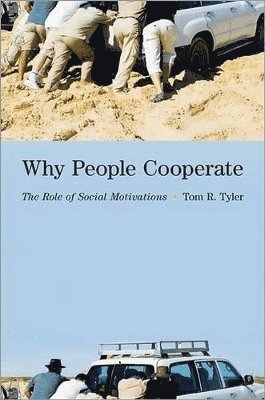
    Why People Cooperate

    The Role of Social Motivations

    AvTom R. Tyler

    Häftad, Engelska, 2013

    300 kr

    Beställningsvara. Skickas inom 5-8 vardagar. Fri frakt över 249 kr.

    Fler format och utgåvor

    E-bok

    403 kr

    Beskrivning

    Any organization's success depends upon the voluntary cooperation of its members. But what motivates people to cooperate? In Why People Cooperate, Tom Tyler challenges the decades-old notion that individuals within groups are primarily motivated by their self-interest. Instead, he demonstrates that human behaviors are influenced by shared attitudes, values, and identities that reflect social connections rather than material interests. Tyler examines employee cooperation in work organizations, resident cooperation with legal authorities responsible for social order in neighborhoods, and citizen cooperation with governmental authorities in political communities. He demonstrates that the main factors for achieving cooperation are socially driven, rather than instrumentally based on incentives or sanctions. Because of this, social motivations are critical when authorities attempt to secure voluntary cooperation from group members.Tyler also explains that two related aspects of group practices--the use of fair procedures when exercising authority and the belief by group members that authorities are benevolent and sincere--are crucial to the development of the attitudes, values, and identities that underlie cooperation. With widespread implications for the management of organizations, community regulation, and governance, Why People Cooperate illustrates the vital role that voluntary cooperation plays in the long-standing viability of groups.

    Produktinformation

    • Utgivningsdatum:2013-02-24
    • Mått:152 x 235 x 17 mm
    • Vikt:363 g
    • Format:Häftad
    • Språk:Engelska
    • Antal sidor:232
    • Förlag:Princeton University Press
    • ISBN:9780691158006
    • Utmärkelser:Short-listed for Choice Magazine Outstanding Reference/Academic Book Award 2011

    Utforska kategorier

    • Socialpsykologi och gruppsykologi inom Psykologi och pedagogik
    • Sociala och etiska frågor inom Samhälle och politik
    • Arbetspsykologi inom Psykologi och pedagogik

    Mer om författaren

    Tom R. Tyler is the Macklin Fleming Professor of Law and Professor of Psychology at Yale Law School.

    Recensioner i media

    One of Choice's Outstanding Academic Titles for 2011: Top 25 Books "I am a fan of Tyler's approach... [H]e supports his theoretical approach by clear and rigorous research rather than the polemic that all too often substitutes for thought in criminology... [H]e demonstrates the paucity of the view that human action is pushed and pulled by the lures of rewards and threats of penalties... [H]e focuses not on the supposed outcomes of policing (such as crime rates), but upon how policing is conducted."--P.A.J. Waddington, Policing "One of the clear strengths of Why People Cooperate is its applicability to a variety of disciplines. Certainly, social psychologists and some political scientists with an empirical bent will want to read this book because it offers new ways to explore interactions and exchanges within groups. Industrial/organizational psychologists and researchers in management science, too, will readily see the applicability of Tyler's persuasive evidence... Researchers interested in social policies... are also likely to find grist for their respective mills in this brief but rich book."--Dana S. Dunn, PsycCRITIQUES: Contemporary Psychology: APA Review Of Books "[T]he book is well written, the ideas are presented clearly and the arguments are empirically grounded. Professor Tyler not only captures the reader's attention, but also manages to change his/her mind about the topic. The book is highly recommended to researchers, academics, professionals and even laypeople interested in the topic."--Francesc S. Beltran, Journal of Artificial Societies Social Simulation "With innovative analyses throughout Why People Cooperate: The Role of Social Motivations, Tom Tyler offers the foundation for participation based in social relationships. Numerous recent studies are cited that build his assertions and provide documented results for motivating cooperation within a variety of group settings."--Paula Tripp, Journal of Family and Consumer Sciences "Summing up, Tom Tyler's book provides a very useful framework for defining and describing various types of cooperation, provides a compelling empirical analysis of instrumental and social motivations that underlie cooperative behavior, and draws out the implications of these findings for organizational design."--Timothy R. Wojan, Journal of Regional Science

    Innehållsförteckning

    • List of Illustrations vii Acknowledgments ix Overview 1 Section One: Introduction 9 CHAPTER ONE: Why Do People Cooperate? 11 CHAPTER TWO: Motivational Models 27 Section Two: Empirical Findings 49 CHAPTER THREE: Cooperation with Managerial Authorities in Work Settings 51 CHAPTER FOUR: Cooperation with Legal Authorities in Local Communities 66 CHAPTER FIVE: Cooperation with Political Authorities 81 Section Three: Implications 91 CHAPTER SIX: The Psychology of Cooperation 93 CHAPTER SEVEN: Implications 108 CHAPTER EIGHT: Self-regulation as a General Model 146 Conclusion 167 Notes 169 References 187 Index 209