• Fri frakt över 249 kr
  • •
  • Snabba leveranser
  • •
  • Billiga böcker
Kundservice

Du är på sajten för privatpersoner.

Företag, bibliotek eller offentlig verksamhet?

Du handlar på classic.bokus.com, där alla dina funktioner finns intakta.
Till classic.bokus.com
Bokus logotyp. Gå till startsidan.
  • Erbjudanden
  • Nyheter
  • Student
  • Topplistor
  • Barn & ungdom
  • Bokus Play
  • E-böcker
  • Pocketböcker
  • Spel & pussel

10% rabatt på allt med kod NYSTART10 →

Sidfot

Mina sidor

    Hjälp

    • Kundservice
    • Vanliga frågor och svar
    • Frakt och leverans
    • Retur vid ångerrätt
    • Reklamera vara
    • Betalning
    • Köpvillkor
    • Allmänna villkor
    • Information om webbplatsens tillgänglighet

    Om Bokus

    • Om oss
    • Pressrum
    • För studenter
    • För företag
    • För bibliotek och offentlig verksamhet
    • För leverantörer
    • Hållbarhet

    Populärt

    • Aktuella erbjudanden
    • Presentkort
    • Studentlitteratur
    • Nya böcker
    • Topplistor
    • Signerade böcker
    • Engelska böcker

    Inspiration

    • Boktips
    • BookTok
    • Populära bokserier
    • Barnbokskaraktärer
    • Populära författare
    Logotyp för Bokus
    Följ oss på Facebook (extern länk)Följ oss på Instagram (extern länk)Följ oss på YouTube (extern länk)Följ oss på TikTok (extern länk)
    bokus @ CookiesAnpassa cookiesIntegritetspolicyKöpvillkor
    Till Citymail hemsida (extern länk)Till Budbee hemsida (extern länk)Till Postnord hemsida (extern länk)Till Schenker hemsida (extern länk)Till Early Bird hemsida (extern länk)Till Walleys hemsida (extern länk)
    1. Ekonomi och Ledarskap
    2. Företagsekonomi
    3. Redovisning och finansiering
    4. Finansiering

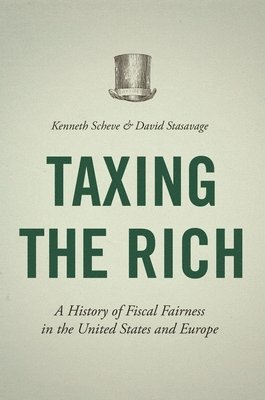
    Taxing the Rich

    A History of Fiscal Fairness in the United States and Europe

    AvKenneth Scheve,David Stasavage

    Inbunden, Engelska, 2016

    318 kr

    Beställningsvara. Skickas inom 11-20 vardagar. Fri frakt över 249 kr.

    Fler format och utgåvor

    Häftad

    202 kr

    Beskrivning

    In today's social climate of acknowledged and growing inequality, why are there not greater efforts to tax the rich? In this wide-ranging and provocative book, Kenneth Scheve and David Stasavage ask when and why countries tax their wealthiest citizens--and their answers may surprise you. Taxing the Rich draws on unparalleled evidence from twenty countries over the last two centuries to provide the broadest and most in-depth history of progressive taxation available. Scheve and Stasavage explore the intellectual and political debates surrounding the taxation of the wealthy while also providing the most detailed examination to date of when taxes have been levied against the rich and when they haven't. Fairness in debates about taxing the rich has depended on different views of what it means to treat people as equals and whether taxing the rich advances or undermines this norm. Scheve and Stasavage argue that governments don't tax the rich just because inequality is high or rising--they do it when people believe that such taxes compensate for the state unfairly privileging the wealthy.Progressive taxation saw its heyday in the twentieth century, when compensatory arguments for taxing the rich focused on unequal sacrifice in mass warfare. Today, as technology gives rise to wars of more limited mobilization, such arguments are no longer persuasive. Taxing the Rich shows how the future of tax reform will depend on whether political and economic conditions allow for new compensatory arguments to be made.

    Produktinformation

    • Utgivningsdatum:2016-03-29
    • Mått:152 x 235 x 27 mm
    • Vikt:567 g
    • Format:Inbunden
    • Språk:Engelska
    • Antal sidor:288
    • Förlag:Princeton University Press
    • ISBN:9780691165455

    Utforska kategorier

    • Finansiering inom Ekonomi och Ledarskap
    • Diskriminering och rättvisa inom Samhälle och politik

    Mer om författaren

    Kenneth Scheve is professor of political science and senior fellow at the Freeman Spogli Institute for International Studies at Stanford University. He is the coauthor of Globalization and the Perceptions of American Workers. David Stasavage is Julius Silver Professor in the Wilf Family Department of Politics at New York University. He is the author of States of Credit: Size, Power, and the Development of European Polities (Princeton).

    Recensioner i media

    One of Bloomberg's Best Books of 2016 "These findings run counter to a popular narrative. Recall that in 2012, Mitt Romney said that in a democracy, a candidate who offers tax breaks to the less well-off at the expense of the rich will win mass support 'no matter what.' That claim does not appear to be supported by the historical record."--Robert J. Shiller, New York Times "In its big picture argument the book is convincing: on both the correlation and nature of causality between wars that required the mass of working people to sacrifice not just their labour but also their lives; and on the imposition of higher tax rates on the rich in the 20th century."--Torsten Bell, Prospect "A sweeping look at the history of levies on the wealthy."--Hugo Greenhalgh, Financial Times "[Scheve and Stasavage] flesh out their big picture with a mass of compelling evidence. Overall, an outstanding book."--Bryan Caplan, EconLog "What is surprising about this book is how robustly the authors discount other widely held explanations for the gradual reduction in tax paid by the richest 1% since 1980. The influence of political lobbying, liberalised capital flows and the breakdown of the postwar consensus are, in their view, inadequate answers. What has changed is the focus of 'equality of sacrifice,' which has returned to a debate about fairness."--Zac Tate, Capx "Apart from anything else, the historical data on top tax rates is fascinating."--Diane Coyle, Enlightened Economist "[A] fine and stimulating book."--Financial Post "More than any other book I've read in the past few years, their arguments have prompted me to review what they wrote and look for other research that supports or counters their points."--David Cay Johnston, Tax Notes "The authors make the force of the compensatory view clear. Judging by the apparent success of the rhetoric during the 2016 U.S. presidential primaries that speaks of a system rigged to favor the rich, the compensatory theory has not gone unnoticed by political strategists."--Michael Keen, Finance & Development Magazine "[A] fine model of social science research."--Richard Cooper, Foreign Affairs "Taxing the Richexplains why the problems of America's poor and angry are unlikely to be solved by redistributive taxation."--Angus Deaton, Bloomberg

    Innehållsförteckning

    • Figures and Tables xi Acknowledgments xiii PART ONE -DEBATING TAXATION 1. Why Might Governments Tax the Rich? 3 2. Treating Citizens as Equals 24 PART TWO -WHEN HAVE GOVERNMENTS TAXED THE RICH? 3. The Income Tax over Two Centuries 53 4. Taxing Inheritance 93 5. Taxes on the Rich in Context 114 PART THREE -WHY HAVE GOVERNMENTS TAXED THE RICH? 6. The Conscription of Wealth 135 7. The Role of War Technology 170 8. Why Taxes on the Rich Declined 185 9. What Future for Taxing the Rich? 206 Notes 219 References 247 Index 261