• Fri frakt över 249 kr
  • •
  • Snabba leveranser
  • •
  • Billiga böcker
Kundservice

Du är på sajten för privatpersoner.

Företag, bibliotek eller offentlig verksamhet?

Du handlar på classic.bokus.com, där alla dina funktioner finns intakta.
Till classic.bokus.com
Bokus logotyp. Gå till startsidan.
  • Erbjudanden
  • Nyheter
  • Student
  • Topplistor
  • Barn & ungdom
  • Bokus Play
  • E-böcker
  • Pocketböcker
  • Spel & pussel

Upp till 20% på populära nyheter →

Sidfot

Mina sidor

    Hjälp

    • Kundservice
    • Vanliga frågor och svar
    • Frakt och leverans
    • Retur vid ångerrätt
    • Reklamera vara
    • Betalning
    • Köpvillkor
    • Allmänna villkor
    • Information om webbplatsens tillgänglighet

    Om Bokus

    • Om oss
    • Pressrum
    • För studenter
    • För företag
    • För bibliotek och offentlig verksamhet
    • För leverantörer
    • Hållbarhet

    Populärt

    • Aktuella erbjudanden
    • Presentkort
    • Studentlitteratur
    • Nya böcker
    • Topplistor
    • Signerade böcker
    • Engelska böcker

    Inspiration

    • Boktips
    • BookTok
    • Populära bokserier
    • Barnbokskaraktärer
    • Populära författare

    Mina sidor

      Hjälp

      • Kundservice
      • Vanliga frågor och svar
      • Frakt och leverans
      • Retur vid ångerrätt
      • Reklamera vara
      • Betalning
      • Köpvillkor
      • Allmänna villkor
      • Information om webbplatsens tillgänglighet

      Om Bokus

      • Om oss
      • Pressrum
      • För studenter
      • För företag
      • För bibliotek och offentlig verksamhet
      • För leverantörer
      • Hållbarhet

      Populärt

      • Aktuella erbjudanden
      • Presentkort
      • Studentlitteratur
      • Nya böcker
      • Topplistor
      • Signerade böcker
      • Engelska böcker

      Inspiration

      • Boktips
      • BookTok
      • Populära bokserier
      • Barnbokskaraktärer
      • Populära författare
      Logotyp för Bokus
      Följ oss på Facebook (extern länk)Följ oss på Instagram (extern länk)Följ oss på YouTube (extern länk)Följ oss på TikTok (extern länk)
      bokus @ CookiesIntegritetspolicyKöpvillkor
      Till Citymail hemsida (extern länk)Till Budbee hemsida (extern länk)Till Postnord hemsida (extern länk)Till Schenker hemsida (extern länk)Till Early Bird hemsida (extern länk)Till Walleys hemsida (extern länk)
      1. Ekonomi och Ledarskap
      2. Nationalekonomi

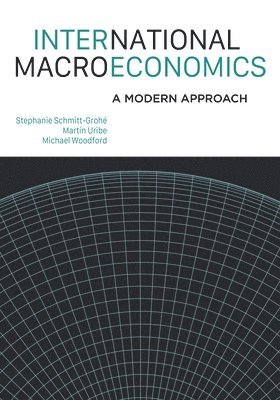
      International Macroeconomics

      A Modern Approach

      AvStephanie Schmitt-Grohé,Martín Uribe

      Inbunden, Engelska, 2022

      895 kr

      Beställningsvara. Skickas inom 5-8 vardagar. Fri frakt över 249 kr.

      Beskrivning

      An essential introduction to one of the most timely and important subjects in economicsInternational Macroeconomics presents a rigorous and theoretically elegant treatment of real-world international macroeconomic problems, incorporating the latest economic research while maintaining a microfounded, optimizing, and dynamic general equilibrium approach. This one-of-a-kind textbook introduces a basic model and applies it to fundamental questions in international economics, including the determinants of the current account in small and large economies, processes of adjustment to shocks, the determinants of the real exchange rate, the role of fixed and flexible exchange rates in models with nominal rigidities, and interactions between monetary and fiscal policy. The book confronts theoretical predictions using actual data, highlighting both the power and limits of given theories and encouraging critical thinking.Provides a rigorous and elegant treatment of fundamental questions in international macroeconomicsBrings undergraduate and master’s instruction in line with modern economic researchFollows a microfounded, optimizing, and dynamic general equilibrium approachAddresses fundamental questions in international economics, such as the role of capital controls in the presence of financial frictions and balance-of-payments crisesUses real-world data to test the predictions of theoretical modelsFeatures a wealth of exercises at the end of each chapter that challenge students to hone their theoretical skills and scrutinize the empirical relevance of modelsAccompanied by a website with lecture slides for every chapter

      Produktinformation

      • Utgivningsdatum:2022-09-06
      • Mått:183 x 257 x 33 mm
      • Vikt:1 158 g
      • Format:Inbunden
      • Språk:Engelska
      • Antal sidor:482
      • Förlag:Princeton University Press
      • ISBN:9780691170640

      Utforska kategorier

      • Nationalekonomi inom Ekonomi och Ledarskap
      • Internationell ekonomi inom Ekonomi och Ledarskap
      • Ekonomisk politik inom Ekonomi och Ledarskap

      Mer om författaren

      Stephanie Schmitt-Grohé is professor of economics at Columbia University. Martín Uribe is professor of economics at Columbia and the coauthor (with Stephanie Schmitt-Grohé) of Open Economy Macroeconomics (Princeton). Michael Woodford is the John Bates Clark Professor of Political Economy at Columbia and the author of Interest and Prices: Foundations of a Theory of Monetary Policy (Princeton).

      Innehållsförteckning

      • PrefaceCHAPTER 1 Global Imbalances1.1 The Balance of Payments1.2 The Trade Balance and the Current Account1.3 The Trade Balance and the Current Account across Countries1.4 Imbalances in U.S. Trade with China1.5 The Current Account and the Net International Investment Position1.6 Valuation Changes and the Net International Investment Position1.6.1 Examples of Valuation Changes1.6.2 Valuation Changes in the United States1.6.3 A Hypothetical NIIP That Excludes Valuation Changes1.7 The NIIP—NIIParadox1.7.1 Dark Matter1.7.2 Return Differentials1.7.3 The Flip Side of the NIIP—NII Paradox1.8 Summing Up1.9 Exercisessection.1.9PART I Determinants of the Current AccountCHAPTER 2 Current Account Sustainability2.1 Can a Country Run a Perpetual Trade Balance Deficit?2.2 Can a Country Run a Perpetual Current Account Deficit?2.3 Saving, Investment, and the Current Account2.3.1 The Current Account as the Gap between Saving and Investment2.3.2 The Current Account as the Gap between National Income and Domestic Absorption2.4 Appendix: Perpetual Trade Balance and Current Account Deficits in Infinite Horizon Economies2.5 Summing Up2.6 ExercisesCHAPTER 3 An Intertemporal Theory of the Current Account3.1 The Intertemporal Budget Constraint3.2 The Lifetime Utility Function3.3 The Optimal Intertemporal Allocation of Consumption3.4 The Interest Rate Parity Condition3.5 Equilibrium in the Small Open Economy3.6 The Trade Balance and the Current Account3.7 Adjustment to Temporary and Permanent Output Shocks3.7.1 Adjustment to Temporary Output Shocks3.7.2 Adjustment to Permanent Output Shocks3.8 Anticipated Income Shocks3.9 An Economy with Logarithmic Preferences3.10 Summing Up3.11 ExercisesCHAPTER 4 Terms of Trade, the World Interest Rate, Tariffs, and the Current Account4.1 Terms of Trade Shocks4.2 Terms of Trade Shocks and Imperfect Information4.3 Imperfect Information, the Price of Copper, and the Chilean Current Account4.4 World Interest Rate Shocks4.5 Import Tariffs4.5.1 A Temporary Increase in Import Tariffs4.5.2 A Permanent Increase in Import Tariffs4.5.3 An Anticipated Future Increase in Import Tariffs4.6 Summing Up4.7 ExercisesCHAPTER 5 Current Account Determination in a Production Economy5.1 The Investment Decision of Firms5.2 The Investment Schedule5.2.1 The Profit Function5.3 The Consumption-Saving Decision of Households5.3.1 Effect of a Temporary Increase in Productivity on Consumption5.3.2 Effect of an Anticipated Future Productivity Increase on Consumption5.3.3 Effect of an Increase in the Interest Rate on Consumption5.4 The Saving Schedule5.5 The Current Account Schedule5.6 Equilibrium in the Production Economy5.6.1 Adjustment of the Current Account to Changes in the World Interest Rate5.6.2 Adjustment of the Current Account to a Temporary Increase in Productivity5.6.3 Adjustment of the Current Account to an Anticipated Future Productivity Increase5.7 Equilibrium in the Production Economy: An Algebraic Approach5.7.1 Adjustment to an Increase in the World Interest Rate5.7.2 Adjustment to a Temporary Increase in Productivity5.7.3 Adjustment to an Anticipated Future Increase in Productivity5.8 The Terms of Trade in the Production Economy5.9 An Application: Giant Oil Discoveries5.10 Summing Up5.11 ExercisesCHAPTER 6 Uncertainty and the Current Account6.1 The Great Moderation6.2 Causes of the Great Moderation6.3 The Great Moderation and the Emergence of Current Account Imbalances6.4 An Open Economy with Uncertainty6.5 Complete Asset Markets and the Current Account6.5.1 State Contingent Claims6.5.2 The Household’s Problem6.5.3 Free Capital Mobility6.5.4 Equilibrium in the Complete Asset Market Economy6.6 Summing Up6.7 ExercisesCHAPTER 7 Large Open Economies7.1 A Two-Country Economy7.2 An Investment Surge in the United States7.3 Microfoundations of the Two-Country Model7.4 International Transmission of Country-Specific Shocks7.5 Country Size and the International Transmission Mechanism7.6 Explaining the U.S. Current Account Deficit: The Global Saving Glut Hypothesis7.6.1 Two Competing Hypotheses7.6.2 The Made in the U.S.A. Hypothesis Strikes Back7.7 Summing Up7.8 ExercisesCHAPTER 8 The Twin Deficits: Fiscal Deficits and the Current Account8.1 An Open Economy with a Government Sector8.1.1 The Government8.1.2 Firms8.1.3 Households8.2 Ricardian Equivalence8.3 Government Spending and Twin Deficits8.4 Failure of Ricardian Equivalence: Tax Cuts and Twin Deficits8.4.1 Borrowing Constraints8.4.2 Intergenerational Effects8.4.3 Distortionary Taxation8.5 The Optimality of Twin Deficits8.6 Fiscal Policy in Economies with Imperfect Capital Mobility8.7 Fiscal Policy in a Large Open Economy8.8 Summing Up8.9 ExercisesPART II The Real Exchange RateCHAPTER 9 The Real Exchange Rate and Purchasing Power Parity9.1 The Law of One Price9.2 Purchasing Power Parity9.3 PPP Exchange Rates9.3.1 Big Mac PPP Exchange Rates9.3.2 PPP Exchange Rates for Baskets of Goods9.3.3 PPP Exchange Rates and Standard of Living Comparisons9.3.4 Rich Countries Are More Expensive Than Poor Countries9.4 Relative Purchasing Power Parity9.4.1 Does Relative PPP Hold in the Long Run?9.4.2 Does Relative PPP Hold in the Short Run?9.5 How Wide Is the Border?9.6 Nontradable Goods and Deviations from Purchasing Power Parity9.7 Trade Barriers and Real Exchange Rates9.8 Home Bias and the Real Exchange Rate9.9 Price Indices and Standards of Living9.9.1 Microfoundations of the Price Level9.9.2 The Price Level, Income, and Welfare9.10 Summing Up9.11 ExercisesCHAPTER 10 Determinants of the Real Exchange Rate10.1 The TNT Model10.1.1 Households10.1.2 Equilibrium10.1.3 Adjustment of the Relative Price of Nontradables to Interest Rate and Endowment Shocks10.2 From the Relative Price of Nontradables to the Real Exchange Rate10.3 The Terms of Trade and the Real Exchange Rate10.4 Sudden Stops10.4.1 A Sudden Stop through the Lens of the TNT Model10.4.2 The Argentine Sudden Stop of 200110.4.3 The Icelandic Sudden Stop of 200810.5 The TNT Model with Sectoral Production10.5.1 The Production Possibility Frontier10.5.2 The PPF and the Real Exchange Rate10.5.3 The Income Expansion Path10.5.4 Partial Equilibrium10.5.5 General Equilibrium10.5.6 Sudden Stops and Sectoral Reallocations10.6 Productivity Differentials and Real Exchange Rates: The Balassa-Samuelson Model10.7 Summing Up10.8 ExercisesPART III International Capital MobilityCHAPTER 11 International Capital Market Integration11.1 Covered Interest Rate Parity11.2 Covered Interest Rate Differentials in China: 1998–202111.3 Capital Controls and Interest Rate Differentials: Brazil 2009–201211.4 Empirical Evidence on Covered Interest Rate Differentials: A Long-Run Perspective11.5 Empirical Evidence on Offshore-Onshore Interest Rate Differentials11.6 Uncovered Interest Rate Parity11.6.1 Asset Pricing in an Open Economy11.6.2 CIP as an Equilibrium Condition11.6.3 Is UIP an Equilibrium Condition?11.6.4 Carry Trade as a Test of UIP11.6.5 The Forward Premium Puzzle11.7 Real Interest Rate Parity11.8 Saving-Investment Correlations11.9 Summing Up11.10 ExercisesCHAPTER 12 Capital Controls12.1 Capital Controls and Interest Rate Differentials12.2 Macroeconomic Effects of Capital Controls12.2.1 Effects of Capital Controls on Consumption, Savings, and the Current Account12.2.2 Effects of Capital Controls on Investment12.2.3 Welfare Consequences of Capital Controls12.3 Quantitative Restrictions on Capital Flows12.4 Borrowing Externalities and Optimal Capital Controls12.4.1 An Economy with a Debt-Elastic Interest Rate12.4.2 Competitive Equilibrium without Government Intervention12.4.3 The Efficient Allocation12.4.4 Optimal Capital Control Policy12.5 Capital Mobility in a Large Economy12.6 Graphical Analysis of Equilibrium under Free Capital Mobility in a Large Economy12.7 Optimal Capital Controls in a Large Economy12.8 Graphical Analysis of Optimal Capital Controls in a Large Economy12.9 Retaliation12.10 Empirical Evidence on Capital Controls around the World12.11 Summing Up12.12 ExercisesPART IV Monetary Policy and Exchange RatesCHAPTER 13 Nominal Rigidity, Exchange Rate Policy, and Unemployment13.1 The TNT-DNWR Model13.1.1 The Supply Schedule13.1.2 The Demand Schedule13.1.3 The Labor Market Slackness Condition13.1.4 Equilibrium in the TNT-DNWR Model13.2 Adjustment to Shocks with a Fixed Exchange Rate13.2.1 An Increase in the World Interest Rate13.2.2 Asymmetric Adjustment: A Decrease in the World Interest Rate13.2.3 Output and Terms of Trade Shocks13.2.4 Volatility and Average Unemployment13.3 Adjustment to Shocks with a Floating Exchange Rate13.3.1 Adjustment to External Shocks13.3.2 Supply Shocks, the Inflation-Unemployment Trade-off, and Stagflation13.4 A Numerical Example: A World Interest Rate Hike13.4.1 The Pre-Shock Equilibrium13.4.2 Adjustment with a Fixed Exchange Rate13.4.3 Adjustment with a Floating Exchange Rate13.4.4 The Welfare Cost of a Currency Peg13.5 The Monetary Policy Trilemma13.6 Exchange Rate Overshooting13.7 Empirical Evidence on Downward Nominal Wage Rigidity13.7.1 Evidence from U.S. Micro Data13.7.2 Evidence from the Great Depression13.7.3 Evidence from Emerging Countries13.8 Appendix13.9 Summing Up13.10 ExercisesCHAPTER 14 Managing Currency Pegs14.1 A Boom-Bust Cycle in the TNT-DNWR Model14.2 The Currency Peg Externality14.3 Managing a Currency Peg14.3.1 Macroprudential Capital Control Policy14.3.2 Fiscal Devaluations14.3.3 Higher Inflation in a Monetary Union14.4 The Boom-Bust Cycle in Peripheral Europe, 2000–201114.5 Summing Up14.6 ExercisesCHAPTER 15 Inflationary Finance and Balance of Payments Crises15.1 The Quantity Theory of Money15.1.1 A Flexible Exchange Rate Regime15.1.2 A Fixed Exchange Rate Regime15.2 A Monetary Economy with a Government Sector15.2.1 An Interest-Elastic Demand for Money15.2.2 Purchasing Power Parity15.2.3 The Interest Parity Condition15.2.4 The Government Budget Constraint15.3 Fiscal Deficits and the Sustainability of Currency Pegs15.4 Fiscal Consequences of a Devaluation15.5 A Constant Money Growth Rate Regime15.6 Fiscal Consequences of Money Creation15.6.1 The Inflation Tax15.6.2 The Inflation Tax Laffer Curve15.6.3 Inflationary Finance15.7 Balance of Payments Crises15.8 Appendix: A Dynamic Optimizing Model of the Demand for Money15.9 Summing Up15.10 ExercisesIndex
      Hoppa över listan

      Mer från samma författare

      Martín Uribe, Stephanie Schmitt-Grohé - Open Economy Macroeconomics, Inbunden

      Open Economy Macroeconomics

      Martín Uribe, Stephanie Schmitt-Grohé

      Inbunden, 2017

      993 kr

      Hoppa över listan

      Du kanske också är intresserad av

      Martín Uribe, Stephanie Schmitt-Grohé - Open Economy Macroeconomics, Inbunden

      Open Economy Macroeconomics

      Martín Uribe, Stephanie Schmitt-Grohé

      Inbunden, 2017

      993 kr

      Michael Woodford - Exposure, Ljudbok

      Exposure

      Michael Woodford

      Ljudbok
      2013

      131 kr

      Michael Woodford, Benjamin M. Friedman - Handbook of Monetary Economics vols 3A+3B Set, E-bok

      Handbook of Monetary Economics vols 3A+3B Set

      Michael Woodford, Benjamin M. Friedman

      E-bok
      2010

      2 600 kr

      Michael Woodford - Exposure, E-bok

      Exposure

      Michael Woodford

      E-bok
      2012

      110 kr

      Michael Woodford - Interest and Prices, E-bok

      Interest and Prices

      Michael Woodford

      E-bok
      2011

      1 566 kr

      Michael Woodford, Marlies Ferber, Andreas Schieberle - Enthüllung, Inbunden

      Enthüllung

      Michael Woodford, Marlies Ferber, Andreas Schieberle

      Inbunden, 2014

      229 kr

      Julio Rotemberg, Michael Woodford - Is the Business Cycle a Necessary Consequence of Stochastic Growth?, Inbunden

      Is the Business Cycle a Necessary Consequence of Stochastic Growth?

      Julio Rotemberg, Michael Woodford

      Inbunden, 2015

      445 kr

      Benjamin M. Friedman, Michael Woodford - Handbook of Monetary Economics, Inbunden

      Handbook of Monetary Economics

      Benjamin M. Friedman, Michael Woodford

      Inbunden, 2010

      1 517 kr

      John B. Taylor, Michael Woodford - Handbook of Macroeconomics, Inbunden

      Handbook of Macroeconomics

      John B. Taylor, Michael Woodford

      Inbunden, 1999

      1 316 kr

      Michael Woodford, Joseph E. Stiglitz, Roman Frydman, Philippe Aghion - Knowledge, Information, and Expectations in Modern Macroeconomics, E-bok

      Knowledge, Information, and Expectations in Modern Macroeconomics

      Michael Woodford, Joseph E. Stiglitz, Roman Frydman, Philippe Aghion

      E-bok
      2021

      1 422 kr