• Fri frakt över 249 kr
  • •
  • Snabba leveranser
  • •
  • Billiga böcker
Kundservice

Du är på sajten för privatpersoner.

Företag, bibliotek eller offentlig verksamhet?

Du handlar på classic.bokus.com, där alla dina funktioner finns intakta.
Till classic.bokus.com
Bokus logotyp. Gå till startsidan.
  • Erbjudanden
  • Nyheter
  • Student
  • Topplistor
  • Barn & ungdom
  • Bokus Play
  • E-böcker
  • Pocketböcker
  • Spel & pussel

10% rabatt på allt med kod: NYSTART10 →

Sidfot

Mina sidor

    Hjälp

    • Kundservice
    • Vanliga frågor och svar
    • Frakt och leverans
    • Retur vid ångerrätt
    • Reklamera vara
    • Betalning
    • Köpvillkor
    • Allmänna villkor
    • Information om webbplatsens tillgänglighet

    Om Bokus

    • Om oss
    • Pressrum
    • För studenter
    • För företag
    • För bibliotek och offentlig verksamhet
    • För leverantörer
    • Hållbarhet

    Populärt

    • Aktuella erbjudanden
    • Presentkort
    • Studentlitteratur
    • Nya böcker
    • Topplistor
    • Signerade böcker
    • Engelska böcker

    Inspiration

    • Boktips
    • BookTok
    • Populära bokserier
    • Barnbokskaraktärer
    • Populära författare
    Logotyp för Bokus
    Följ oss på Facebook (extern länk)Följ oss på Instagram (extern länk)Följ oss på YouTube (extern länk)Följ oss på TikTok (extern länk)
    bokus @ CookiesAnpassa cookiesIntegritetspolicyKöpvillkor
    Till Citymail hemsida (extern länk)Till Budbee hemsida (extern länk)Till Postnord hemsida (extern länk)Till Schenker hemsida (extern länk)Till Early Bird hemsida (extern länk)Till Walleys hemsida (extern länk)
    1. Samhälle och politik
    2. Samhälle och kultur
    3. Kultur och medier
    4. Referensverk och tvärvetenskap

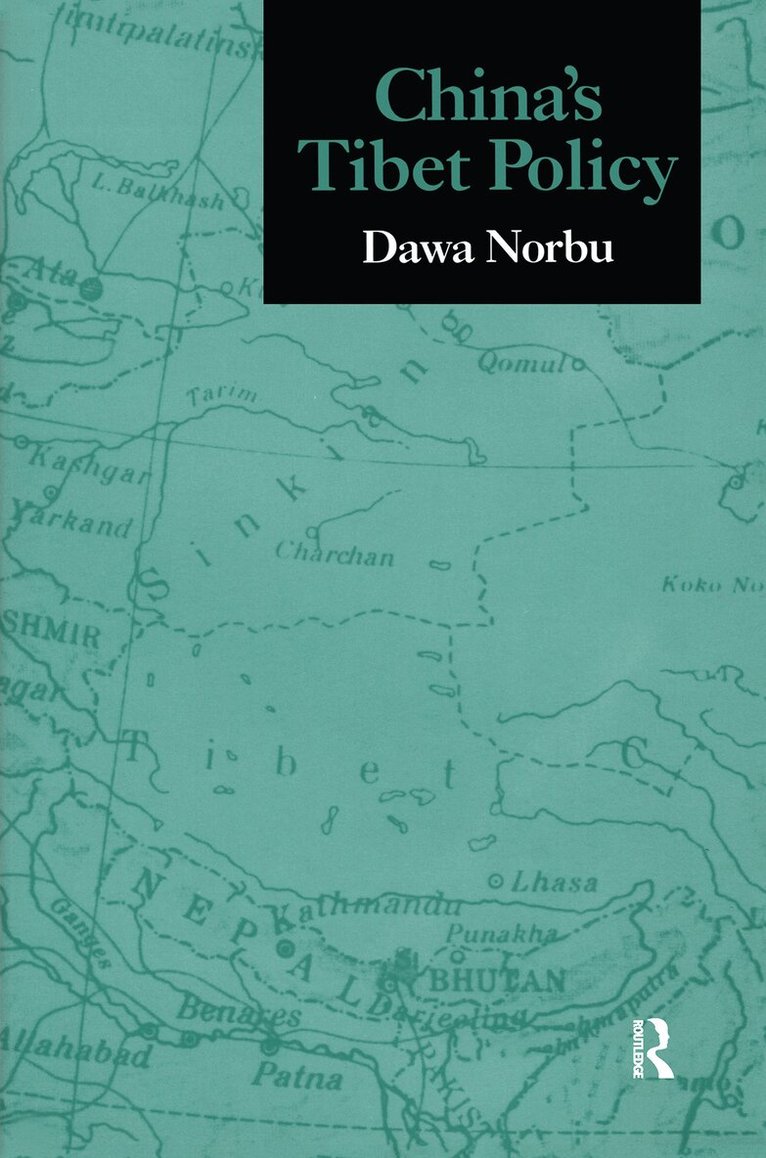
    China's Tibet Policy

    AvDawa Norbu

    Inbunden, Engelska, 2001

    Del i serien Durham East Asia Series

    2 957 kr

    Beställningsvara. Skickas inom 10-15 vardagar. Fri frakt över 249 kr.

    Fler format och utgåvor

    E-bok

    829 kr

    E-bok

    829 kr

    Beskrivning

    This major study analyses the traditional modes of Sino-Tibetan relations in order to unearth general patterns beyond partisan points of view. It sheds light on contemporary issues in the Sino-Tibetan dialogue, and discerns possible future structures for conflict resolution in occupied Tibet. With its economic reforms, China is changing and will change more in the near future, thereby expanding the scope for freedom and democracy. It is in such a context that several leading Chinese intellectuals have, since the early 1990s, called for a fresh examination of the history of Sino-Tibetan relations in order to determine the actual status of Tibet. This book is a Tibetan's contribution to this great debate. Tibet is often viewed in isolation from other developments in Asia or the West. This book, for the first time, analyses the Tibetan question within the context of international politics, especially the roles of Britain, India, the USA and Russia in paving peaceful ways to conflict resolution in Tibet.

    Produktinformation

    • Utgivningsdatum:2001-09-27
    • Mått:156 x 234 x undefined mm
    • Vikt:861 g
    • Format:Inbunden
    • Språk:Engelska
    • Serie:Durham East Asia Series
    • Antal sidor:484
    • Förlag:Taylor & Francis Ltd
    • ISBN:9780700704743

    Utforska kategorier

    • Referensverk och tvärvetenskap inom Samhälle och politik
    • Politik och statsskick inom Samhälle och politik

    Recensioner i media

    'This is a courageous powerful work. It is incisive and informative ... this book is a must for every library and should be recommended to all those interested in research on the area and in understanding the intricacies of Sino-Tibetan relations.' - Economic and Political Weekly'His book is a significant contribution to the understanding of the actual status of Tibet. Undoubtedly, his grasp on the Tibetan language and familiarity with the vast literature on the subject are well reflected in the work ... on the whole this is a courageous, powerful work. It is incisive and informative.' - International Affaris'The great merit of the book lies in a sophisticated approach to how the historic China-Tibet interface should be viewed ... readers will gain a great deal from China's Tibet Policy, most notably a refreshing change from the Minichean view that forms most works on this subject.' - Pacific Affairs'Dawa Norbu has demonstrated a capacity for unconventional thinking that courageously questions and challenges accepted wisdom ... a compelling read ... an important and assertive book that should be read carefully by everyone interested in the subject.' - China Quarterly'An engaged scholarly examination of a highly contested issue in objective manner.' - Asian Affairs'Dawa Norbu's book is a brilliant analysis of Sino-Tibetan cultural and political relations. His book is full of the penetrating insights that have marked his career as a participant in and analyst of Tibetan history and politics. I think I am on safe ground in saying that his book is unsurpassed in its contribution to an understanding of modern Tibetan history. Those who hope to participate in any sort of dialogue on Tibetan history and politics should not neglect to arm themselves with this information and insights contained in Dawa Norbu's grand new book.' - Warren W. Smith, The Tibet Journal

    Innehållsförteckning

    • Introduction PART I Patterns of the Sino-Tibetan Past and Current Political Realities 1 The Origins of Tribute Relations and the Buddhist Factor in Sino-Barbarian Relations 2 The Warrior Kings of Tibet (624-842 AD) and Tang China (618-756 AD): The Strategic Factor 3 The Song Dynasty (960-1126) and the Buddhist Revolution in Tibet (842-1247): A Period of Benign Neglect 4 The Mongol Empire (1207-1368) and the Sakya Lamas (1244-1358): The Buddhist Factor in Operation 5 The Confucian Restoration in Ming China (1368-1662) and the Refeudalization of Post-Sakya Tibet (1337-1565): The Role of Karmapa in Tibetan Politics 6 The Manchu Empire (1662-1912) and the Gelugpa Hegemony (1642-1950): The Indigenous Instruments of Indirect Rule 7 The Rise of the Han Nation and the End of Indirect Rule: The Consequences of Non-Change in Tibet 8 The Anatomy of Tibetan Autonomy: An Agenda for the Twenty-first Century PART II China and Tibet in War and Peace 9 The Warrior Kings of Tibet and the Tang Dynasty 10 Imperial China and the Lama Rulers: Imperial Power, a Non-coercive Regime and Military Dependency 11 British Interpretations of Sino-Tibetan Relationships: The Genesis of Tibetan Autonomy and Chinese Suzerainty PART III Tibet in Communist China 12 The Problematics of the Sino-Tibetan Agreement of 1951 13 The 1959 Revolt: In Defence of the Value System 14 The Political Economy of Communist Rule: Strategic Developments 1951-1998 PART IV Tibet in International Politics 15 The Tibet Factor in Sino-American Relations 1948-1998: From Secret Service to Public Pressure 16 The Tibet Factor in Sino-Indian Relations: The Centrality of Marginality 17 Beijing, Taiwan and the Tibet Question: The Politics of Internal Differentiation PART V Tibet's Future 18 China's Dialogue with the Dalai Lama 1979-1998 19 Tibet's Possible Future Structures: The Dalai's and the Dissidents' Visions of Federation 20 Self-Determination in the Post-Con1munist Era: The Tibetan People's Case