• Fri frakt över 249 kr
  • •
  • Snabba leveranser
  • •
  • Billiga böcker
Kundservice

Du är på sajten för privatpersoner.

Företag, bibliotek eller offentlig verksamhet?

Du handlar på classic.bokus.com, där alla dina funktioner finns intakta.
Till classic.bokus.com
Bokus logotyp. Gå till startsidan.
  • Erbjudanden
  • Student
  • Topplistor
  • Barn & ungdom
  • Bokus Play
  • E-böcker
  • Ljudböcker
  • Pocketböcker
  • Spel och pussel

Pocketfynda! Hundratals böcker för 49 kr/st →

Sidfot

Mina sidor

    Hjälp

    • Kundservice
    • Vanliga frågor och svar
    • Frakt och leverans
    • Retur vid ångerrätt
    • Reklamera vara
    • Betalning
    • Köpvillkor
    • Allmänna villkor
    • Information om webbplatsens tillgänglighet

    Om Bokus

    • Om oss
    • Pressrum
    • För studenter
    • För företag
    • För bibliotek och offentlig verksamhet
    • För leverantörer
    • Hållbarhet

    Populärt

    • Aktuella erbjudanden
    • Presentkort
    • Studentlitteratur
    • Nya böcker
    • Topplistor
    • Signerade böcker
    • Engelska böcker

    Inspiration

    • Boktips
    • BookTok
    • Barnbokskaraktärer
    • Populära författare
    Logotyp för Bokus
    Följ oss på Facebook (extern länk)Följ oss på Instagram (extern länk)Följ oss på YouTube (extern länk)Följ oss på TikTok (extern länk)
    bokus @ CookiesAnpassa cookiesIntegritetspolicyKöpvillkor
    Till Citymail hemsida (extern länk)Till Budbee hemsida (extern länk)Till Postnord hemsida (extern länk)Till Schenker hemsida (extern länk)Till Early Bird hemsida (extern länk)Till Walleys hemsida (extern länk)
    1. Skönlitteratur
    2. Litteraturvetenskap
    3. Litteraturvetenskap

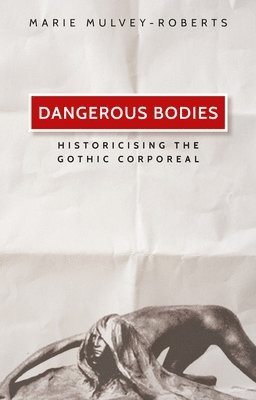
    Dangerous Bodies

    Historicising the Gothic Corporeal

    AvMarie Mulvey-Roberts

    Inbunden, Engelska, 2016

    1 367 kr

    Beställningsvara. Skickas inom 5-8 vardagar. Fri frakt över 249 kr.

    Fler format och utgåvor

    Häftad

    414 kr

    Beskrivning

    Through an investigation of the body and its oppression by the church, the medical profession and the state, this book reveals the actual horrors lying beneath fictional horror in settings as diverse as the monastic community, slave plantation, operating theatre, Jewish ghetto and battlefield trench. The book provides original readings of canonical Gothic literary and film texts including The Castle of Otranto, The Monk, Frankenstein, Dracula and Nosferatu. This collection of fictionalised dangerous bodies is traced back to the effects of the English Reformation, Spanish Inquisition, French Revolution, Caribbean slavery, Victorian medical malpractice, European anti-Semitism and finally warfare, ranging from the Crimean up to the Vietnam War. The endangered or dangerous body lies at the centre of the clash between victim and persecutor and has generated tales of terror and narratives of horror, which function to either salve, purge or dangerously perpetuate such oppositions. This ground-breaking book will be of interest to academics and students of Gothic studies, gender and film studies and especially to readers interested in the relationship between history and literature.

    Produktinformation

    • Utgivningsdatum:2016-01-01
    • Mått:138 x 216 x 19 mm
    • Vikt:499 g
    • Format:Inbunden
    • Språk:Engelska
    • Antal sidor:272
    • Förlag:Manchester University Press
    • ISBN:9780719085413
    • Utmärkelser:Winner of Winner of the Alan Lloyd Smith Memorial Prize in 2017 2018 (UK)

    Utforska kategorier

    • Litteraturvetenskap inom Skönlitteratur

    Mer om författaren

    Marie Mulvey-Roberts is Associate Professor in English Literature at the University of the West of England, Bristol

    Recensioner i media

    'Admirable! Now at last I know what "Gothic" means.'Fay Weldon'This book breaks new ground in Gothic studies by relating a series of enduring images of the body in torment to actual historical events and trends[...] A significant addition to the body of writing on the Gothic, the study of Gothic as writing on the body.' David Punter, Professor of English, University of Bristol‘Mulvey-Roberts has put together an excellent text that is soundly designed and structured, rigorously documented and supported through compact and learned endnotes, and includes cogently argued concepts, analyses, and interpretations. Dangerous Bodies: Historicising the Gothic Corporeal will, I hope, become a standard text for the field.’Edmund Cueva, The Irish Journal of Gothic and Horror Studies 16 (Autumn 2017)'… this study is a deeply historicized and thoroughly researched reading of several canonical Gothic texts and one film, spanning the period from the eighteenth to the twentieth century … The array of topics brought together here is dizzying … the past scholarship and new insights are brought together to create a seamless account of how the Gothic recounts, parallels, anticipates, and unfortunately sometimes encourages historical atrocity … Dangerous Bodies [is] a valuable and unflinching analysis that reaches beyond our current critical limits.'Kasee Laster, University of North Georgia, Science Fiction Studies‘The gothic imaginary foregrounds the body unlike any other imaginary. In her methodically researched and richly detailed work, Dangerous Bodies: Historicising the Gothic Corporeal, Marie Mulvey-Roberts confirms this truth. Corporal parts, the bloodied bits, scraps and orts of the human body, and Gothic’s preoccupation withthreading them often literally together, as in the case of Mary Shelley’s Frankenstein, are evaluated in Mulvey-Roberts’s text. The Gothic has always explored, exploited and revelled in the extremes of the body; it has always enjoyed the messy, monstrous and grotesque potential that the human form offers. Similarly, Mulvey-Roberts revels in the critical possibilities and scholarly opportunities that a study of gothic corporeality holds.’Hannah Hutchings-Georgiou, University College London, British Society for Literature and Science'This exceptionally well-argued volume breaks new ground in liking the representations of the monstrous body to the historical traumas that culture responds to, and neatly illuminates the dialectic relationship between the Gothic body of work and the work of the Gothic body.'Gothic Studies

    Innehållsförteckning

    • 1. Catholicism, the Gothic and the bleeding body2. Mary Shelley, Frankenstein and slavery3. Death by orgasm: sexual surgery and Dracula4. Nazis, Jews and Nosferatu 5. The vampire of war6. Conclusion: conflict GothicBibliographyIndex