• Fri frakt över 249 kr
  • •
  • Snabba leveranser
  • •
  • Billiga böcker
Kundservice

Du är på sajten för privatpersoner.

Företag, bibliotek eller offentlig verksamhet?

Du handlar på classic.bokus.com, där alla dina funktioner finns intakta.
Till classic.bokus.com
Bokus logotyp. Gå till startsidan.
  • Erbjudanden
  • Nyheter
  • Student
  • Topplistor
  • Barn & ungdom
  • Bokus Play
  • E-böcker
  • Pocketböcker
  • Spel & pussel

Må bättre, för mindre! Upp till 50% rabatt på hälsoböcker

Sidfot

Mina sidor

    Hjälp

    • Kundservice
    • Vanliga frågor och svar
    • Frakt och leverans
    • Retur vid ångerrätt
    • Reklamera vara
    • Betalning
    • Köpvillkor
    • Allmänna villkor
    • Information om webbplatsens tillgänglighet

    Om Bokus

    • Om oss
    • Pressrum
    • För studenter
    • För företag
    • För bibliotek och offentlig verksamhet
    • För leverantörer
    • Hållbarhet

    Populärt

    • Aktuella erbjudanden
    • Presentkort
    • Studentlitteratur
    • Nya böcker
    • Topplistor
    • Signerade böcker
    • Engelska böcker

    Inspiration

    • Boktips
    • BookTok
    • Populära bokserier
    • Barnbokskaraktärer
    • Populära författare
    Logotyp för Bokus
    Följ oss på Facebook (extern länk)Följ oss på Instagram (extern länk)Följ oss på YouTube (extern länk)Följ oss på TikTok (extern länk)
    bokus @ CookiesAnpassa cookiesIntegritetspolicyKöpvillkor
    Till Citymail hemsida (extern länk)Till Budbee hemsida (extern länk)Till Postnord hemsida (extern länk)Till Schenker hemsida (extern länk)Till Early Bird hemsida (extern länk)Till Walleys hemsida (extern länk)
    1. Ekonomi och Ledarskap
    2. Nationalekonomi
    3. Ekonomisk politik

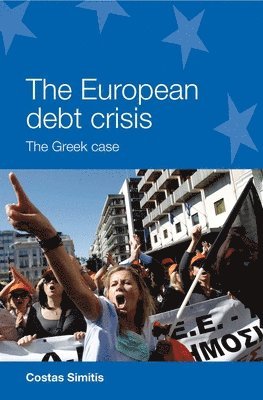
    European debt crisis

    The Greek case

    AvCostas Simitis

    Häftad, Engelska, 2014

    Del i serien European Politics

    330 kr

    Beställningsvara. Skickas inom 5-8 vardagar. Fri frakt över 249 kr.

    Fler format och utgåvor

    Inbunden

    1 188 kr

    Beskrivning

    In this book, former Greek Prime Minister Costas Simitis examines the European debt crisis with particular reference to the case of Greece. Greece was the first Eurozone country to face an enormous deficit, which reached 15% of GDP in 2009. As the Greek crisis unfolded, other Eurozone countries displayed identical symptoms, albeit in varying degrees of severity. From a strictly Greek predicament the debt crisis quickly turned into a problem for the European Union as a whole. This first English language translation investigates the causes of this spillover and chronicles the policy responses to combat it. It also discusses Greece’s troubled political economy, the country’s difficulties in adjusting to the demands of its creditors and the vehement social and political reactions to the policy of austerity.Through his comprehensive and authoritative analysis, Simitis provides valuable insights into the crucial interconnection between Greece’s own economic troubles and the wider European search for macroeconomic stability and sustainable economic growth. As such, the book appeals well beyond those with a narrow academic interest in Greece. This is very much a discussion about the future of the Eurozone and the European Union as a whole.

    Produktinformation

    • Utgivningsdatum:2014-04-30
    • Mått:156 x 234 x 28 mm
    • Vikt:572 g
    • Format:Häftad
    • Språk:Engelska
    • Serie:European Politics
    • Antal sidor:368
    • Förlag:Manchester University Press
    • ISBN:9780719095788

    Utforska kategorier

    • Ekonomisk politik inom Ekonomi och Ledarskap
    • Finanskriser inom Ekonomi och Ledarskap
    • Politik och statsskick inom Samhälle och politik

    Mer om författaren

    Costas Simitis was the Prime Minister of Greece from 1996 to 2004

    Innehållsförteckning

    • PrefacePart I: How we arrived at this first Memorandum1. Was Greece ready for the Euro?2. New Democracy’s criminal indifference3. PASOK’s opportunistic optimism4. Being in denial5. Ineffective solutions6. The bitter truth7. The first Memorandum: a medicine with dangerous side effectsPart II: The Memorandum’s first year of implementation8. The crisis spreads to the Union9. Implementing the Memorandum: an obstacle race10. ‘An all encompassing plan’ to solve the crisis in the Eurozone?11. ‘An all encompassing plan’ to solve the crisis in Greece?12. A year of the Memorandum: seeking a new solutionPart III: Debt restructuring and power games13. Debt restructuring: The decisions of 21st July14. A dead end15. More hitches16. The new solution17. Political games with unpredictable consequencesPart IV: Coalition government, psi, second Memorandum18. A flicker of hope19. Conflicts at the highest European level20. The new agreement with the Eurozone (Memorandum II), the PSI21. An evaluation of the Memorandum(s)22. Austerity and growth: implementing the decisions of 21st February 201223. The crisis peaksPart V: Elections May–June 201224. Elections of 6th May: Euro or drachma?25. Cracks in the Euro26. The Union at a dead end: change of course on 29th June27. The elections of 17th June: a new beginning?28. Provisional solutions. October 2012–June 201329. The evaluations of the assistance programme to Greece30. CyprusPart VI: The future of Greece and the European Union31. The causes of the crisis are not only economic32. A new European policy is necessaryA. Economic governanceB. Inclusion and participationAppendix: Key meetings and decisions of the institutions of the European Union relating to the financial crisisNote. The main Greek political partiesFigure 1: Net borrowing of Greek government and economy (% of GDP)Figure 2: Greece. Primary expenditure, expenditure, revenue 1988–2014AbbreviationsIndex