• Fri frakt över 249 kr
  • •
  • Snabba leveranser
  • •
  • Billiga böcker
Kundservice

Du är på sajten för privatpersoner.

Företag, bibliotek eller offentlig verksamhet?

Du handlar på classic.bokus.com, där alla dina funktioner finns intakta.
Till classic.bokus.com
Bokus logotyp. Gå till startsidan.
  • Erbjudanden
  • Nyheter
  • Student
  • Topplistor
  • Barn & ungdom
  • Bokus Play
  • E-böcker
  • Pocketböcker
  • Spel & pussel

10% rabatt på allt med kod: NYSTART10 →

Sidfot

Mina sidor

    Hjälp

    • Kundservice
    • Vanliga frågor och svar
    • Frakt och leverans
    • Retur vid ångerrätt
    • Reklamera vara
    • Betalning
    • Köpvillkor
    • Allmänna villkor
    • Information om webbplatsens tillgänglighet

    Om Bokus

    • Om oss
    • Pressrum
    • För studenter
    • För företag
    • För bibliotek och offentlig verksamhet
    • För leverantörer
    • Hållbarhet

    Populärt

    • Aktuella erbjudanden
    • Presentkort
    • Studentlitteratur
    • Nya böcker
    • Topplistor
    • Signerade böcker
    • Engelska böcker

    Inspiration

    • Boktips
    • BookTok
    • Populära bokserier
    • Barnbokskaraktärer
    • Populära författare
    Logotyp för Bokus
    Följ oss på Facebook (extern länk)Följ oss på Instagram (extern länk)Följ oss på YouTube (extern länk)Följ oss på TikTok (extern länk)
    bokus @ CookiesAnpassa cookiesIntegritetspolicyKöpvillkor
    Till Citymail hemsida (extern länk)Till Budbee hemsida (extern länk)Till Postnord hemsida (extern länk)Till Schenker hemsida (extern länk)Till Early Bird hemsida (extern länk)Till Walleys hemsida (extern länk)
    1. Skönlitteratur
    2. Litteraturvetenskap
    3. Litteraturvetenskap

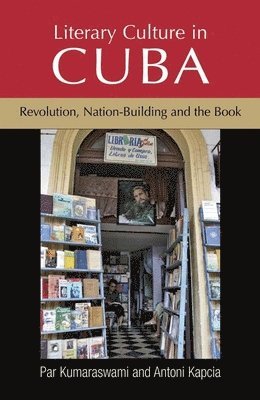
    Literary Culture in Cuba

    Revolution, Nation-Building and the Book

    AvPar Kumaraswami,Antoni Kapcia

    Häftad, Engelska, 2016

    493 kr

    Beställningsvara. Skickas inom 5-8 vardagar. Fri frakt över 249 kr.

    Fler format och utgåvor

    Inbunden

    Tillf. slut

    Beskrivning

    Available in paperback for the first time, this book brings an original and innovative approach to a much-misunderstood aspect of the Cuban Revolution: the place of literature and the creation of a literary culture. Based on over 100 interviews with a wide range of actors involved in the structures and processes that produce, regulate, promote and consume literature on the island, the book breaks new ground by going beyond the conventional approach (the study of individual authors and texts) and by going beyond the canon of texts known outside Cuba. It thus presents a historical analysis of the evolution of literary culture from 1959 to the present, as well as a series of more detailed case studies (on writing workshops, the Havana Book Festival and the publishing infrastructure) which reveal how this culture is created in contemporary Cuba. It thus contributes a new and complex vision of revolutionary Cuban culture which is as detailed as it is comprehensive.

    Produktinformation

    • Utgivningsdatum:2016-01-04
    • Mått:138 x 216 x 15 mm
    • Vikt:336 g
    • Format:Häftad
    • Språk:Engelska
    • Antal sidor:272
    • Förlag:Manchester University Press
    • ISBN:9780719099953

    Utforska kategorier

    • Litteraturvetenskap inom Skönlitteratur

    Mer om författaren

    Par Kumaraswami is Associate Professor in Latin American Cultural Studies at the University of ReadingAntoni Kapcia is Professor of Latin American History at the University of Nottingham

    Innehållsförteckning

    • Introduction1. Locating literary culture in the trajectory of the Revolution2. Understanding literary culture in the Revolution3. 1959–61: the first flush of revolution4. 1961–89: the years of radicalisation and consolidation5. 1990s–2000s: the years of crisis and reassessment6. The path to becoming a writer in contemporary Cuba: the role of the Centro de Formación Literaria Onelio Jorge Cardoso and the movement of talleres literarios by Meesha Nehr7. The history of a novel: Alberto Ajón León’s ¿Qué bolá? (What’s Up?)8. The Feria Internacional del Libro de La HabanaConclusion