Häftad, Engelska, 2004
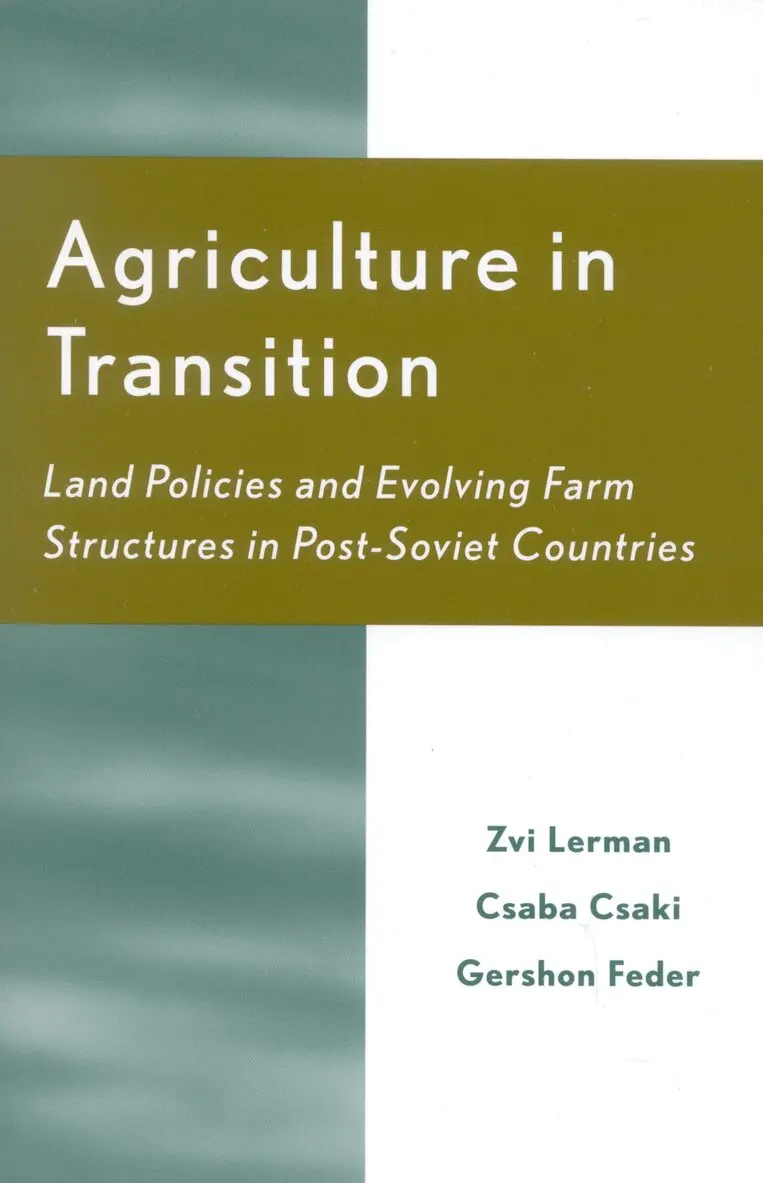
Agriculture in Transition
Land Policies and Evolving Farm Structures in Post Soviet Countries
Av Zvi Lerman, Csaba Csaki, Gershon Feder
Del i serien Rural Economies in Transition
616 kr
Beställningsvara. Skickas inom 10-15 vardagar. Fri frakt över 249 kr.
Beskrivning
Produktinformation
- Utgivningsdatum: 2004-01-29
- Mått: 172 x 229 x 19 mm
- Vikt: 386 g
- Format: Häftad
- Språk: Engelska
- Serie: Rural Economies in Transition
- Antal sidor: 264
- Förlag: Bloomsbury Publishing Plc
- ISBN: 9780739108079
Utforska kategorier
Mer om författaren
Zvi Lerman teaches financial management, accounting and cooperative theory at The Hebrew University of Jerusalem, Israel. Csaba Csaki is senior advisor, World Bank Rural Development Department. Gershon Feder is research manager, World Bank Rural Development Department.
Recensioner i media
This book is an excellent resource for research and teaching as well as for anyone engaged in policy analysis and policy advisory work. There has been an unfortunate tendency to focus too much on commonality and not enough on differences in transition economy initial conditions and processes of reform. This book takes a carefully balanced approach, which acknowledges the common heritage but also clearly shows the different approaches to reform, the underlying reasons for these differences and the consequences of the differing paths. By highlighting divergent approaches taken in a wide variety of countries the authors provide a rich and comprehensive analysis and derive lessons from this analysis that could not be obtained from a more simplistic approach.
Betyg & recensioner
0 recensioner
Inga recensioner tillgängliga.