• Fri frakt över 249 kr
  • •
  • Snabba leveranser
  • •
  • Billiga böcker
Kundservice

Du är på sajten för privatpersoner.

Företag, bibliotek eller offentlig verksamhet?

Du handlar på classic.bokus.com, där alla dina funktioner finns intakta.
Till classic.bokus.com
Bokus logotyp. Gå till startsidan.
  • Erbjudanden
  • Nyheter
  • Student
  • Topplistor
  • Barn & ungdom
  • Bokus Play
  • E-böcker
  • Pocketböcker
  • Spel & pussel

10% rabatt på allt med kod NYSTART10 →

Sidfot

Mina sidor

    Hjälp

    • Kundservice
    • Vanliga frågor och svar
    • Frakt och leverans
    • Retur vid ångerrätt
    • Reklamera vara
    • Betalning
    • Köpvillkor
    • Allmänna villkor
    • Information om webbplatsens tillgänglighet

    Om Bokus

    • Om oss
    • Pressrum
    • För studenter
    • För företag
    • För bibliotek och offentlig verksamhet
    • För leverantörer
    • Hållbarhet

    Populärt

    • Aktuella erbjudanden
    • Presentkort
    • Studentlitteratur
    • Nya böcker
    • Topplistor
    • Signerade böcker
    • Engelska böcker

    Inspiration

    • Boktips
    • BookTok
    • Populära bokserier
    • Barnbokskaraktärer
    • Populära författare
    Logotyp för Bokus
    Följ oss på Facebook (extern länk)Följ oss på Instagram (extern länk)Följ oss på YouTube (extern länk)Följ oss på TikTok (extern länk)
    bokus @ CookiesAnpassa cookiesIntegritetspolicyKöpvillkor
    Till Citymail hemsida (extern länk)Till Budbee hemsida (extern länk)Till Postnord hemsida (extern länk)Till Schenker hemsida (extern länk)Till Early Bird hemsida (extern länk)Till Walleys hemsida (extern länk)
    1. Historia och arkeologi
    2. Historia
    3. Europas historia

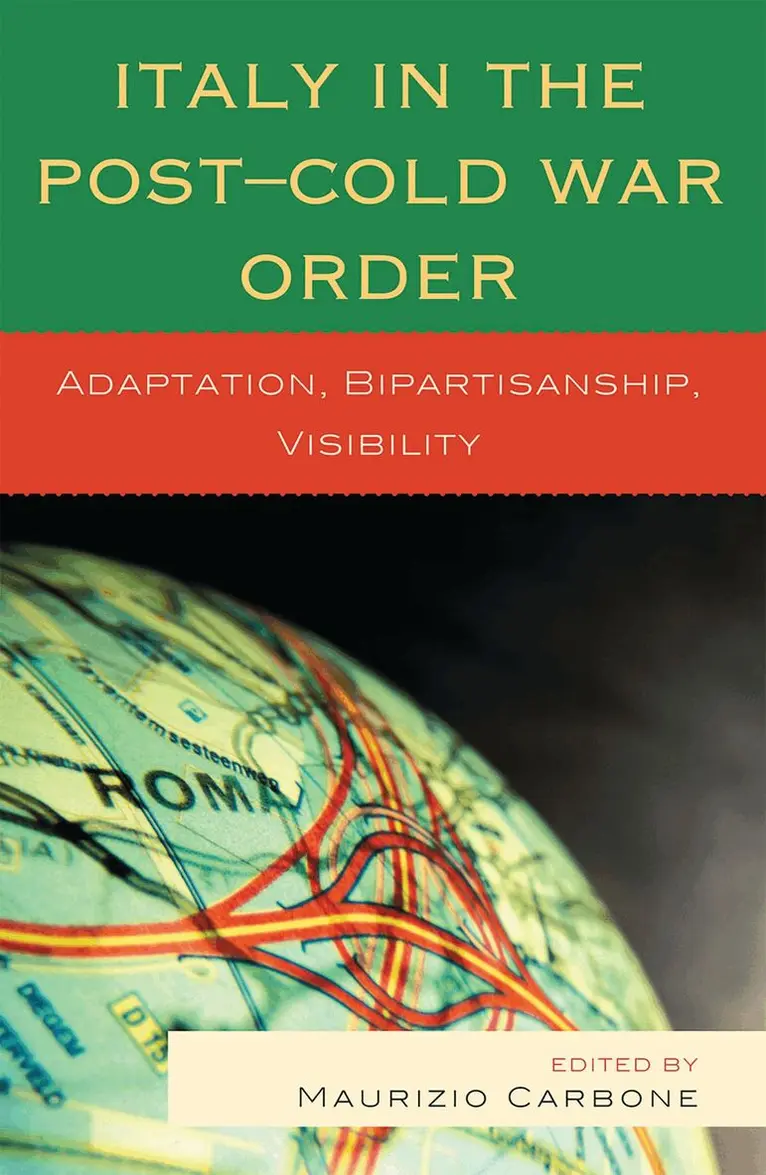
    Italy in the Post-Cold War Order

    Adaptation, Bipartisanship, Visibility

    AvMaurizio Carbone

    Inbunden, Engelska, 2011

    1 581 kr

    Beställningsvara. Skickas inom 10-15 vardagar. Fri frakt över 249 kr.

    Beskrivning

    There are little doubts that Italy has attempted to play a more assertive role in the international arena since the end of the Cold War. During the first forty years of its Republican history, conditioned by both the polarized international context and an antagonistic domestic political system, Italy delegated its main choices in international affairs to external actors, most notably NATO and the European Union. The transition from a bipolar to a unipolar/multipolar world order provided Italy with new opportunities to pursue its political and commercial interests more autonomously, as well as new responsibilities, to actively contribute to solving conflicts and addressing new global threats. At the same time, the collapse of the traditional parties (linked to the fall of the Berlin wall and the Clean Hands enquiries) and the changes of the electoral law (from a proportional representation into a quasi-majoritarian system) generated two heterogeneous coalitions which have regularly alternated in power, but do not always share the same views and approaches-with differences at times of form, and more often of substance. Against this background, Italy in the Post-Cold War Order: Adaptation, Bipartisanship, Visibility, edited by Maurizio Carbone, seeks to explain the evolution of Italy's international action over a twenty-year span (1989–2009). Three central questions are addressed. First, how does Italy adapt to transformations of the international system? Second, how does its ever-changing political system influence Italy's choices in foreign relations? Third, how do domestic structures constrain (or enable) Italy's place on the world stage? To answer these questions, this book consists of two broad parts. The first part sets the context and discusses issues 'horizontally,' focusing on foreign policy, security and defense policy, development cooperation, and multilateral action. The second part, which takes a 'vertical' approach, discusses Italy's relations with key countries and regions of the world

    Produktinformation

    • Utgivningsdatum:2011-02-24
    • Mått:163 x 241 x 25 mm
    • Vikt:615 g
    • Format:Inbunden
    • Språk:Engelska
    • Antal sidor:294
    • Förlag:Bloomsbury Publishing Plc
    • ISBN:9780739137116

    Utforska kategorier

    • Europas historia inom Historia och arkeologi
    • Internationella relationer inom Samhälle och politik

    Mer om författaren

    Maurizio Carbone is the Jean Monnet Chair and Director of the Scottish Jean Monnet Centre of European Excellence. He is also Director of Postgraduate Taught Programmes and a senior lecturer in the School of Social and Political Studies at the University of Glasgow.

    Recensioner i media

    This book offers new perspectives in the analysis of the ways in which domestic politics and foreign policy are connected. Its implications therefore extend far beyond the single case—Italy—on which it is based, making it essential reading for comparativists and international relations scholars generally.

    Innehållsförteckning

    • List of Tables and FiguresList of AbbreviationsAcknowledgementsForewordIntroduction: Understanding Italy's Role on the World StagePart I: Contexts and PerspectivesChapter 1: Italian Foreign Policy in the Cold War: A Constant Search for StatusChapter 2: Italian Politics after the End of the Cold War: The Continuation of a Two-Level GameChapter 3: Italy as a Foreign Policy Actor: The Interplay of Domestic and International FactorsChapter 4: Italy as a Security Actor: New Resolve and Old InadequaciesChapter 5: Italy as a Development Actor: A Tale of Bipartisan FailureChapter 6: Italy as a Multilateral Actor: The Inescapable Destiny of a Middle PowerPart II: Countries and RegionsChapter 7: Italy and the US: Prestige, Peace, and the Transatlantic BalanceChapter 8: Italy and the EU: Seeking Visibility, Fearing ExclusionChapter 9: Italy, China and Russia: Costs and Benefits of Building BridgesChapter 10: Italy in the Mediterranean: Between Europeanism and AtlanticismChapter 11: Italy in the Balkans: An Emerging Actor in its NeighborhoodChapter 12: Italy in Latin America and South Asia: Struggling to Become More VisibleConclusion: After the Cold War, a World of Opportunity and Greater Responsibility for Italy tooIndexAbout the Contributors