• Fri frakt över 249 kr
  • •
  • Snabba leveranser
  • •
  • Billiga böcker
Kundservice

Du är på sajten för privatpersoner.

Företag, bibliotek eller offentlig verksamhet?

Du handlar på classic.bokus.com, där alla dina funktioner finns intakta.
Till classic.bokus.com
Bokus logotyp. Gå till startsidan.
  • Erbjudanden
  • Nyheter
  • Student
  • Topplistor
  • Barn & ungdom
  • Bokus Play
  • E-böcker
  • Pocketböcker
  • Spel & pussel

10% rabatt på allt med kod NYSTART10 →

Sidfot

Mina sidor

    Hjälp

    • Kundservice
    • Vanliga frågor och svar
    • Frakt och leverans
    • Retur vid ångerrätt
    • Reklamera vara
    • Betalning
    • Köpvillkor
    • Allmänna villkor
    • Information om webbplatsens tillgänglighet

    Om Bokus

    • Om oss
    • Pressrum
    • För studenter
    • För företag
    • För bibliotek och offentlig verksamhet
    • För leverantörer
    • Hållbarhet

    Populärt

    • Aktuella erbjudanden
    • Presentkort
    • Studentlitteratur
    • Nya böcker
    • Topplistor
    • Signerade böcker
    • Engelska böcker

    Inspiration

    • Boktips
    • BookTok
    • Populära bokserier
    • Barnbokskaraktärer
    • Populära författare
    Logotyp för Bokus
    Följ oss på Facebook (extern länk)Följ oss på Instagram (extern länk)Följ oss på YouTube (extern länk)Följ oss på TikTok (extern länk)
    bokus @ CookiesAnpassa cookiesIntegritetspolicyKöpvillkor
    Till Citymail hemsida (extern länk)Till Budbee hemsida (extern länk)Till Postnord hemsida (extern länk)Till Schenker hemsida (extern länk)Till Early Bird hemsida (extern länk)Till Walleys hemsida (extern länk)
    1. Filosofi och religion
    2. Filosofi
    3. Filosofiska discipliner

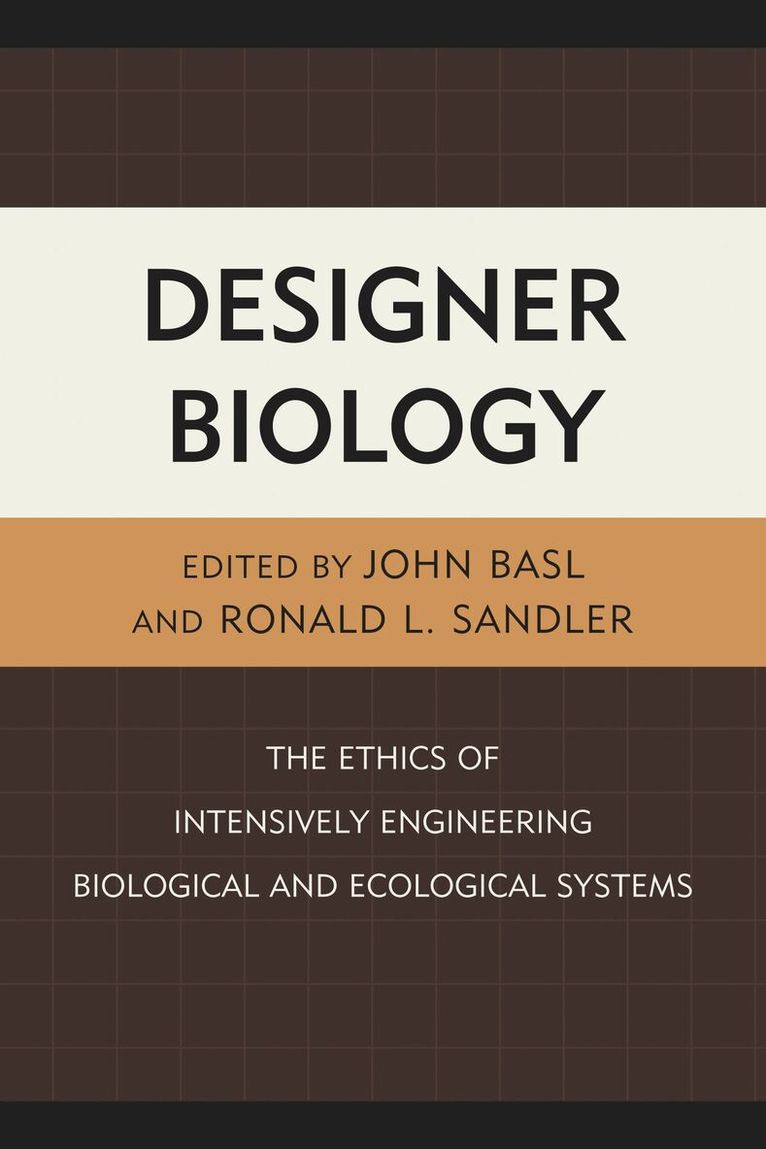
    Designer Biology

    The Ethics of Intensively Engineering Biological and Ecological Systems

    AvRonald L. Sandler,John Basl

    Häftad, Engelska, 2015

    701 kr

    Beställningsvara. Skickas inom 10-15 vardagar. Fri frakt över 249 kr.

    Beskrivning

    Advances in our scientific understanding and technological power in recent decades have dramatically amplified our capacity to intentionally manipulate complex ecological and biological systems. An implication of this is that biological and ecological problems are increasingly understood and approached from an engineering perspective. In environmental contexts, this is exemplified in the pursuits of geoengineering, designer ecosystems, and conservation cloning. In human health contexts, it is exemplified in the development of synthetic biology, bionanotechnology, and human enhancement technologies. Designer Biology: The Ethics of Intensively Engineering Biological and Ecological Systems consists of thirteen chapters (twelve of them original to the collection) that address the ethical issues raised by technological intervention and design across a broad range of biological and ecological systems. Among the technologies addressed are geoengineering, human enhancement, sex selection, genetic modification, and synthetic biology. This collection advances and enriches our understanding of the ethical issues raised by these technologies and identifies general lessons about the ethics of engineering complex biological and ecological systems that can be applied as new technologies and practices emerge. The insights that emerge will be especially valuable to students and scholars of environmental ethics, bioethics, or technology ethics.

    Produktinformation

    • Utgivningsdatum:2015-08-24
    • Mått:154 x 228 x 22 mm
    • Vikt:467 g
    • Format:Häftad
    • Språk:Engelska
    • Antal sidor:304
    • Förlag:Bloomsbury Publishing Plc
    • ISBN:9780739184875

    Utforska kategorier

    • Filosofiska discipliner inom Filosofi och religion

    Mer om författaren

    John Basl is assistant professor of philosophy at Northeastern University and cofounder of Philosophy TV (http://philostv.com).Ronald L. Sandler is associate professor of philosophy at Northeastern University, and also director of Northeastern’s Ethics Institute. He is author of The Ethics of Species, Character and Environment, and Nanotechnology: The Social and Ethical Issues, as well as coeditor of Environmental Justice and Environmentalism and Environmental Virtue Ethics.

    Recensioner i media

    This work, edited by Basl and Sandler (both, philosophy, Northeastern Univ.), is a compilation of papers based on a workshop held at Northeastern. The book contains 13 chapters divided in three parts: 'Engineering Humans,' 'Engineering the Environment,' and 'Engineering Life.' Twelve of the 13 chapters are from the workshop; the last chapter does a very nice job of providing conclusions and generalizations based on the other chapters. Contributors address topics such as the consideration of moral responsibility for using engineering methods to select the sex of human embryos; using molecular techniques to create 'designer' children; using implants and/or drugs to affect moral behavior; altering the Earth's atmosphere to combat climate change; and artificially designing and developing technologically created organisms. Each chapter stands alone and would pique a reader's interest in moral issues associated with new and future use of biological engineering to manipulate biological entities. The chapters are provocative and are valuable as a basis for considerations of the ethics of human intervention into natural systems. Summing Up: Highly recommended. Upper-division undergraduates, graduate students, and researchers/faculty.

    Innehållsförteckning

    • AcknowledgmentsContributor BiographiesIntroductionI. Engineering HumansChapter 1: Sex Selection and the Value-Ladenness of the Procreative Liberty Framework Chapter 2: The Ethics of Embryo SelectionChapter 3: Assessing Efficacy of “Neuroenhancing” Drugs: Normative Problems in Empirical Controversies Chapter 4: Engineering for Virtue? Toward Holistic Moral EnhancementChapter 5: Radical Enhancement and What’ Wrong with ItChapter 6: Human Engineering and Climate ChangeII. Engineering the EnvironmentChapter 7: The Human Influence: Moral Responsibility for Novel EcosystemsChapter 8: Why Scientists Should Get Out of Nature ConservationChapter 9: What it Takes to Justify Geoengineering the ClimateChapter 10: Remediation vs. Steering: An Act-Description Approach to Approving and Funding Geoengineering ResearchIII. Engineering LifeChapter 11: Sensitivity Enhancement: The Ethics of Testing Cognitive Enhancement on Non-Human Research SubjectsChapter 12: The Capacities, Interests, and Or