• Fri frakt över 249 kr
  • •
  • Snabba leveranser
  • •
  • Billiga böcker
Kundservice

Du är på sajten för privatpersoner.

Företag, bibliotek eller offentlig verksamhet?

Du handlar på classic.bokus.com, där alla dina funktioner finns intakta.
Till classic.bokus.com
Bokus logotyp. Gå till startsidan.
  • Erbjudanden
  • Nyheter
  • Student
  • Topplistor
  • Barn & ungdom
  • Bokus Play
  • E-böcker
  • Pocketböcker
  • Spel & pussel

10% rabatt på allt med kod: NYSTART10 →

Sidfot

Mina sidor

    Hjälp

    • Kundservice
    • Vanliga frågor och svar
    • Frakt och leverans
    • Retur vid ångerrätt
    • Reklamera vara
    • Betalning
    • Köpvillkor
    • Allmänna villkor
    • Information om webbplatsens tillgänglighet

    Om Bokus

    • Om oss
    • Pressrum
    • För studenter
    • För företag
    • För bibliotek och offentlig verksamhet
    • För leverantörer
    • Hållbarhet

    Populärt

    • Aktuella erbjudanden
    • Presentkort
    • Studentlitteratur
    • Nya böcker
    • Topplistor
    • Signerade böcker
    • Engelska böcker

    Inspiration

    • Boktips
    • BookTok
    • Populära bokserier
    • Barnbokskaraktärer
    • Populära författare
    Logotyp för Bokus
    Följ oss på Facebook (extern länk)Följ oss på Instagram (extern länk)Följ oss på YouTube (extern länk)Följ oss på TikTok (extern länk)
    bokus @ CookiesAnpassa cookiesIntegritetspolicyKöpvillkor
    Till Citymail hemsida (extern länk)Till Budbee hemsida (extern länk)Till Postnord hemsida (extern länk)Till Schenker hemsida (extern länk)Till Early Bird hemsida (extern länk)Till Walleys hemsida (extern länk)
    1. Filosofi och religion
    2. Filosofi
    3. Filosofiska discipliner

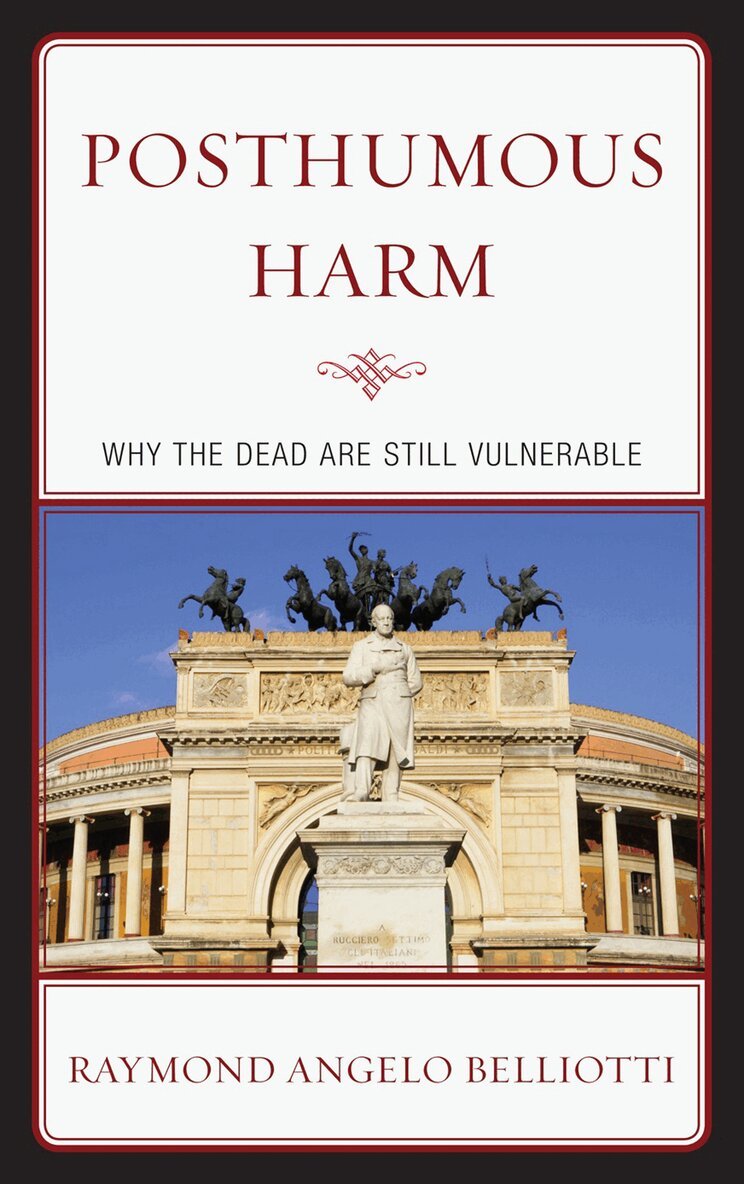
    Posthumous Harm

    Why the Dead are Still Vulnerable

    AvRaymond Angelo Belliotti

    Häftad, Engelska, 2013

    701 kr

    Beställningsvara. Skickas inom 10-15 vardagar. Fri frakt över 249 kr.

    Beskrivning

    Reasonable people agree that, other things being equal, it is immoral to fail to fulfill deathbed promises, to maliciously defame the dead, and to mistreat corpses. But philosophical controversy swirls over why such acts are morally wrong. Are these acts wrong only because they violate moral norms against breaking promises, lying, and abusing others? Are these acts morally deficient because they wrong the dead? Are these acts morally wrong because they harm or injure the dead? Or are these acts blameworthy because they wrong, harm, or injure those who survive the deaths? Who are the genuine victims, if any, of these morally wrong acts?When first confronting such questions seriously, we discover paradoxes. On one hand, we are inclined to think that the dead person is in some sense wronged, harmed, or injured by posthumous treachery. After all, when a promise is broken, when someone is maliciously defamed, and when someone’s request concerning the disposition of his remains is dismissed, we are inclined to think of the victims as the promisee, the defamed person, and the ignored person, respectively. On the other hand, in the case of the dead there are no “people” who might be identified as victims. Assuming that death marks finality, once we are dead we are no more. So perhaps the typical moral paradigms dissolve in such cases. Posthumous Harm: Why the Deadare Still Vulnerable addresses these issues and the host of questions surrounding them.

    Produktinformation

    • Utgivningsdatum:2013-08-20
    • Mått:152 x 229 x 15 mm
    • Vikt:318 g
    • Format:Häftad
    • Språk:Engelska
    • Antal sidor:206
    • Förlag:Bloomsbury Publishing Plc
    • ISBN:9780739185995

    Utforska kategorier

    • Filosofiska discipliner inom Filosofi och religion

    Mer om författaren

    Raymond Angelo Belliotti is SUNY Distinguished Teaching Professor of Philosophy at the State University of New York at Fredonia.

    Recensioner i media

    Engagingly written and tightly argued, Posthumous Harm clarifies the paradoxical intuition that we can harm the dead even if their consciousness has been extinguished. If death is the end of all experience, then the dead seem safe from harm. So why do we take care to dispose of their remains and assets as they wished? Why is it wrong to besmirch the reputation of Cicero or Rocky Marciano? How can there be harm if there is no subject to experience the harm? Considering the hypothetical posthumous defamation of Rocky Marciano, Belliotti makes a convincing case that the prize fighter can be harmed today even though he has been dead since 1969. Taking inspiration from Aristotle and Kant, and engaging contemporary philosophers including Nagel and Feinberg, Belliotti has produced a truly unique work, the only book-length study of the issue.

    Innehållsförteckning

    • IntroductionChapter 1: Classical WritersChapter 2: The Contemporary Debate: In the Footsteps of Aristotle and KantChapter 3: The Feinberg-Pitcher AccountChapter 4: Refinements and Alternatives to the Feinberg-Pitcher AccountChapter 5: Biological and Biographical LivesChapter 6: Why Rocky Marciano is Still Vulnerable