• Fri frakt över 249 kr
  • •
  • Snabba leveranser
  • •
  • Billiga böcker
Kundservice

Du är på sajten för privatpersoner.

Företag, bibliotek eller offentlig verksamhet?

Du handlar på classic.bokus.com, där alla dina funktioner finns intakta.
Till classic.bokus.com
Bokus logotyp. Gå till startsidan.
  • Erbjudanden
  • Nyheter
  • Student
  • Topplistor
  • Barn & ungdom
  • Bokus Play
  • E-böcker
  • Pocketböcker
  • Spel & pussel

Må bättre, för mindre! Upp till 50% rabatt på hälsoböcker

Sidfot

Mina sidor

    Hjälp

    • Kundservice
    • Vanliga frågor och svar
    • Frakt och leverans
    • Retur vid ångerrätt
    • Reklamera vara
    • Betalning
    • Köpvillkor
    • Allmänna villkor
    • Information om webbplatsens tillgänglighet

    Om Bokus

    • Om oss
    • Pressrum
    • För studenter
    • För företag
    • För bibliotek och offentlig verksamhet
    • För leverantörer
    • Hållbarhet

    Populärt

    • Aktuella erbjudanden
    • Presentkort
    • Studentlitteratur
    • Nya böcker
    • Topplistor
    • Signerade böcker
    • Engelska böcker

    Inspiration

    • Boktips
    • BookTok
    • Populära bokserier
    • Barnbokskaraktärer
    • Populära författare
    Logotyp för Bokus
    Följ oss på Facebook (extern länk)Följ oss på Instagram (extern länk)Följ oss på YouTube (extern länk)Följ oss på TikTok (extern länk)
    bokus @ CookiesAnpassa cookiesIntegritetspolicyKöpvillkor
    Till Citymail hemsida (extern länk)Till Budbee hemsida (extern länk)Till Postnord hemsida (extern länk)Till Schenker hemsida (extern länk)Till Early Bird hemsida (extern länk)Till Walleys hemsida (extern länk)
    1. Ekonomi och Ledarskap
    2. Företagsekonomi
    3. Entreprenörskap

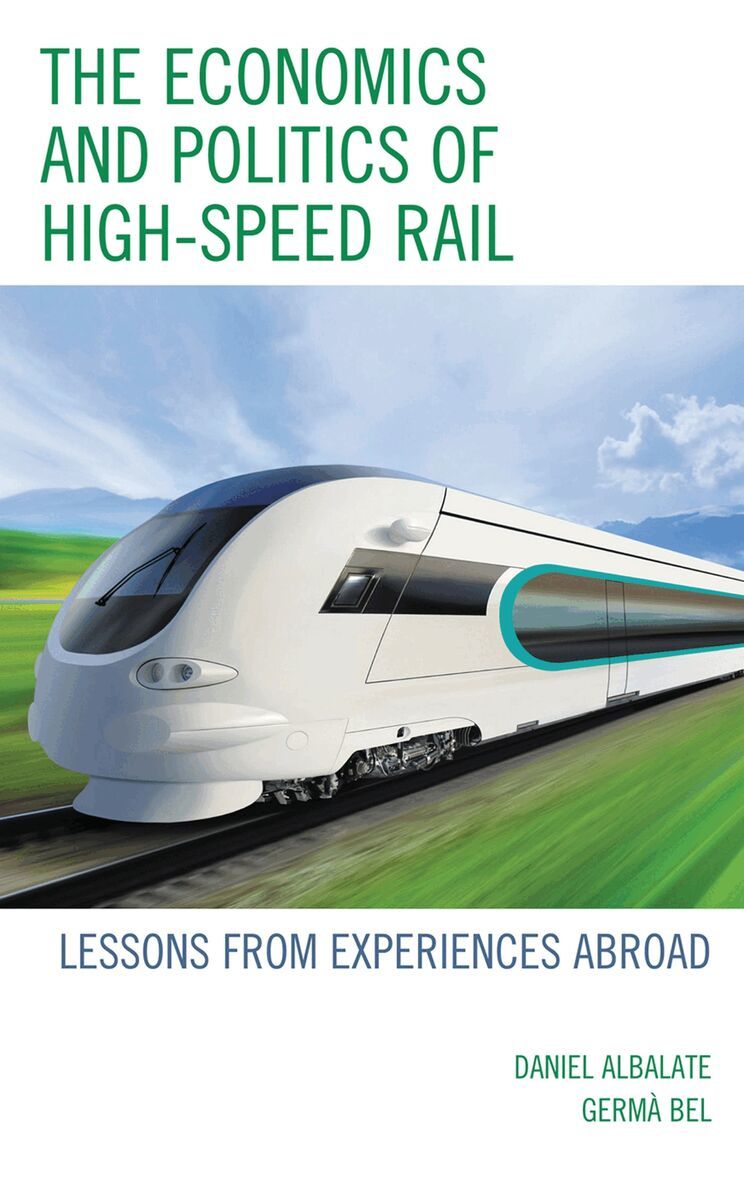
    Economics and Politics of High-Speed Rail

    Lessons from Experiences Abroad

    AvDaniel Albalate,Germa Bel

    Häftad, Engelska, 2013

    622 kr

    Beställningsvara. Skickas inom 10-15 vardagar. Fri frakt över 249 kr.

    Beskrivning

    The technological revolution linked to high speed rail (HSR) has been accompanied by myths and claims about its contribution to society and the economy. Although HSR is unquestionably a technological advance that has become a symbol of modernity, this review and analysis of the international experiences shows that the conditions necessary to have a positive impact, economically, socially and environmentally, are enormously restrictive. The Economics and Politics of High Speed Rail: Lessons from Experiences Abroad, by Daniel Albalate and Germà Bel, introduces the main questions policy makers and scholars should examine when considering and studying HSR implementation, with particular emphasis on the US’s recent interest in this technology and possible application in California. Albalate and Bel then review the experiences of the most significant implementations of HSR around the globe. This in-depth international perspective includes chapters on the pioneers of HSR (Japan and France), the European followers (Germany, Spain and Italy), as well as Asian experiences in China, Taiwan, and Korea. Albalate and Bel’s study provides a clear distinction between the myths and realities associated with this transportation innovation. Among the most relevant findings, this study highlights how HSR projects that do not satisfy highly restrictive conditions—on mobility patterns, measured costs, and economically rational designs—that make it desirable have been the source of huge financial debacles and the economic failure of HSR in most cases, which result in unfortunate consequences for taxpayers. The Economics and Politics of High Speed Rail is a rigorous investigation of the economic and political challenges and ramifications of implementing new public transportation technology.

    Produktinformation

    • Utgivningsdatum:2013-12-04
    • Mått:154 x 229 x 14 mm
    • Vikt:340 g
    • Format:Häftad
    • Språk:Engelska
    • Antal sidor:210
    • Förlag:Bloomsbury Publishing Plc
    • ISBN:9780739190685

    Utforska kategorier

    • Entreprenörskap inom Ekonomi och Ledarskap
    • Internationell ekonomi inom Ekonomi och Ledarskap
    • Finansiering inom Ekonomi och Ledarskap

    Mer om författaren

    Daniel Albalate is assistant professor of economics at the University of Barcelona.Germà Bel is professor of economics at the University of Barcelona.

    Recensioner i media

    Two Spanish economics professors have written this book to inform the debate on high-speed rail (HSR) in the US, using the international HSR experience. Most valuable are the separate chapters describing HSR in Japan, France, Germany, Spain, and China. These chapters include sections titled Objectives and Motivation; Structure, Design and Functions; Spending and Profitability; Demand and Modal Competition; Economic and Regional Impacts; and Environment and Other Externalities. The experiences are sobering for anyone thinking HSR can be built and operated profitably in the US. Public-private partnership (PPP) advocates, take note. The book warns strongly against political pressures to build HSR in less populated areas since HSR has drained economic activity from smaller cities to the major cities. Instead, HSR should connect only hubs with significant existing travel markets since HSR does not significantly increase (‘induce’) travel. The bibliography and index are excellent. There is no comparable published book, despite the burgeoning literature on HSR. Summing Up: Highly recommended. Students, upper-division undergraduate and up; faculty and researchers; professionals; general readers.

    Innehållsförteckning

    • Part 1. IntroductionChapter 1. Development of the High Speed Rail in the WorldChapter 2. High Speed Rail in the US: An Overview of the DebateChapter 3. High Speed Rail: The Analytical FrameworkPart 2. Case Studies WorldwideChapter 4. Japan: ‘Shinkansen’Chapter 5. France: ‘Train à Grande Vitesse’ (TGV)Chapter 6. Germany: “Neubaustrecken”Chapter 7. Spain: ‘Alta Velocidad Española’ (AVE)Chapter 8. China:’Zhongguó gaosù tielù’Chapter 9. Other Experiences: Italy, Korea, and TaiwanPart 3. An Evaluation of High Speed RailChapter 10. Lessons from International ExperiencesChapter 11. Conclusions: Desires, Beliefs and Reality