• Fri frakt över 249 kr
  • •
  • Snabba leveranser
  • •
  • Billiga böcker
Kundservice

Du är på sajten för privatpersoner.

Företag, bibliotek eller offentlig verksamhet?

Du handlar på classic.bokus.com, där alla dina funktioner finns intakta.
Till classic.bokus.com
Bokus logotyp. Gå till startsidan.
  • Erbjudanden
  • Nyheter
  • Student
  • Topplistor
  • Barn & ungdom
  • Bokus Play
  • E-böcker
  • Pocketböcker
  • Spel & pussel

Må bättre, för mindre! Upp till 50% rabatt på hälsoböcker

Sidfot

Mina sidor

    Hjälp

    • Kundservice
    • Vanliga frågor och svar
    • Frakt och leverans
    • Retur vid ångerrätt
    • Reklamera vara
    • Betalning
    • Köpvillkor
    • Allmänna villkor
    • Information om webbplatsens tillgänglighet

    Om Bokus

    • Om oss
    • Pressrum
    • För studenter
    • För företag
    • För bibliotek och offentlig verksamhet
    • För leverantörer
    • Hållbarhet

    Populärt

    • Aktuella erbjudanden
    • Presentkort
    • Studentlitteratur
    • Nya böcker
    • Topplistor
    • Signerade böcker
    • Engelska böcker

    Inspiration

    • Boktips
    • BookTok
    • Populära bokserier
    • Barnbokskaraktärer
    • Populära författare
    Logotyp för Bokus
    Följ oss på Facebook (extern länk)Följ oss på Instagram (extern länk)Följ oss på YouTube (extern länk)Följ oss på TikTok (extern länk)
    bokus @ CookiesAnpassa cookiesIntegritetspolicyKöpvillkor
    Till Citymail hemsida (extern länk)Till Budbee hemsida (extern länk)Till Postnord hemsida (extern länk)Till Schenker hemsida (extern länk)Till Early Bird hemsida (extern länk)Till Walleys hemsida (extern länk)
    1. Filosofi och religion
    2. Filosofi

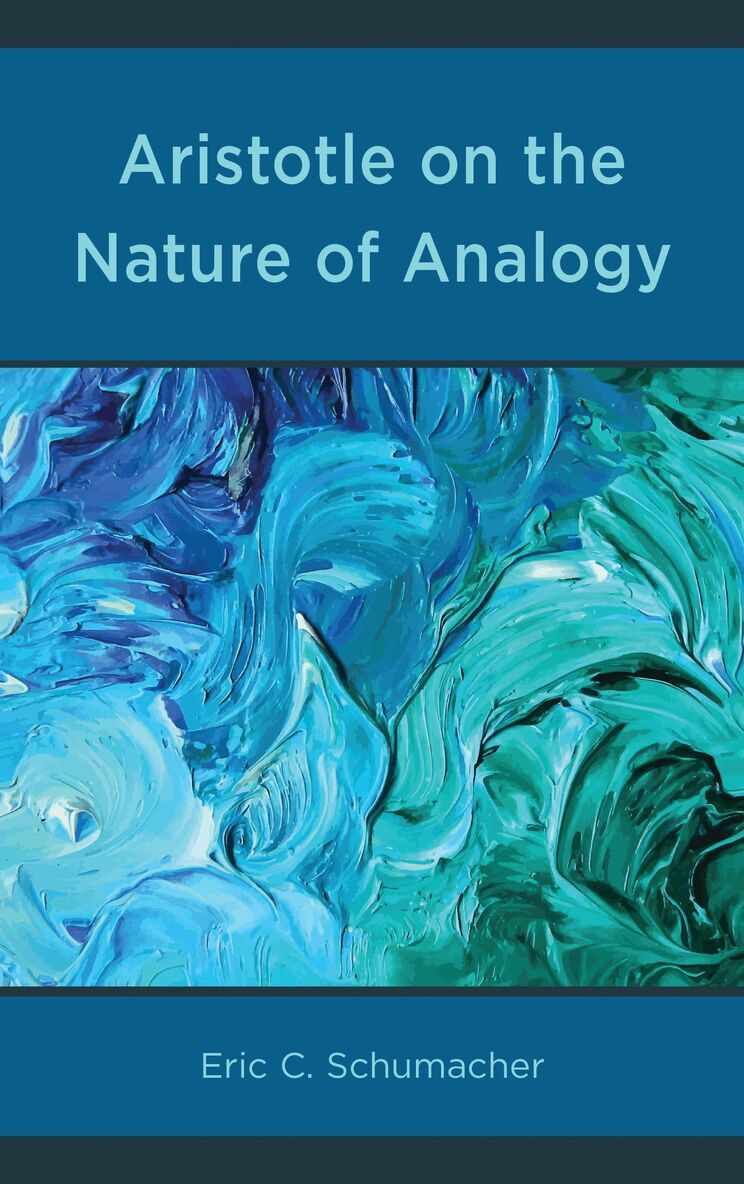
    Aristotle on the Nature of Analogy

    AvEric Schumacher

    Inbunden, Engelska, 2018

    1 117 kr

    Beställningsvara. Skickas inom 10-15 vardagar. Fri frakt över 249 kr.

    Beskrivning

    Focusing primarily on Aristotle’s Physics Alpha, an attempt is made to establish the structure and significance of the Aristotelian analogy. Traditionally, the concept of analogy in Aristotle has been treated along two lines of interpretation. In this book, these are referred to as the mathematical interpretation and the correlative interpretation. The mathematical approach claims that the Aristotelian analogy only accounts for proportional comparisons between usually four things. On the other hand, the correlative interpretation describes the Aristotelian analogy as something that unites the multiple uses of a single term (the many uses of “healthy,” for example). This book will argue that both of these interpretations overlook the nature of the Aristotelian analogy. The structure of analogy can be taken from Aristotle’s discussion of the three principles of natural “becoming” in his Physics Alpha. In Physics Alpha, Aristotle claims that these three principles are: 1) the being in its addressable form (logos); 2) the course of becoming of that addressable being (steresis); 3) the substance that remains the same throughout the change (hypokeimenon). Although the first principle, logos, accounts for addressability, the other two do not. The second and third principles are inseparable from logos but always remain hidden from addressability (ana-logos). This book will argue that these principles reveal a structure of analogy that discloses an inherent mobility of logos which enables it to reflect the intuitive and ever-changing principles of becoming. As such, the relationship between Logos and intuition (nous) can be reimagined.

    Produktinformation

    • Utgivningsdatum:2018-10-15
    • Mått:159 x 231 x 17 mm
    • Vikt:381 g
    • Format:Inbunden
    • Språk:Engelska
    • Antal sidor:140
    • Förlag:Bloomsbury Publishing Plc
    • ISBN:9780739198704

    Utforska kategorier

    • Filosofi inom Filosofi och religion
    • Filosofiska discipliner inom Filosofi och religion

    Mer om författaren

    Eric Schumacher is associate professor of philosophy at Cheyney University of Pennsylvania.

    Recensioner i media

    Eric Schumacher here offers an ambitious and original interpretation of the concept of analogy in Aristotle's Physics. In his reading, analogy becomes intimately linked to the movements of nature, insofar as it is capable of making visible not only the formal and quantitative characteristics of natural beings, but also their privations and "silent features."

    Innehållsförteckning

    • IntroductionCourse of this StudyGenesis and AnalogyComparability and Underlying NatureChapter One: Locating the Structure of Analogy in Aristotle’s ThoughtTwo Determinant Points of Reference for the Study of Analogy in Aristotle’s Thought: Gamma 2 and Lambda 4Aristotle’s “Common Nature” as the Ground of Analogy in Aquinas Aquinas on Analogical NamesAquinas on the Analogy of BeingConcluding Comments on Aquinas on AnalogyAristotle’s “Common Nature” as the Ground of the Abuse of AnalogyOwen on Focal MeaningAubenque on the “Origin of the Doctrine of the Analogy of Being”What Heidegger Adds to the Locating of Analogy in AristotleProblems with the Two Interpretations of Analogy in AristotleChapter Two: Speaking By NatureAristotle’s Way as an Analogical Movement of DiscoveryPhysics Alpha, 1Three Conditions Nous for the Structure of AnalogyThe Co-operation of Nous and AisthesisNous and its Expression through LogosNous and the Apprehending of First PrinciplesA Few More Words on Nous and the Return to the Analogical Movement of Discovery Physics Alpha, 2Concluding Remarks on the Analogical Movement of DiscoveryChapter Three: On the Primary Role of SteresisUnification and Uniqueness as the Guiding Significance of Steresis Reading the Definitions of Steresis from Metaphysics Delta, 22A Few More Words Regarding the Articulation of SteresisPhysics Alpha, 3, 4 and 5Concluding Remarks on Qualified Non-BeingChapter Four: On the Analogical Preservation of the Ambiguity of BeingPhysics Alpha, 6 Logos as Radical AnalogyConcluding Remarks on Logos as Radical AnalogyBibliography