• Fri frakt över 249 kr
  • •
  • Snabba leveranser
  • •
  • Billiga böcker
Kundservice

Du är på sajten för privatpersoner.

Företag, bibliotek eller offentlig verksamhet?

Du handlar på classic.bokus.com, där alla dina funktioner finns intakta.
Till classic.bokus.com
Bokus logotyp. Gå till startsidan.
  • Erbjudanden
  • Nyheter
  • Student
  • Topplistor
  • Barn & ungdom
  • Bokus Play
  • E-böcker
  • Pocketböcker
  • Spel & pussel

10% rabatt på allt med kod NYSTART10 →

Sidfot

Mina sidor

    Hjälp

    • Kundservice
    • Vanliga frågor och svar
    • Frakt och leverans
    • Retur vid ångerrätt
    • Reklamera vara
    • Betalning
    • Köpvillkor
    • Allmänna villkor
    • Information om webbplatsens tillgänglighet

    Om Bokus

    • Om oss
    • Pressrum
    • För studenter
    • För företag
    • För bibliotek och offentlig verksamhet
    • För leverantörer
    • Hållbarhet

    Populärt

    • Aktuella erbjudanden
    • Presentkort
    • Studentlitteratur
    • Nya böcker
    • Topplistor
    • Signerade böcker
    • Engelska böcker

    Inspiration

    • Boktips
    • BookTok
    • Populära bokserier
    • Barnbokskaraktärer
    • Populära författare
    Logotyp för Bokus
    Följ oss på Facebook (extern länk)Följ oss på Instagram (extern länk)Följ oss på YouTube (extern länk)Följ oss på TikTok (extern länk)
    bokus @ CookiesAnpassa cookiesIntegritetspolicyKöpvillkor
    Till Citymail hemsida (extern länk)Till Budbee hemsida (extern länk)Till Postnord hemsida (extern länk)Till Schenker hemsida (extern länk)Till Early Bird hemsida (extern länk)Till Walleys hemsida (extern länk)
    1. Historia och arkeologi
    2. Historia
    3. Historia: särskilda händelser och ämnen
    4. Kalla krig och ombudskrig

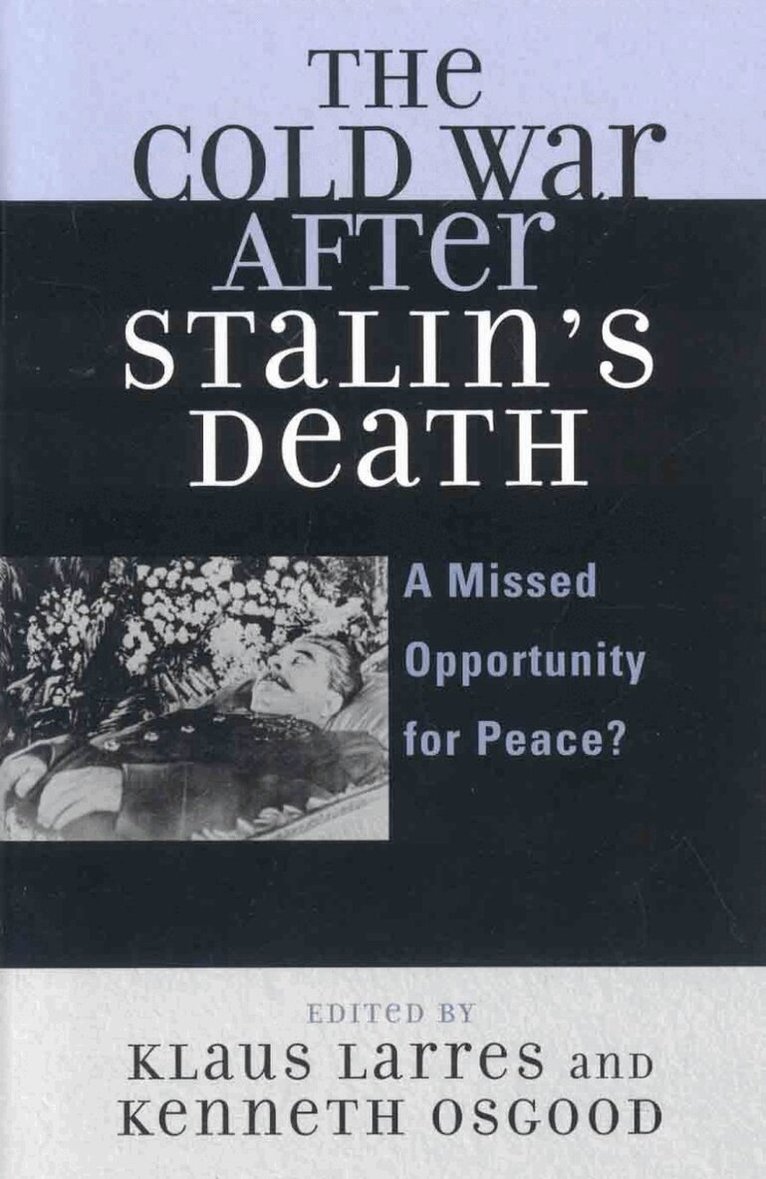
    Cold War after Stalin's Death

    A Missed Opportunity for Peace?

    AvKlaus Larres,Kenneth Osgood

    Inbunden, Engelska, 2006

    Del i serien Harvard Cold War Studies Book Series

    1 580 kr

    Beställningsvara. Skickas inom 10-15 vardagar. Fri frakt över 249 kr.

    Beskrivning

    After Stalin's death in March 1953, the Cold War changed almost overnight. The Soviet Union embarked on a course of reconciliation and greater openness. However, despite an end to the Korean War and progress on many other outstanding East-West questions, the Western world remained mistrustful of Soviet motives and policies and Soviet leaders remained suspicious of Western intentions. Less than a decade after Stalin's death the Berlin Wall was erected and the Cuban Missile Crisis brought the world close to nuclear annihilation. Was this development unavoidable? Was an opportunity missed to overcome and terminate the Cold War? Was there a possibility for the creation of a more stable, less threatening, and less costly world in both human and material terms? It is only now, after the end of the Cold War and based on recently declassified western documents and revelations from once-closed archives in the former Soviet Union, Eastern Europe, and China, that new light can be shed on the nature of international Cold War policies in the years after Stalin's death. The essays in this book offer a historical understanding of this crucial period of the Cold War, assessing both the possibilities for change and the obstacles to détente. The book draws on the collective talents of an international group of scholars with a wide range of historical, geographical, and linguistic expertise. All of the essays are based on original research, many of them drawing from previously inaccessible archival documents from both the East and West. This book should be read by everyone interested in the final stage of the defining conflict that was the Cold War.Contributions by: Csaba Békés, Günter Bischof, Jeffrey Brooks, Ira Chernus, Jerald A. Combs, Lloyd Gardner, Jussi M. Hanhimäki, Hope M. Harrison, Tsuyoshi Hasegawa, Mark Kramer, Klaus Larres, Vojtech Mastny, Kenneth Osgood, Kathryn C. Statler, and Qiang Zhai

    Produktinformation

    • Utgivningsdatum:2006-10-12
    • Mått:161 x 233 x 31 mm
    • Vikt:649 g
    • Format:Inbunden
    • Språk:Engelska
    • Serie:Harvard Cold War Studies Book Series
    • Antal sidor:352
    • Förlag:Bloomsbury Publishing Plc
    • ISBN:9780742554511

    Utforska kategorier

    • Kalla krig och ombudskrig inom Historia och arkeologi
    • Allmän historia och världshistoria inom Historia och arkeologi

    Mer om författaren

    Klaus Larres is professor of history and international affairs at the University of Ulster. He is also a Distinguished Scholar with the Library of Congress in Washington, D.C. Kenneth Osgood is assistant professor in the Department of History at Florida Atlantic University.

    Recensioner i media

    This exemplary collection of original essays sheds much new light on the evolution of the Cold War during one of its most dangerous and fluid phases. A model of broadly focused international history, The Cold War after Stalin's Death imaginatively probes paths taken—and not taken—by the Soviets, the Americans, and other key actors during a crucial period. Highly recommended for scholars and general readers alike.

    Innehållsförteckning

    • Introduction: International Politics in the Early Post-Stalin Era: A Lost Opportunity, a Turning Point, or More of the Same?Part I: The Soviet Union and the United States after StalinChapter 1: The Elusive Détente: Stalin's Successors and the WestChapter 2: The Perils of Coexistence: Peace and Propaganda in Eisenhower's Foreign PolicyChapter 3: A Missed Chance for Peace?: Opportunities for Détente in EuropeChapter 4: Poisoned Apples: John Foster Dulles and the Peace OffensivePart II: The Peace Offensives in Cultural ContextChapter 5: Meanings of Peace: The Rhetorical Cold War after StalinChapter 6: Stalin's Ghost: Cold War Culture and U.S.-Soviet RelationsPart III: Fragile Coalitions, East and WestChapter 7: The Road to Geneva 1955: Churchill's Summit Diplomacy and Anglo-American Tension after Stalin's DeathChapter 8: Alliance Politics after Stalin's Death: Franco-American Conflict in Europe and AsiaChapter 9: Coexistence and Confrontation: Sino-Soviet Relations after StalinChapter 10: The New Course: Soviet Policy Toward Germany and the Uprising in the GDRPart IV: Assessing Peaceful CoexistenceChapter 11: Cold War, Détente, and the 1956 Hungarian RevolutionChapter 12: The Robust Assertion of Austrianism: Peaceful Coexistence in Austria after Stalin's DeathChapter 13: The Lure of Neutrality: Finland and the Cold WarChapter 14: Treacherous Ground: Soviet-Japanese Relations and the United States