Häftad, Engelska, 2011
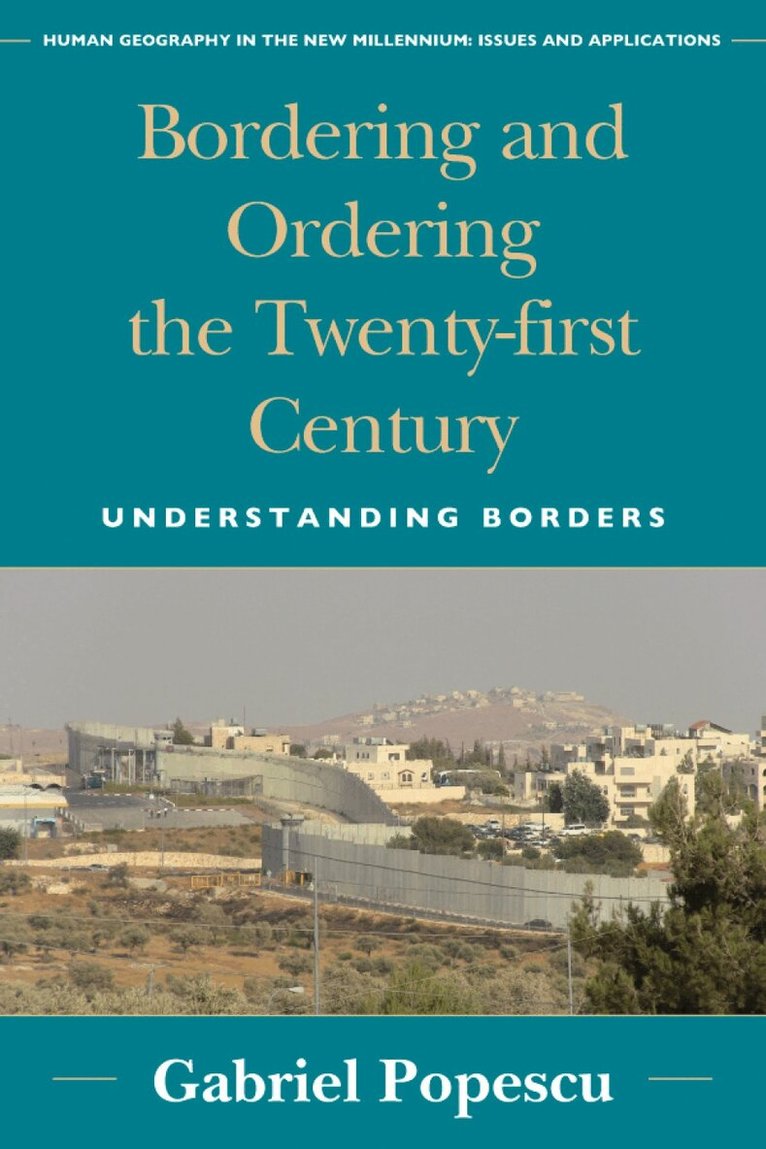
Bordering and Ordering the Twenty-first Century
Understanding Borders
Del i serien Human Geography in the Twenty-First Century: Issues and Applications
625 kr
Beställningsvara. Skickas inom 10-15 vardagar. Fri frakt över 249 kr.
Beskrivning
Produktinformation
- Utgivningsdatum: 2011-09-29
- Mått: 155 x 230 x 13 mm
- Vikt: 304 g
- Format: Häftad
- Språk: Engelska
- Serie: Human Geography in the Twenty-First Century: Issues and Applications
- Antal sidor: 192
- Förlag: Bloomsbury Publishing Plc
- ISBN: 9780742556225
- Utmärkelser: Winner of Association of Borderlands Studies book award 2013
Utforska kategorier
Mer om författaren
Gabriel Popescu is associate professor of geography in the Department of Political Science at Indiana University, South Bend.
Recensioner i media
This book provides an excellent classification of borders as viewed by various disciplines as well as providing a framework to understanding the changing nature of borders. In this manner, the work by Popescu is reminiscent of the work of Ellwyn R. Stoddard. Understanding the spatial characteristics of borders and reviewing its impact on the formation and transformation of borders is innovative. Finally, the author offers an excellent review of modern attempts to control mobility across borders. The final chapter reviews, within the framework constructed, the various types of cross-border cooperation. His review of this cross-border cooperation is as innovative as the work of Remigio Ratti and Shalom Reichman, Theory and Practice of Transborder Cooperation, was in 1993. This book will be useful to students as well as seasoned researchers.
Betyg & recensioner
0 recensioner
Inga recensioner tillgängliga.