• Fri frakt över 249 kr
  • •
  • Snabba leveranser
  • •
  • Billiga böcker
Kundservice

Du är på sajten för privatpersoner.

Företag, bibliotek eller offentlig verksamhet?

Du handlar på classic.bokus.com, där alla dina funktioner finns intakta.
Till classic.bokus.com
Bokus logotyp. Gå till startsidan.
  • Erbjudanden
  • Nyheter
  • Student
  • Topplistor
  • Barn & ungdom
  • Bokus Play
  • E-böcker
  • Pocketböcker
  • Spel & pussel

10% rabatt på allt med kod: NYSTART10 →

Sidfot

Mina sidor

    Hjälp

    • Kundservice
    • Vanliga frågor och svar
    • Frakt och leverans
    • Retur vid ångerrätt
    • Reklamera vara
    • Betalning
    • Köpvillkor
    • Allmänna villkor
    • Information om webbplatsens tillgänglighet

    Om Bokus

    • Om oss
    • Pressrum
    • För studenter
    • För företag
    • För bibliotek och offentlig verksamhet
    • För leverantörer
    • Hållbarhet

    Populärt

    • Aktuella erbjudanden
    • Presentkort
    • Studentlitteratur
    • Nya böcker
    • Topplistor
    • Signerade böcker
    • Engelska böcker

    Inspiration

    • Boktips
    • BookTok
    • Populära bokserier
    • Barnbokskaraktärer
    • Populära författare
    Logotyp för Bokus
    Följ oss på Facebook (extern länk)Följ oss på Instagram (extern länk)Följ oss på YouTube (extern länk)Följ oss på TikTok (extern länk)
    bokus @ CookiesAnpassa cookiesIntegritetspolicyKöpvillkor
    Till Citymail hemsida (extern länk)Till Budbee hemsida (extern länk)Till Postnord hemsida (extern länk)Till Schenker hemsida (extern länk)Till Early Bird hemsida (extern länk)Till Walleys hemsida (extern länk)
    1. Språk och ordböcker
    2. Språkvetenskap och lingvistik

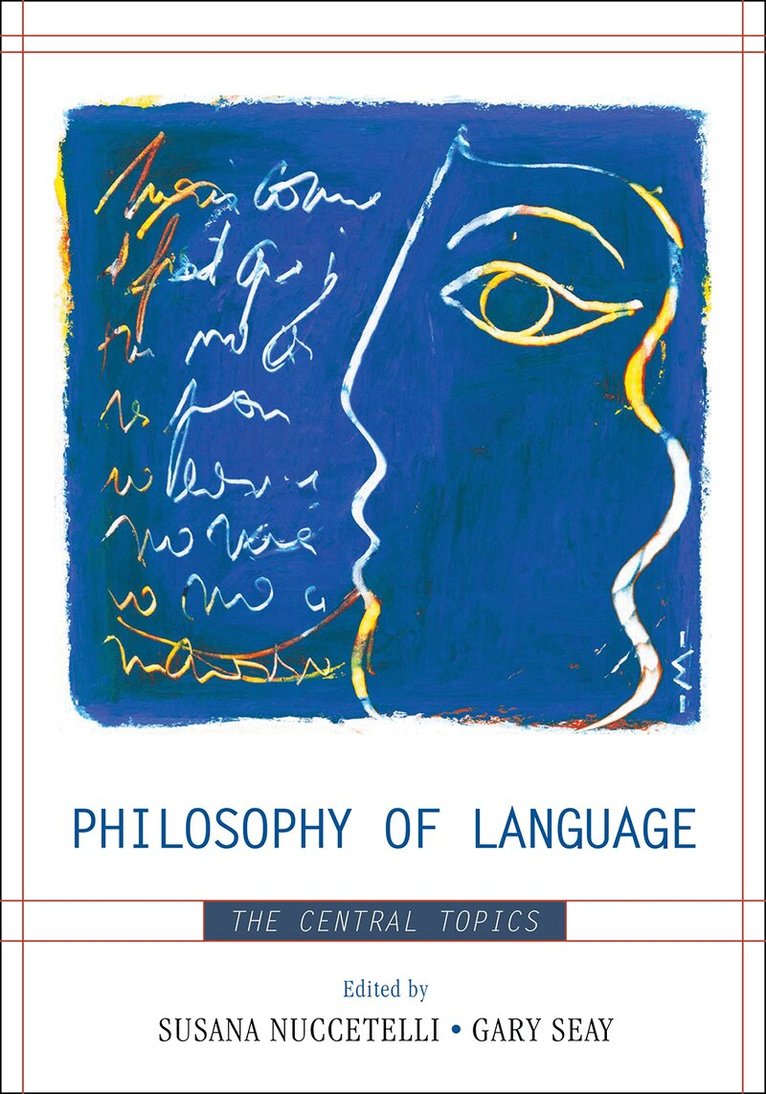
    Philosophy of Language

    The Central Topics

    AvSusana Nuccetelli,Gary Seay

    Häftad, Engelska, 2007

    910 kr

    Beställningsvara. Skickas inom 10-15 vardagar. Fri frakt över 249 kr.

    Beskrivning

    This collection of classic and contemporary essays in philosophy of language offers a concise introduction to the field for students in graduate and upper-division undergraduate courses. It contains some of the most important basic sources in philosophy of language, including a number of classic essays by philosophers such as Frege, Russell, Wittgenstein, Kripke, Grice, Davidson, Strawson, Austin, and Putnam, as well as more recent contributions by scholars including John McDowell, Stephen Neale, Ruth Millikan, Stephen Schiffer, Paul Horwich, and Anthony Brueckner, among others, who are on the leading edge of innovation in this increasingly influential area of philosophy. The result is a lively mix of readings, together with the editors' discussions of the material, which provides a rigorous introduction to the subject.

    Produktinformation

    • Utgivningsdatum:2007-12-24
    • Mått:181 x 255 x 26 mm
    • Vikt:885 g
    • Format:Häftad
    • Språk:Engelska
    • Antal sidor:432
    • Förlag:Bloomsbury Publishing Plc
    • ISBN:9780742559776

    Utforska kategorier

    • Språkvetenskap och lingvistik inom Språk och ordböcker
    • Filosofi inom Filosofi och religion
    • Filosofiska discipliner inom Filosofi och religion

    Mer om författaren

    Susana Nuccetelli is associate professor of philosophy at St. Cloud State University in Minnesota. Gary Seay is associate professor of philosophy at Medgar Evers College of the City University of New York.

    Recensioner i media

    This collection would make an excellent text for an advanced undergraduate or introductory graduate course in the philosophy of language. Its particular choice of readings is very good and not available in any other collection; its conceptualization of the subject and focus is extremely well suited for its intended audience, and the editors' introductions are substantive and helpful.

    Innehållsförteckning

    • Part 1 PrefacePart 2 Part I: Language, Meaning, and TruthChapter 3 IntroductionChapter 4 Suggestions for Further ReadingChapter 5 A. The Nature of LanguageChapter 6 Chapter 1. Philosophical Investigations (excerpts)Chapter 7 Chapter 2. Rules and Representations (excerpt)Chapter 8 B. Truth, Meaning, and the Indeterminacy of TranslationChapter 9 Chapter 3. The Semantic Conception of TruthChapter 10 Chapter 4. Semantics for Natural LanguagesChapter 11 Chapter 5. Indeterminacy of Translation AgainChapter 12 C. Meaning as IntentionChapter 13 Chapter 6. MeaningChapter 14 D. MeaningChapter 15 Chapter 7. Meaning, Use and TruthPart 16 Part II:Meaning and ReferenceChapter 17 IntroductionChapter 18 Suggestions for Further ReadingChapter 19 A. Proper NamesChapter 20 Chapter 8. On Sense and ReferenceChapter 21 Chapter 9. Naming and Necessity (Lecture II)Chapter 22 B. Definite DescriptionsChapter 23 Chapter 10. DescriptionsChapter 24 Chapter 11. Reference and Definite DescriptionsChapter 25 Chapter 12. Descriptions (excerpt)Chapter 26 C. Demonstratives and IndexicalsChapter 27 Chapter 13. Demonstratives (excerpt)Chapter 28 Chapter 14. Understanding DemonstrativesPart 29 Part III: Semantic ContentChapter 30 IntroductionChapter 31 Suggestions for Further ReadingChapter 32 A. Content: Direct-Reference Theory vs. Fregean SemanticsChapter 33 Chapter 15. Frege's Puzzle (excerpt)Chapter 34 Chapter 16. De Re SensesChapter 35 B. A Puzzle About Belief AscriptionsChapter 36 Chapter 17. A Puzzle about Belief (excerpt)Chapter 37 Chapter 18. What Puzzling Pierre Does Not BelieveChapter 38 C. The Internalism/Externalism DebateChapter 39 Chapter 19. Meaning and ReferenceChapter 40 Chapter 20. Are Meanings in the Head?Chapter 41 Chapter 21. The Social Character of MeaningChapter 42 D. Externalism and KnowledgeChapter 43 Chapter 22. Anti-individualism and Privileged AccessChapter 44 Chapter 23. What an Anti-Individualist Knows A PrioriPart 45 Part IV: Convention, Intention, and the Pragmatics of LanguageChapter 46 IntroductionChapter 47 Suggestions for Further ReadingChapter 48 A. Speech Acts and ConventionChapter 49 Chapter 24. Performative - ConstativeChapter 50 B. Speech Acts and Speaker MeaningChapter 51 Chapter 25. Intention and Convention in Speech ActsChapter 52 Chatper 26. Meaning (excerpt)Chapter 53 C. Speech Acts and EvolutionChapter 54 Chapter 27. Pushmi-Pullyu RepresentationsChapter 55 D. Conversational Implicature and MetaphorChapter 56 Chapter 28. Logic and ConversationChapter 57 Chapter 29. What Metaphors Mean