• Fri frakt över 249 kr
  • •
  • Snabba leveranser
  • •
  • Billiga böcker
Kundservice

Du är på sajten för privatpersoner.

Företag, bibliotek eller offentlig verksamhet?

Du handlar på classic.bokus.com, där alla dina funktioner finns intakta.
Till classic.bokus.com
Bokus logotyp. Gå till startsidan.
  • Erbjudanden
  • Nyheter
  • Student
  • Topplistor
  • Barn & ungdom
  • Bokus Play
  • E-böcker
  • Pocketböcker
  • Spel & pussel

10% rabatt på allt med kod NYSTART10 →

Sidfot

Mina sidor

    Hjälp

    • Kundservice
    • Vanliga frågor och svar
    • Frakt och leverans
    • Retur vid ångerrätt
    • Reklamera vara
    • Betalning
    • Köpvillkor
    • Allmänna villkor
    • Information om webbplatsens tillgänglighet

    Om Bokus

    • Om oss
    • Pressrum
    • För studenter
    • För företag
    • För bibliotek och offentlig verksamhet
    • För leverantörer
    • Hållbarhet

    Populärt

    • Aktuella erbjudanden
    • Presentkort
    • Studentlitteratur
    • Nya böcker
    • Topplistor
    • Signerade böcker
    • Engelska böcker

    Inspiration

    • Boktips
    • BookTok
    • Populära bokserier
    • Barnbokskaraktärer
    • Populära författare
    Logotyp för Bokus
    Följ oss på Facebook (extern länk)Följ oss på Instagram (extern länk)Följ oss på YouTube (extern länk)Följ oss på TikTok (extern länk)
    bokus @ CookiesAnpassa cookiesIntegritetspolicyKöpvillkor
    Till Citymail hemsida (extern länk)Till Budbee hemsida (extern länk)Till Postnord hemsida (extern länk)Till Schenker hemsida (extern länk)Till Early Bird hemsida (extern länk)Till Walleys hemsida (extern länk)
    1. Historia och arkeologi
    2. Historia
    3. Europas historia

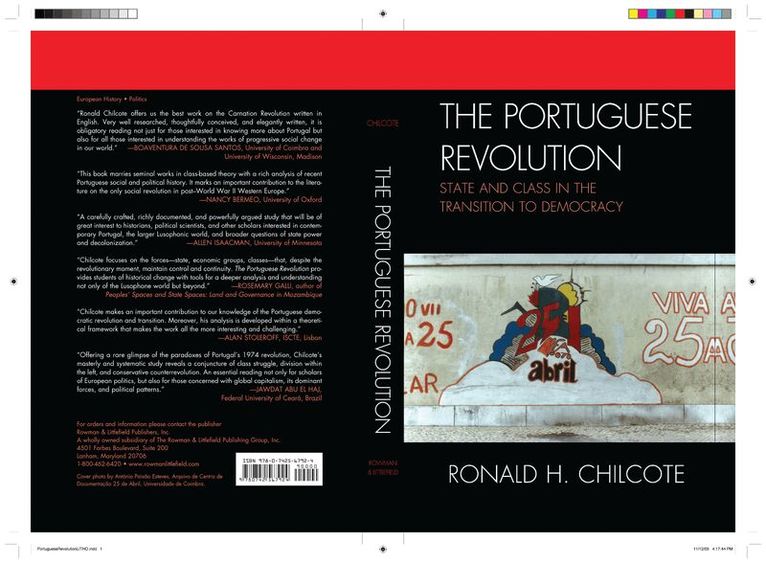
    Portuguese Revolution

    State and Class in the Transition to Democracy

    AvRonald H. Chilcote

    Inbunden, Engelska, 2010

    1 723 kr

    Beställningsvara. Skickas inom 10-15 vardagar. Fri frakt över 249 kr.

    Fler format och utgåvor

    Häftad

    722 kr

    E-bok

    777 kr

    Beskrivning

    Building on decades of research, leading scholar Ronald H. Chilcote provides a definitive analysis of the 1974–1975 Portuguese revolution, which captured global attention and continues to resonate today. His study revisits a key historical moment to explain the revolution and its aftermath through periods of authoritarianism and resistance as well as representative and popular democracy. Exploring the intertwined themes of class, state, and hegemony, Chilcote builds a powerful framework for understanding the Portuguese case as well as contemporary political economy worldwide.

    Produktinformation

    • Utgivningsdatum:2010-02-16
    • Mått:162 x 241 x 26 mm
    • Vikt:649 g
    • Format:Inbunden
    • Språk:Engelska
    • Antal sidor:328
    • Förlag:Bloomsbury Publishing Plc
    • ISBN:9780742567924

    Utforska kategorier

    • Europas historia inom Historia och arkeologi

    Mer om författaren

    Ronald H. Chilcote is professor of economics and political science at the University of California, Riverside.

    Recensioner i media

    This book interprets the Portuguese revolution of 1974–75 and emphasizes its significance as a political and economic rapture. It describes the events leading up to the coup of April 25, 1974, the coup itself, the role of the Armed Forces Movement (MFA), subsequent institutional conflict among the MFA and the political parties including the Portuguese Communist Party, and the impact of labor unions and new popular and social movements. Advancing a class theory of the state, Chilcote (Univ. of California, Riverside) argues the November 25, 1975, countercoup ended prospects for any socialist transition and ensured the state's control over the eventual consolidation of capitalism and parliamentary democracy. He believes Portugal's revolution failed for many reasons, including the country's conservative nature, its traditionally weak proletariat, and a lack of an independent workers' movement under the António Salazar/Marcelo Caetano regime. Chilcote's key argument, however, is that the continuity of the state throughout Portugal's uneven movement from authoritarianism to liberal democracy best explains the revolution's political and economic outcomes. This analysis is well grounded in extensive archival research, numerous interviews of the revolution's participants, and a careful reading of the academic literature's vast coverage of the topic. Summing Up: Recommended.

    Innehållsförteckning

    • Preface: Portugal and Comparative InquiryIntroductionChapter 1: Capitalism and the Bourgeois RevolutionPart I: State Forms, Enterprise, and Continuity in the Consolidation of CapitalismChapter 2: Origins and Evolution of the StateChapter 3: Economic Groups, Public Enterprises, and Multinationals: Links to the StateChapter 4: Continuity of the State in the Political EconomyPart II: Class and Movement in the Struggle for a Socialist Transition and Popular DemocracyChapter 5: Class and Movement in the Struggle for a Socialist Transition and Popular DemocracyChapter 6: The April 25 CoupChapter 7: Institutional Conflict and the MFAChapter 8: The New Popular and Social MovementsChapter 9: Social Classes in StruggleChapter 10: Legacies of the RevolutionChapter 11: The AftermathConclusion: Assessment and Implications