• Fri frakt över 249 kr
  • •
  • Snabba leveranser
  • •
  • Billiga böcker
Kundservice

Du är på sajten för privatpersoner.

Företag, bibliotek eller offentlig verksamhet?

Du handlar på classic.bokus.com, där alla dina funktioner finns intakta.
Till classic.bokus.com
Bokus logotyp. Gå till startsidan.
  • Erbjudanden
  • Nyheter
  • Student
  • Topplistor
  • Barn & ungdom
  • Bokus Play
  • E-böcker
  • Pocketböcker
  • Spel & pussel

10% rabatt på allt med kod NYSTART10 →

Sidfot

Mina sidor

    Hjälp

    • Kundservice
    • Vanliga frågor och svar
    • Frakt och leverans
    • Retur vid ångerrätt
    • Reklamera vara
    • Betalning
    • Köpvillkor
    • Allmänna villkor
    • Information om webbplatsens tillgänglighet

    Om Bokus

    • Om oss
    • Pressrum
    • För studenter
    • För företag
    • För bibliotek och offentlig verksamhet
    • För leverantörer
    • Hållbarhet

    Populärt

    • Aktuella erbjudanden
    • Presentkort
    • Studentlitteratur
    • Nya böcker
    • Topplistor
    • Signerade böcker
    • Engelska böcker

    Inspiration

    • Boktips
    • BookTok
    • Populära bokserier
    • Barnbokskaraktärer
    • Populära författare
    Logotyp för Bokus
    Följ oss på Facebook (extern länk)Följ oss på Instagram (extern länk)Följ oss på YouTube (extern länk)Följ oss på TikTok (extern länk)
    bokus @ CookiesAnpassa cookiesIntegritetspolicyKöpvillkor
    Till Citymail hemsida (extern länk)Till Budbee hemsida (extern länk)Till Postnord hemsida (extern länk)Till Schenker hemsida (extern länk)Till Early Bird hemsida (extern länk)Till Walleys hemsida (extern länk)
    1. Historia och arkeologi
    2. Historia
    3. Afrikas historia

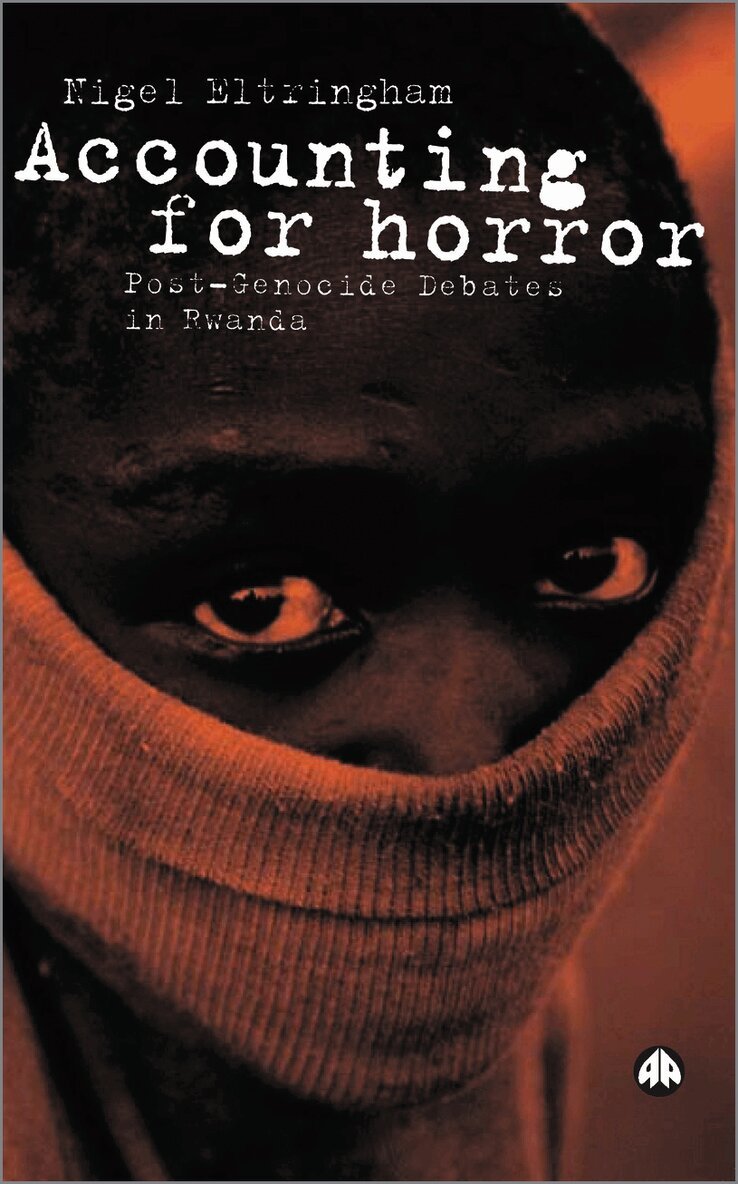
    Accounting for Horror

    Post-Genocide Debates in Rwanda

    AvNigel Eltringham

    Häftad, Engelska, 2004

    532 kr

    Tillfälligt slut

    Beskrivning

    The 1994 Rwandan genocide was a monumental atrocity in which at least 500,000 Tutsi and tens of thousands of Hutu were murdered in less than four months. Since 1994, members of the Rwandan political class who recognise those events as genocide have struggled to account for it and bring coherence to what is often perceived as irrational, primordial savagery.Most people agree on the factors that contributed to the genocide -- colonialism, ethnicity, the struggle to control the state. However, many still disagree over the way these factors evolved, and the relationship between them. This continuing disagreemnt raises questions about how we come to understand historical events -- understandings that underpin the possibility of sustainable peace.Drawing on extensive research among Rwandese in Rwanda and Europe, and on his work with a conflict resolution NGO in post-genocide Rwanda, Nigel Eltringham argues that conventional modes of historical representation are inadequate in a case like Rwanda. Single, absolutist narratives and representations of genocide actually reinforce the modes of thinking that fuelled the genocide in the first place. Eltringham maintains that if we are to understand the genocide, we must explore the relationship between multiple explanations of what happened and interrogate how -- and why -- different groups within Rwandan society talk about the genocide in different ways.

    Produktinformation

    • Utgivningsdatum:2004-01-20
    • Mått:135 x 215 x undefined mm
    • Format:Häftad
    • Språk:Engelska
    • Antal sidor:248
    • Förlag:Pluto Press
    • ISBN:9780745320007

    Utforska kategorier

    • Afrikas historia inom Historia och arkeologi

    Mer om författaren

    Nigel Eltringham is a Research Associate in the Department of Anthropology and Sociology of SOAS, London. He worked for three years with a conflict resolution NGO in Rwanda before conducting doctoral research in Rwanda and among the Rwandan Diaspora in Europe. He has extensively published on post-genocide Rwanda.

    Recensioner i media

    I think it is going to be a very fine contribution to African Studies. It is well structured, cogently argued, erudite and most of the time well-written -- Rene Lemarchand, author of Burundi: Ethnic Conflict and Genocide - professor Emeritus of Political Science at the University of Florida. The proposal certainly identifies some of the most critical issues in the discourse about the Rwandan Genocide. -- Carina Tersakian

    Innehållsförteckning

    • Acknowledgements Abbreviations Introduction 1. ‘Ethnicity’: The Permeant Debate2. The Pre-Cursor Debate3. The Holocaust: The Comparative Debate4. Debating Collective Guilt5. Unresolved Allegations And The Culture Of Impunity6. Appealling To The Past: The Debate Over HistoryAfterword Bibliography EndnotesIndex