• Fri frakt över 249 kr
  • •
  • Snabba leveranser
  • •
  • Billiga böcker
Kundservice

Du är på sajten för privatpersoner.

Företag, bibliotek eller offentlig verksamhet?

Du handlar på classic.bokus.com, där alla dina funktioner finns intakta.
Till classic.bokus.com
Bokus logotyp. Gå till startsidan.
  • Erbjudanden
  • Student
  • Topplistor
  • Barn & ungdom
  • Bokus Play
  • E-böcker
  • Ljudböcker
  • Pocketböcker
  • Spel & pussel

Upp till 25% på utvalda nyheter →

Sidfot

Mina sidor

    Hjälp

    • Kundservice
    • Vanliga frågor och svar
    • Frakt och leverans
    • Retur vid ångerrätt
    • Reklamera vara
    • Betalning
    • Köpvillkor
    • Allmänna villkor
    • Information om webbplatsens tillgänglighet

    Om Bokus

    • Om oss
    • Pressrum
    • För studenter
    • För företag
    • För bibliotek och offentlig verksamhet
    • För leverantörer
    • Hållbarhet

    Populärt

    • Aktuella erbjudanden
    • Presentkort
    • Studentlitteratur
    • Nya böcker
    • Topplistor
    • Signerade böcker
    • Engelska böcker

    Inspiration

    • Boktips
    • BookTok
    • Populära bokserier
    • Barnbokskaraktärer
    • Populära författare
    Logotyp för Bokus
    Följ oss på Facebook (extern länk)Följ oss på Instagram (extern länk)Följ oss på YouTube (extern länk)Följ oss på TikTok (extern länk)
    bokus @ CookiesAnpassa cookiesIntegritetspolicyKöpvillkor
    Till Citymail hemsida (extern länk)Till Budbee hemsida (extern länk)Till Postnord hemsida (extern länk)Till Schenker hemsida (extern länk)Till Early Bird hemsida (extern länk)Till Walleys hemsida (extern länk)
    1. Samhälle och politik
    2. Politik och statsskick
    3. Statsskick och politiska processer

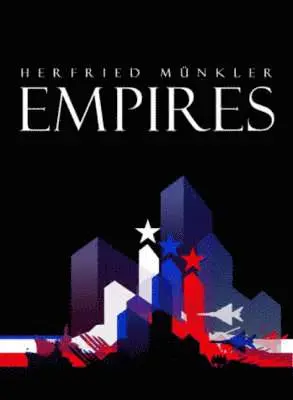
    Empires

    The Logic of World Domination from Ancient Rome to the United States

    AvHerfried Münkler

    Inbunden, Engelska, 2007

    883 kr

    Beställningsvara. Skickas inom 5-8 vardagar. Fri frakt över 249 kr.

    Fler format och utgåvor

    Häftad

    266 kr

    Beskrivning

    "Herfried Munkler is a walking one-man think tank."Die Zeit Until recently, it was thought by many that empires were relics of the past. But suddenly, in the wake of 9/11, the global war on terror and the invasion of Iraq, the question of imperial power has returned to the centre of debate: we now seem to be faced with a new American empire that many people regard as threatening. Do the politicians in Washington dictate the rules that the rest of the world must follow? Or do empires have a logic of their own to which even the most powerful rulers must succumb?In this major new book, Herfried Munkler analyses the characteristics of empires and traces the rise and fall of imperial powers from Ancient Rome to the present day. What is an empire? What risks does an imperial order face and what opportunities are offered? Munkler shows how empires provide stability and examines the dangers they face when their powers are overstretched. He argues that, while earlier empires from Ancient China and Ancient Rome to the Spanish, Portuguese and British empires had their own historical conditions, certain basic principles concerning the development and preservation of power can be discerned in all empires and are still relevant today.This book is a commanding walk through the history of empires and at the same time a brilliant analysis of the most modern of topics. It will appeal to students and scholars of international politics and history as well as general readers interested in political history and contemporary world politics.

    Produktinformation

    • Utgivningsdatum:2007-12-18
    • Mått:160 x 239 x 22 mm
    • Vikt:499 g
    • Format:Inbunden
    • Språk:Engelska
    • Antal sidor:264
    • Förlag:John Wiley and Sons Ltd
    • ISBN:9780745638713
    • Översättare:Patrick Camiller

    Utforska kategorier

    • Statsskick och politiska processer inom Samhälle och politik

    Mer om författaren

    Herfried Munkler is Professor of Political Theory at Humboldt University, Berlin.

    Recensioner i media

    "What makes Munkler's effort intriguingly different is that he doesn't just talk about America, but offers fascinating thoughts on the European Union as, at least potentially, a kind of empire too."The Independent"[In] tough-minded style, the German strategist Herfried Münkler has expounded the world-historical logic of empires in an ambitious comparative work."Perry Anderson, London Review of Books "Although Münkler's concerns are firmly grounded in the present, it is the ambition and historical richness of his argument that most firmly distinguishes it from other attempts to make sense of empire. Defying the presentism that is so characteristic of much commentary on the subject, Münkler takes the reader on a panoramic journey from the 'parallel empires' of Rome and Qin Dynasty China, through the seaborne and steppe empires of the late medieval and early modern periods, to the imperial American present ... A pleasure to read."Australian Journal of Political Science"Seamlessly weaving together theory and empiricism, [Empires] is a historical analysis of the highest order."Political Studies Review "Herfried Münkler is a walking one-man think-tank."Die Zeit"A fascinating examination of empire."Tribune"Münkler carefully traces the sweep of empires in history, distinguishes between that which is imperial and that which is imperialist, and renders a fascinating and balanced account of two contemporary cases: the contradictory elements of America?s imperial destiny and the inevitability, following the US precedent, of the EU?s taking on imperial forms, out of necessity, despite its anti-imperialist character. In a twenty-first century where issues of order and stability lie at the core of security questions, this timely book, elegant in its conception and translation, may be a vital guide."James Gow, King?s College London"Without question, this is the best single volume available on the logic of empires, both ancient and modern. The empirical range is impressive, the debt to international relations theory helpful, and the whole is written with grace and clarity."John A. Hall, McGill University

    Innehållsförteckning

    • Preface1. What Is an Empire?A brief sketch of the characteristics of empires - World empires and great empires - The compulsion to intervene, neutrality options and the Melian dialogue in Thucydides2. Empire, Imperialism and Hegemony: a Necessary DistinctionThe self-destructive dynamic of capitalism: economic theories of imperialism - The centre-periphery problem - Prestige and great power rivalry: political theories of imperialism - Expansion pressures, marginality advantages and time sovereignty - The tricky distinction between hegemony and empire3. Steppe Empires, Sea Empires and Global Economies: A Short Typology of Imperial RuleThe formation of empires through military and commercial extraction of surplus product - The two (at least two) sides of empires - Imperial cycles and Augustan thresholds4. Civilization and Barbarian Frontiers: Tasks and Hallmarks of Imperial OrderPeace as a justification for imperial rule - Imperial missions and the sacredness of empire - The idea of the barbarian and the construction of imperial space - Prosperity as a justification and programme for imperial rule5. The Defeat of Empires by the Power of the WeakForms of imperial overstretch - Political mobilization and military asymmetry: the strategies of anti-imperial players - Cultural identity struggles and terrorism as a strategy for wars of devastation6. The Surprising Return of Empire in the Post-Imperial AgeAnalyses of the end of empire and the problem of post-imperial areas - The United States: the new empire - A democratic empire? - Europe’s imperial challengeMapsNotesBibliographyAcknowledgements