• Fri frakt över 249 kr
  • •
  • Snabba leveranser
  • •
  • Billiga böcker
Kundservice

Du är på sajten för privatpersoner.

Företag, bibliotek eller offentlig verksamhet?

Du handlar på classic.bokus.com, där alla dina funktioner finns intakta.
Till classic.bokus.com
Bokus logotyp. Gå till startsidan.
  • Erbjudanden
  • Nyheter
  • Student
  • Topplistor
  • Barn & ungdom
  • Bokus Play
  • E-böcker
  • Pocketböcker
  • Spel & pussel

10% studentrabatt med kod TERM26

Sidfot

Mina sidor

    Hjälp

    • Kundservice
    • Vanliga frågor och svar
    • Frakt och leverans
    • Retur vid ångerrätt
    • Reklamera vara
    • Betalning
    • Köpvillkor
    • Allmänna villkor
    • Information om webbplatsens tillgänglighet

    Om Bokus

    • Om oss
    • Pressrum
    • För studenter
    • För företag
    • För bibliotek och offentlig verksamhet
    • För leverantörer
    • Hållbarhet

    Populärt

    • Aktuella erbjudanden
    • Presentkort
    • Studentlitteratur
    • Nya böcker
    • Topplistor
    • Signerade böcker
    • Engelska böcker

    Inspiration

    • Boktips
    • BookTok
    • Populära bokserier
    • Barnbokskaraktärer
    • Populära författare
    Logotyp för Bokus
    Följ oss på Facebook (extern länk)Följ oss på Instagram (extern länk)Följ oss på YouTube (extern länk)Följ oss på TikTok (extern länk)
    bokus @ CookiesAnpassa cookiesIntegritetspolicyKöpvillkor
    Till Citymail hemsida (extern länk)Till Budbee hemsida (extern länk)Till Postnord hemsida (extern länk)Till Schenker hemsida (extern länk)Till Early Bird hemsida (extern länk)Till Walleys hemsida (extern länk)
    1. Kultur
    2. Scenkonst och film
    3. Film

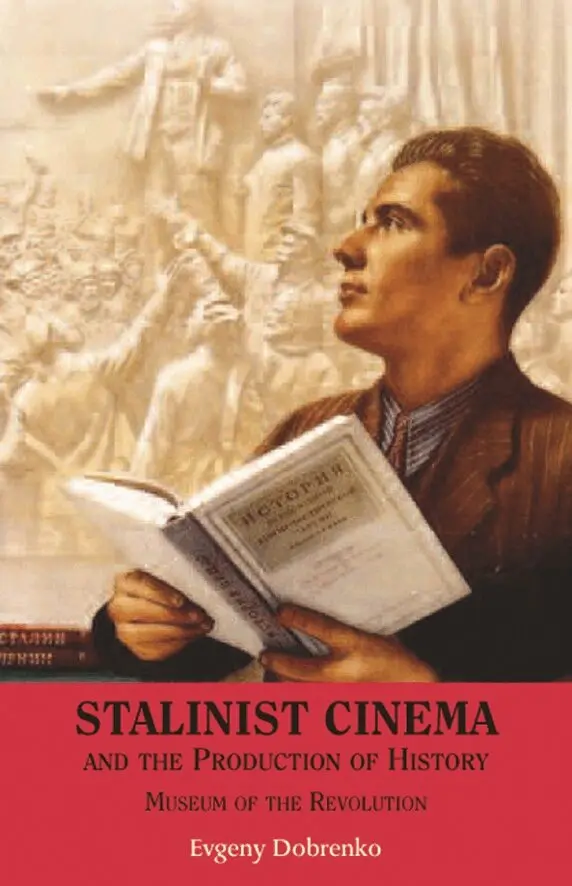
    Stalinist Cinema and the Production of History

    Museum of the Revolution

    AvEvgeny Dobrenko

    Inbunden, Engelska, 2008

    1 436 kr

    Beställningsvara. Skickas inom 7-10 vardagar. Fri frakt över 249 kr.

    Beskrivning

    This book explores how Soviet film worked with time, the past, and memory. It looks at Stalinist cinema and its role in the production of history, the conversion of the present and experience into history, mechanisms of transfer, and what is located between history and the past. The representation of history is always the representation of power. The institution of legitimization and the mechanism for the production of identity, history is the past, constructed and served by the authorities who are attempting to curtail the experience by packaging it into a literary narrative and new visual imagery. Cinema’s role in the legitimization of Stalinism and the production of a new Soviet identity was enormous. Both Lenin and Stalin saw in this ‘most important of arts’ the most effective form of propaganda and ‘organisation of the masses’. By examining the works of the greatest Soviet filmmakers of the Stalin era – Sergei Eisenstein, Vsevolod Pudovkin, Grigorii Kozintsev, Leonid Trauberg, Fridrikh Ermler, Mark Donskoi, Mikhail Romm – the author explores the role of the cinema in the formation of the Soviet political imagination.Key Features*The first study of Stalinist cinema, which fills a gap in the history of Soviet film.*Covers the works of great Soviet film directors.*Focuses on Stalinist political imagination, one of the most understudied aspects of Stalinism.

    Produktinformation

    • Utgivningsdatum:2008-03-05
    • Mått:156 x 234 x 22 mm
    • Vikt:604 g
    • Format:Inbunden
    • Språk:Engelska
    • Antal sidor:320
    • Förlag:Edinburgh University Press
    • ISBN:9780748634453

    Utforska kategorier

    • Film inom Kultur

    Mer om författaren

    Evgeny Dobrenko is Professor of Russian and Slavic Studies at the University of Venice. He is the author, editor, or co-editor of twenty-five books, and has published more than 300 articles and essays on Soviet cultural and intellectual history, literature, film, visual arts, architecture, photography, media and music, Socialist Realism, and critical theory, which between them have been translated into ten languages. His books include the monographs State Laughter: Stalinism, Populism, and Origins of Soviet Culture (OUP, 2022), Late Stalinism: The Aesthetics of Politics (Yale UP, 2020) and Stalinist Cinema and the Production of History: Museum of the Revolution (Edinburgh UP, 2008, as well as the edited volumes The Cambridge Companion to Twentieth-Century Russian Literature (with Marina Balina; CUP, 2011), Petrified Utopia: Happiness Soviet Style (with Marina Balina; London: Anthem Press, 2009) and Soviet Culture and Power: A History in Documents, 1917–1953 (with Katerina Clark; Yale UP, 2007, among others.

    Recensioner i media

    This is a major study of the place of Soviet film within the Soviet cultural system. Specialists in the history of Russian film and culture will find it an indispensable resource. -- Professor Jeff Brooks, The Johns Hopkins University This is essential reading for all those interested in Soviet film. Dobrenko with his fresh approach and non-standard mix of examples confounds many of the cliches about the subject. -- Professor Katerina Clark, Yale University Professor Dobrenko's absorbing new study of Stalin period cinema shows how films set in the past, from historical epics to versions of literary classics to narratives of the Revolutionary struggle were required to adapt 'history' to the evolving political demands of the present. Witty and nuanced, drawing on a broad range of sources, the book combines unprecedented attention to hitherto neglected films with exciting new insights into classics of Soviet cinema. -- Professor Julian Graffy, University College London Each chapter provides attentive discussions of three or four films, weaving a convincing argument through powerful examples! Anglophone academics will find this book a useful gateway to Russian language sources on film and Stalinist art! Dobrenko has set an example of interpretive practice with this detailed, painstaking exploration of the interface between ideology and cinema. -- Maria Antonia Velez-Serna, University of Glasgow Kelvingrove Review The key to this book's success is precisely the way in which the author manages to combine and weave the many threads in his argument into a satisfying whole... In sum, this is a rigorous and engrossing work that brings a profound understanding to the films of the Stalinist era and will initiate debates on major films that, to date, have been largely ignored in cinematic history. -- Jamie Miller, University of Toronto Modern Language Review This is a major study of the place of Soviet film within the Soviet cultural system. Specialists in the history of Russian film and culture will find it an indispensable resource. This is essential reading for all those interested in Soviet film. Dobrenko with his fresh approach and non-standard mix of examples confounds many of the cliches about the subject. Professor Dobrenko's absorbing new study of Stalin period cinema shows how films set in the past, from historical epics to versions of literary classics to narratives of the Revolutionary struggle were required to adapt 'history' to the evolving political demands of the present. Witty and nuanced, drawing on a broad range of sources, the book combines unprecedented attention to hitherto neglected films with exciting new insights into classics of Soviet cinema. Each chapter provides attentive discussions of three or four films, weaving a convincing argument through powerful examples! Anglophone academics will find this book a useful gateway to Russian language sources on film and Stalinist art! Dobrenko has set an example of interpretive practice with this detailed, painstaking exploration of the interface between ideology and cinema. The key to this book's success is precisely the way in which the author manages to combine and weave the many threads in his argument into a satisfying whole... In sum, this is a rigorous and engrossing work that brings a profound understanding to the films of the Stalinist era and will initiate debates on major films that, to date, have been largely ignored in cinematic history.

    Innehållsförteckning

    • Introduction: History Degree Zero1. The Dialectics of the Popular Monarchy2. History with Biography3. Russian Classics in its Revolutionary Development4. (Autobio/Bio/Hagio)graphy: Peshkov - Gorky - Donskoi5. Three Mothers: Pudovkin - Donskoi - Panfilov6. Shots from Underground: Dialectics of Conspiratorial Imagination