Evgeny Dobrenko – författare
Visar alla böcker från författaren Evgeny Dobrenko. Handla med fri frakt och snabb leverans.
18 produkter
18 produkter
Inbunden, Engelska, 2022
1 486 kr
Skickas inom 5-8 vardagar
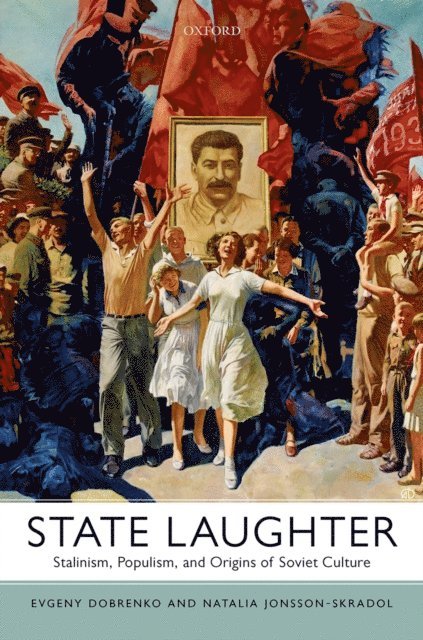
Stalin's reign of terror was not all doom and gloom, much of it was (meant to be) funny! From comedy films to satirical theatre, from caricature to court speeches, and from Stalin's own writings to bawdy folk songs, humour pervaded the popular culture of the USSR. Until now, conventional wisdom has held that humour was a hallmark of the subversive, but in State Laughter Dobrenko and Jonsson-Skradol do away with that notion. Instead, tracing the development of official humour, satire, and comedy from the revolution through to the 1950s, they explore how and why laughter was a core component of the survival of the Soviet regime. Grounded in Soviet intellectual and cultural history, State Laughter offers the first comprehensive analysis of state-sponsored popular culture in Stalin's Soviet Union.
Häftad, Engelska, 2003
570 kr
Skickas inom 3-6 vardagar
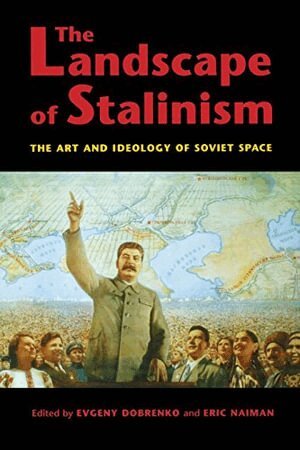
This wide-ranging cultural history explores the expression of Bolshevik Party ideology through the lens of landscape, or, more broadly, space. Portrayed in visual images and words, the landscape played a vital role in expressing and promoting ideology in the former Soviet Union during the Stalin years, especially in the 1930s. At the time, the iconoclasm of the immediate postrevolutionary years had given way to nation building and a conscious attempt to create a new Soviet “culture.” In painting, architecture, literature, cinema, and song, images of landscape were enlisted to help mold the masses into joyful, hardworking citizens of a state with a radiant, utopian future -- all under the fatherly guidance of Joseph Stalin.From backgrounds in history, art history, literary studies, and philosophy, the contributors show how Soviet space was sanctified, coded, and “sold” as an ideological product. They explore the ways in which producers of various art forms used space to express what Katerina Clark calls “a cartography of power” -- an organization of the entire country into “a hierarchy of spheres of relative sacredness,” with Moscow at the center. The theme of center versus periphery figures prominently in many of the essays, and the periphery is shown often to be paradoxically central.Examining representations of space in objects as diverse as postage stamps, a hikers’ magazine, advertisements, and the Soviet musical, the authors show how cultural producers attempted to naturalize ideological space, to make it an unquestioned part of the worldview. Whether focusing on the new or the centuries-old, whether exploring a built cityscape, a film documentary, or the painting Stalin and Voroshilov in the Kremlin, the authors offer a consistently fascinating journey through the landscape of the Soviet ideological imagination.Not all features of Soviet space were entirely novel, and several of the essayists assert continuities with the prerevolutionary past. One example is the importance of the mother image in mass songs of the Stalin period; another is the "boundless longing" inspired in the Russian character by the burden of living amid vast empty spaces. But whether focusing on the new or the centuries-old, whether exploring a built cityscape, a film documentary, or the painting Stalin and Voroshilov in the Kremlin, the authors offer a consistently fascinating journey through the landscape of the Soviet ideological imagination.
Inbunden, Engelska, 2007
1 165 kr
Skickas inom 5-8 vardagar
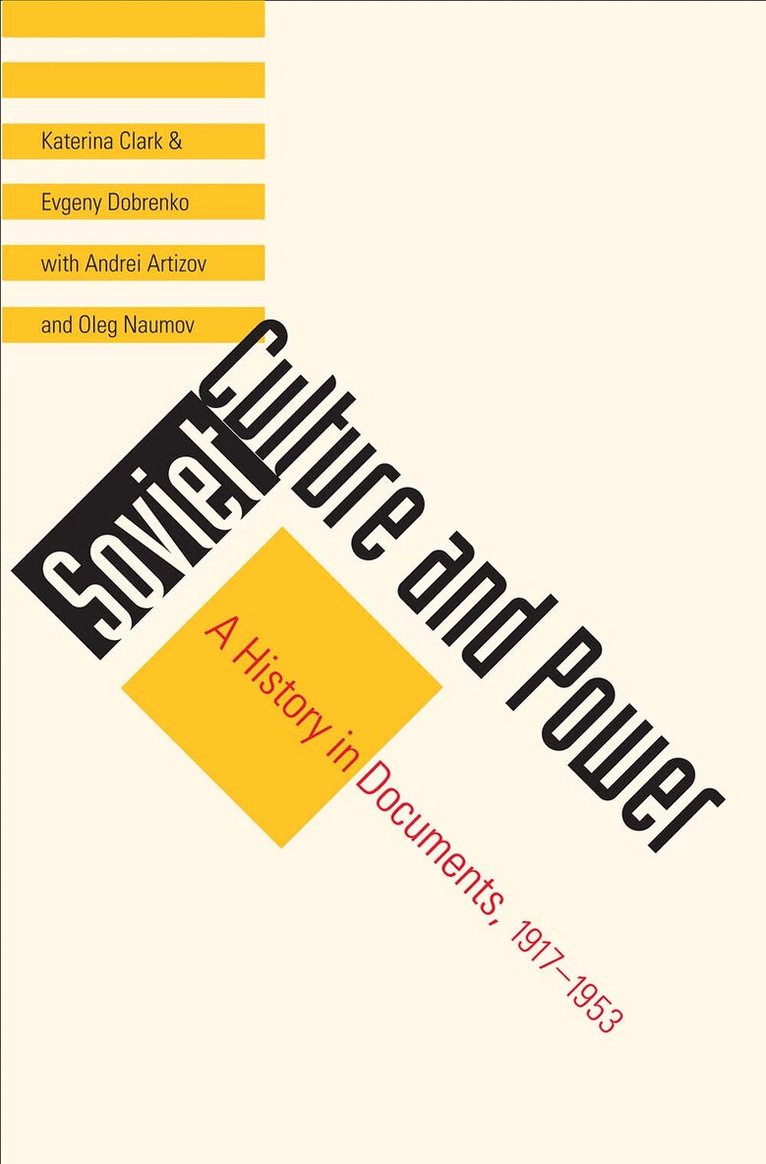
A history of Soviet repression of cultural and artistic life, based on remarkable archival documents never published in English beforeLeaders of the Soviet Union, Stalin chief among them, well understood the power of art, and their response was to attempt to control and directit in every way possible. This book examines Soviet cultural politics from the Revolution to Stalin’s death in 1953. Drawing on a wealth of newly released documents from the archives of the former Soviet Union, the book provides remarkable insight on relations between Gorky, Pasternak, Babel, Meyerhold, Shostakovich, Eisenstein, and many other intellectuals, and the Soviet leadership. Stalin’s role in directing these relations, and his literary judgments and personal biases, will astonish many. The documents presented in this volume reflect the progression of Party control in the arts. They include decisions of the Politburo, Stalin’s correspondence with individual intellectuals, his responses to particular plays, novels, and movie scripts, petitions to leaders from intellectuals, and secret police reports on intellectuals under surveillance. Introductions, explanatory materials, and a biographical index accompany the documents.
Inbunden, Engelska, 2007
1 044 kr
Skickas inom 5-8 vardagar
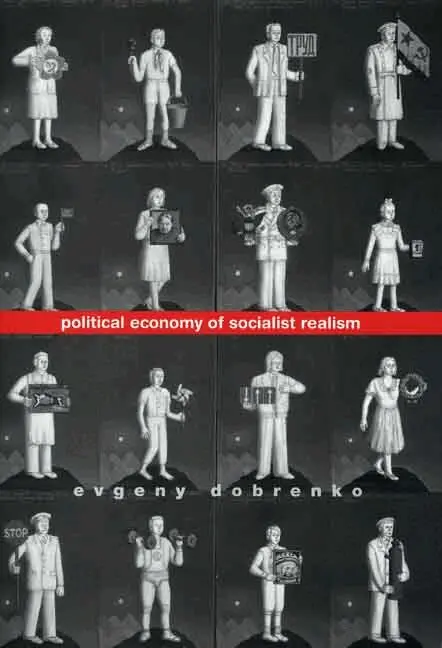
For decades Stalinist literature, film, and art was almost exclusively deemed political propaganda imposed from on high, devoid of any aesthetic significance. In this book, Evgeny Dobrenko suggests an entirely new view: socialism did not produce Socialist Realism to “prettify reality”; rather, Socialist Realism itself produced socialism by elevating socialism to reality status, giving it material form. Without art, socialism could not have materialized. Bringing together the Soviet historical experience and Stalin-era art—novels, films, poems, songs, painting, photography, architecture, and advertising—Dobrenko examines Stalinism’s representational strategies and demonstrates how real socialism was begotten of Socialist Realism. Socialist Realism, he concludes, was Stalinism’s most effective sociopolitical institution.
Häftad, Engelska, 2009
307 kr
Skickas inom 11-20 vardagar
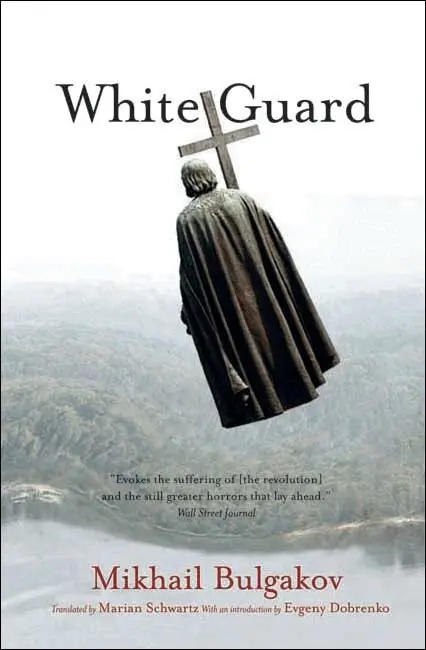
The first complete and accurate English translation of Bulgakov’s classic novel, accompanied by a substantial historical introduction “Bulgakov’s novel not only leads us into a majestic, more-than-1,000-year-old metropolis, but also gives us an understanding of how, in a single day, the world can change as radically as if decades had passed.”—Marci Shore, The Atlantic “Bulgakov’s novel evokes the suffering of the conflict and the still greater horrors that lay ahead.”—Joshua Rubenstein, Wall Street Journal White Guard, Mikhail Bulgakov’s semi-autobiographical first novel, is the story of the Turbin family in Kiev in 1918. Alexei, Elena, and Nikolka Turbin have just lost their mother—their father had died years before—and find themselves plunged into the chaotic civil war that erupted in the Ukraine in the wake of the Russian Revolution. In the context of this family’s personal loss and the social turmoil surrounding them, Bulgakov creates a brilliant picture of the existential crises brought about by the revolution and the loss of social, moral, and political certainties. He confronts the reader with the bewildering cruelty that ripped Russian life apart at the beginning of the last century as well as with the extraordinary ways in which the Turbins preserved their humanity. In this volume Marian Schwartz, a leading translator, offers the first complete and accurate translation of the definitive original text of Bulgakov’s novel. She includes the famous dream sequence, omitted in previous translations, and beautifully solves the stylistic issues raised by Bulgakov’s ornamental prose. Readers with an interest in Russian literature, culture, or history will welcome this superb translation of Bulgakov’s important early work. This edition also contains an informative historical essay by Evgeny Dobrenko.
Inbunden, Engelska, 2020
567 kr
Skickas
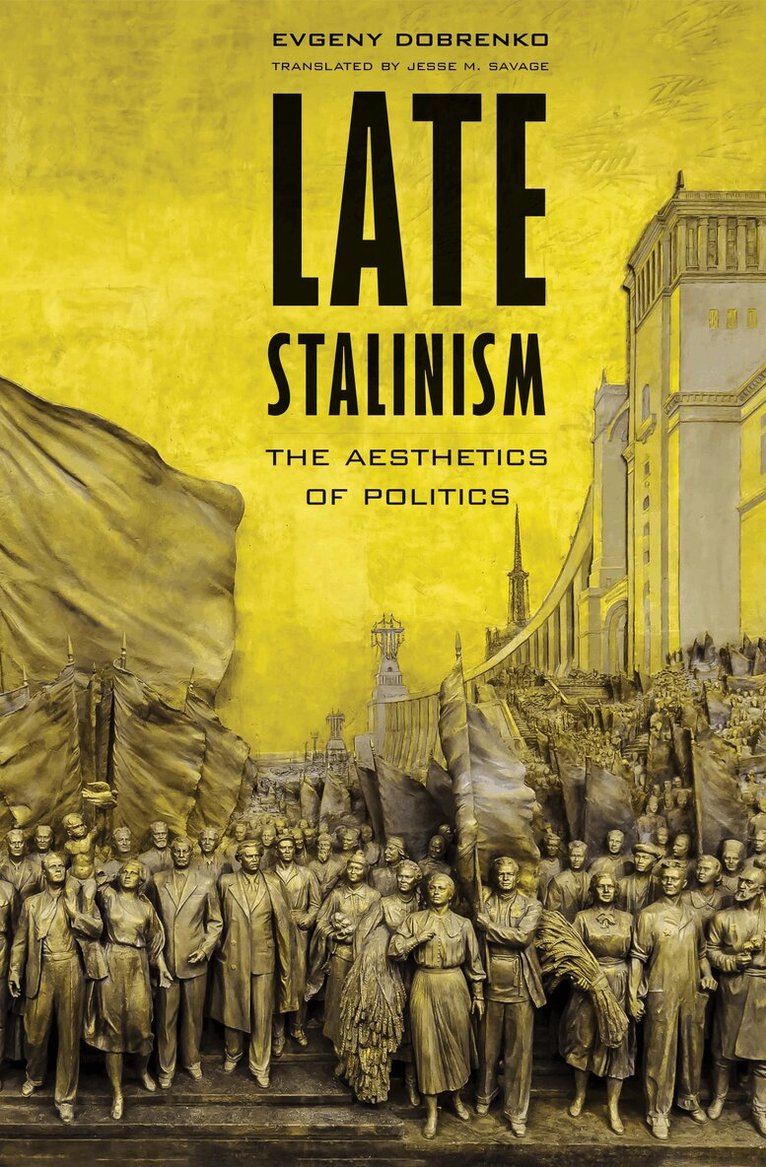
How the last years of Stalin’s rule led to the formation ofan imperial Soviet consciousnessIn this nuanced historical analysis of late Stalinism organized chronologically around the main events of the period—beginning with Victory in May 1945 and concluding with the death of Stalin in March 1953—Evgeny Dobrenko analyzes key cultural texts to trace the emergence of an imperial Soviet consciousness that, he argues, still defines the political and cultural profile of modern Russia.
Häftad, Engelska, 2011
408 kr
Skickas inom 7-10 vardagar
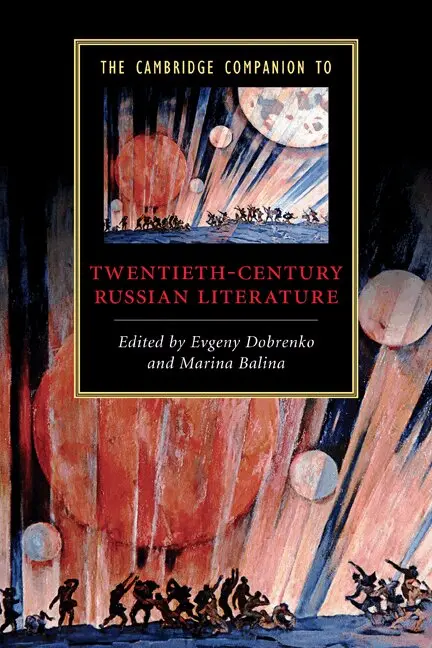
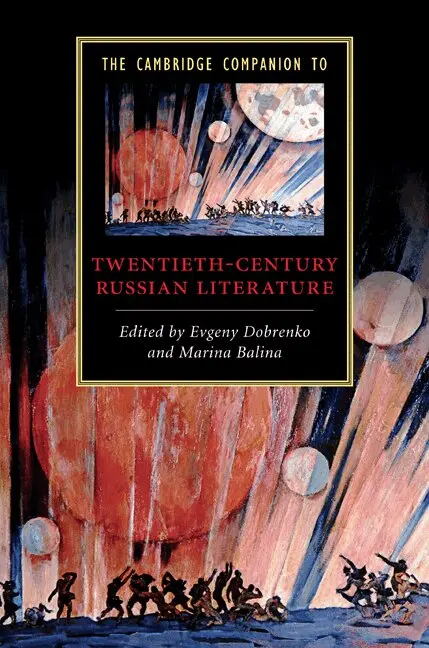
In Russian history, the twentieth century was an era of unprecedented, radical transformations - changes in social systems, political regimes, and economic structures. A number of distinctive literary schools emerged, each with their own voice, specific artistic character, and ideological background. As a single-volume compendium, the Companion provides a new perspective on Russian literary and cultural development, as it unifies both émigré literature and literature written in Russia. This volume concentrates on broad, complex, and diverse sources - from symbolism and revolutionary avant-garde writings to Stalinist, post-Stalinist, and post-Soviet prose, poetry, drama, and émigré literature, with forays into film, theatre, and literary policies, institutions and theories. The contributors present recent scholarship on historical and cultural contexts of twentieth-century literary development, and situate the most influential individual authors within these contexts, including Boris Pasternak, Alexander Solzhenitsyn, Joseph Brodsky, Osip Mandelstam, Mikhail Bulgakov and Anna Akhmatova.
Inbunden, Engelska, 2011
814 kr
Skickas inom 7-10 vardagar
In Russian history, the twentieth century was an era of unprecedented, radical transformations - changes in social systems, political regimes, and economic structures. A number of distinctive literary schools emerged, each with their own voice, specific artistic character, and ideological background. As a single-volume compendium, the Companion provides a new perspective on Russian literary and cultural development, as it unifies both émigré literature and literature written in Russia. This volume concentrates on broad, complex, and diverse sources - from symbolism and revolutionary avant-garde writings to Stalinist, post-Stalinist, and post-Soviet prose, poetry, drama, and émigré literature, with forays into film, theatre, and literary policies, institutions and theories. The contributors present recent scholarship on historical and cultural contexts of twentieth-century literary development, and situate the most influential individual authors within these contexts, including Boris Pasternak, Alexander Solzhenitsyn, Joseph Brodsky, Osip Mandelstam, Mikhail Bulgakov and Anna Akhmatova.
Inbunden, Engelska, 2008
1 390 kr
Skickas inom 7-10 vardagar
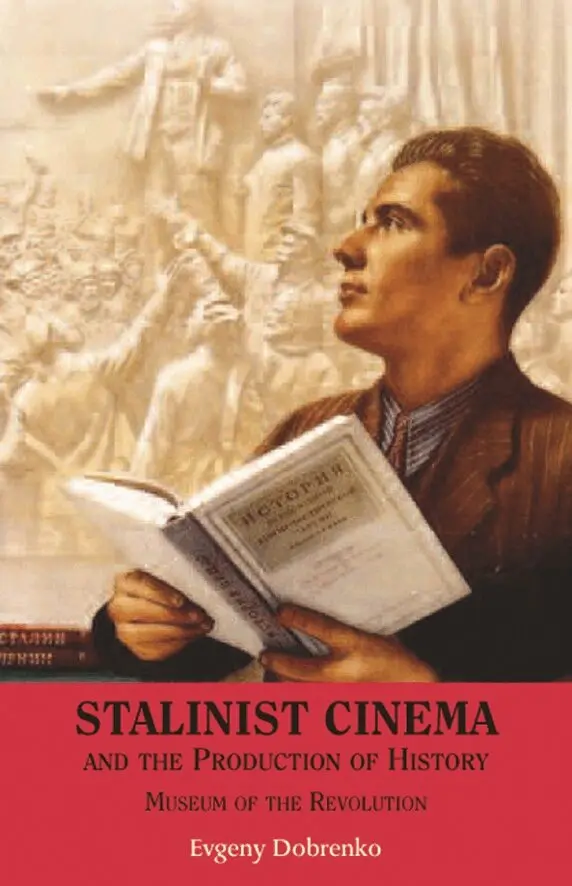
This book explores how Soviet film worked with time, the past, and memory. It looks at Stalinist cinema and its role in the production of history, the conversion of the present and experience into history, mechanisms of transfer, and what is located between history and the past. The representation of history is always the representation of power. The institution of legitimization and the mechanism for the production of identity, history is the past, constructed and served by the authorities who are attempting to curtail the experience by packaging it into a literary narrative and new visual imagery. Cinema’s role in the legitimization of Stalinism and the production of a new Soviet identity was enormous. Both Lenin and Stalin saw in this ‘most important of arts’ the most effective form of propaganda and ‘organisation of the masses’. By examining the works of the greatest Soviet filmmakers of the Stalin era – Sergei Eisenstein, Vsevolod Pudovkin, Grigorii Kozintsev, Leonid Trauberg, Fridrikh Ermler, Mark Donskoi, Mikhail Romm – the author explores the role of the cinema in the formation of the Soviet political imagination.Key Features*The first study of Stalinist cinema, which fills a gap in the history of Soviet film.*Covers the works of great Soviet film directors.*Focuses on Stalinist political imagination, one of the most understudied aspects of Stalinism.
Inbunden, Engelska, 1997
1 051 kr
Skickas inom 5-8 vardagar
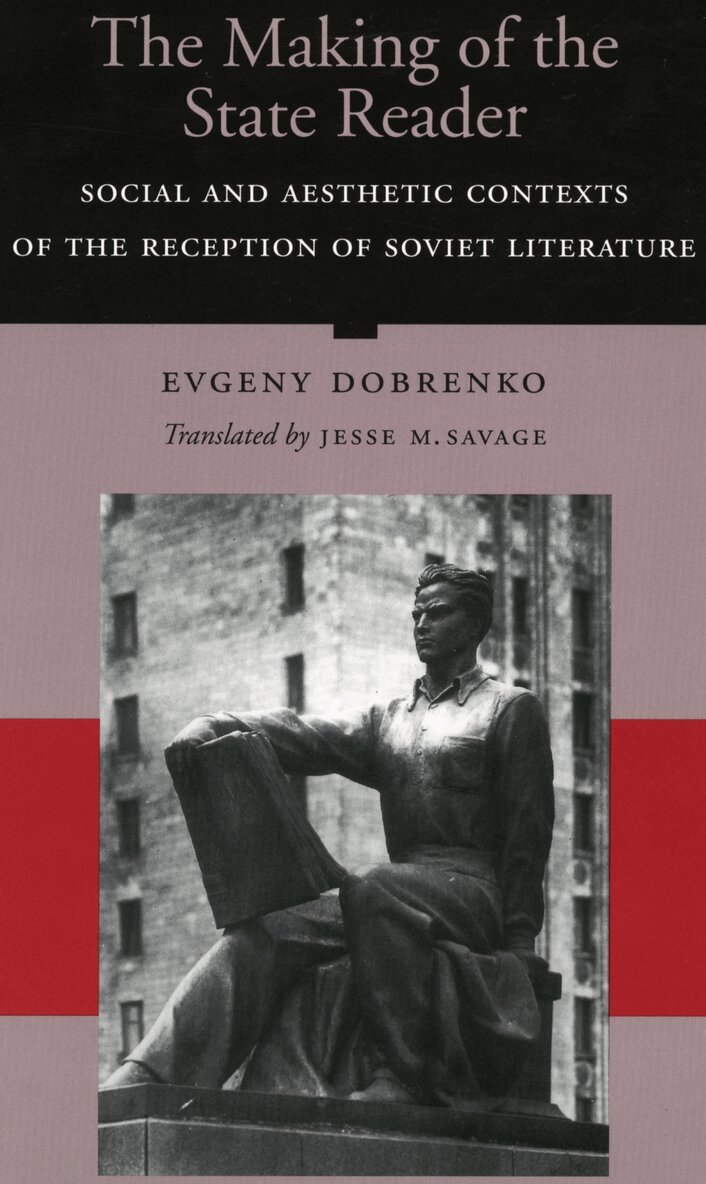
In Soviet culture, the reader was never a "consumer of books" in the Western sense. According to the aesthetic doctrine at the heart of Socialist Realism, the reader was a subject of education, to be reforged and molded. Because of this, Soviet culture cannot be examined properly without taking into account the reading masses. This book is a history of the shaping of the reader of Soviet literature, a history of the "State appropriation of the reader."The entire history of the formation and transformation of the institution of literature in the revolutionary and Soviet eras bears witness to the fact that literature was called upon to perform substantive political and ideological functions in the authorities' overall system (which included the publishing business, the book trade, libraries, and schools) aimed at ultimately creating a new Soviet person. This book shows how people from various social classes, in a dynamic unknown in pre-Soviet history, not only consumed the products of a new culture but in fact created that culture.On its own, the sociology of reading is scarcely capable of uncovering the variety, dynamism, and multilayered structure of the process of reading, for the reader is a composite figure. Soviet society in the Stalin era was not only a State-hierarchy system, but also a mosaic that was always divided into definite cultural strata, each of which consumed its own culture, which performed a host of familiar functions—escapist, socializing, compensating, informative, recreational, prestige-enhancing, aesthetic, and emotional—in addition to the specifically Soviet tastes connected with propaganda and mobilization. If we superimpose on this spectrum the diverse characteristics of individual readers, the resulting picture is extraordinarily variegated. At the same time, there is a certain cultural space in which these factors intersect—the space the author defines as the "situation of reading." In this book, he focuses on the basic lines of force that were at work in the Soviet reading space.
Inbunden, Engelska, 2002
1 502 kr
Skickas inom 10-15 vardagar
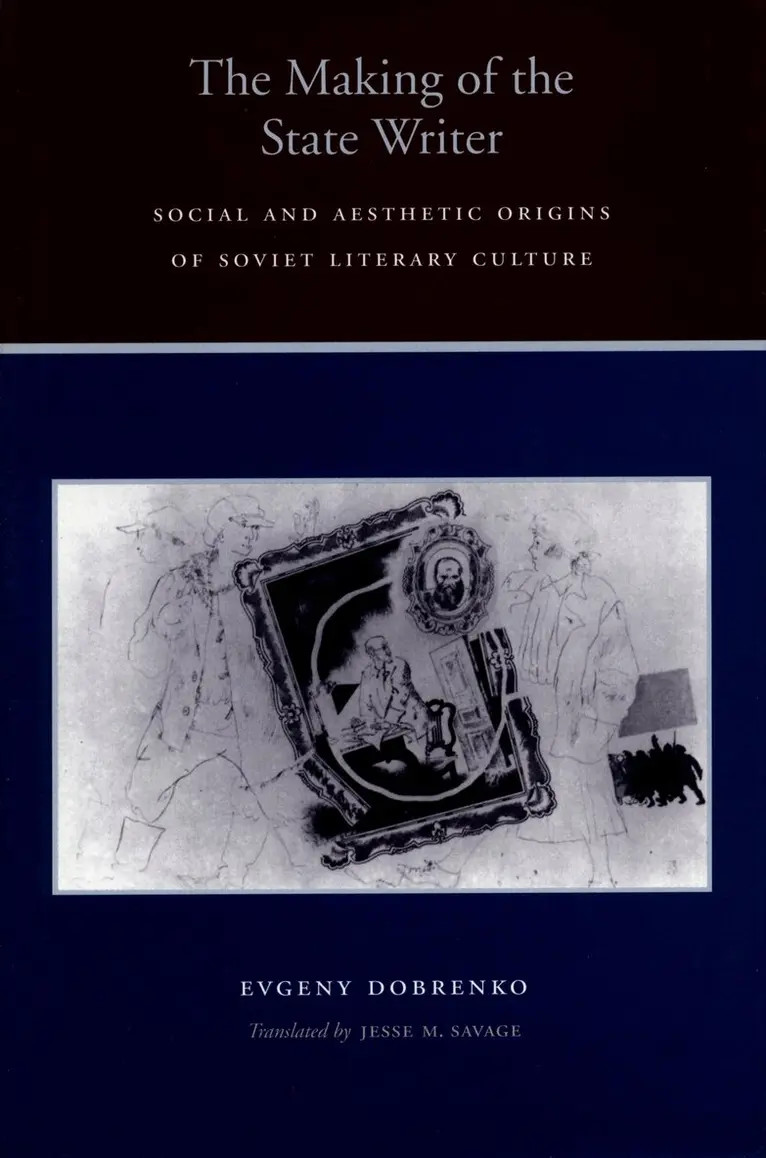
This book completes the author's study of the sociology of the literary process in Soviet Russia, begun in The Making of the State Reader: Social and Aesthetic Contexts of the Reception of Soviet Literature (Stanford, 1997). The history of the literary process of the Soviet era, understood as the living process of the clash of political and ideological aspirations and the interests and psychology of cultural elites, allows one to understand the social origins and cultural aims of Stalinist art in an entirely new way.Previous scholarship has concentrated largely on Sovietological answers to the basic problems of Stalinist aesthetics—such as "political control," "repressions," and "pressure from the regime." However, the author demonstrates that Socialist Realism is not so much directed as it is self-directed; it is not a matter of control but of self-control. The transformation of the author into his own censor is the true history of Soviet literature.Socialist Realism is cultural revolution not only from above but from below as well. The state simply took into account, and accurately discerned, the demands of the masses, and Soviet literature became the reader's answer to these demands. The reader not only shaped Socialist Realist aesthetics down to his own expectations, but in fact created it. The Soviet writer was yesterday's Soviet reader who had learned how to write books.The Soviet writer can be called the product of authority only to the extent that this authority recognized and institutionalized what Lenin called the "lively creativity of the masses." On the other hand, the author shows, the Soviet writer is the radical realization and embodiment of the nineteenth-century Russian populist utopia of enlightenment of the people.
Häftad, Engelska, 1997
591 kr
Skickas inom 3-6 vardagar
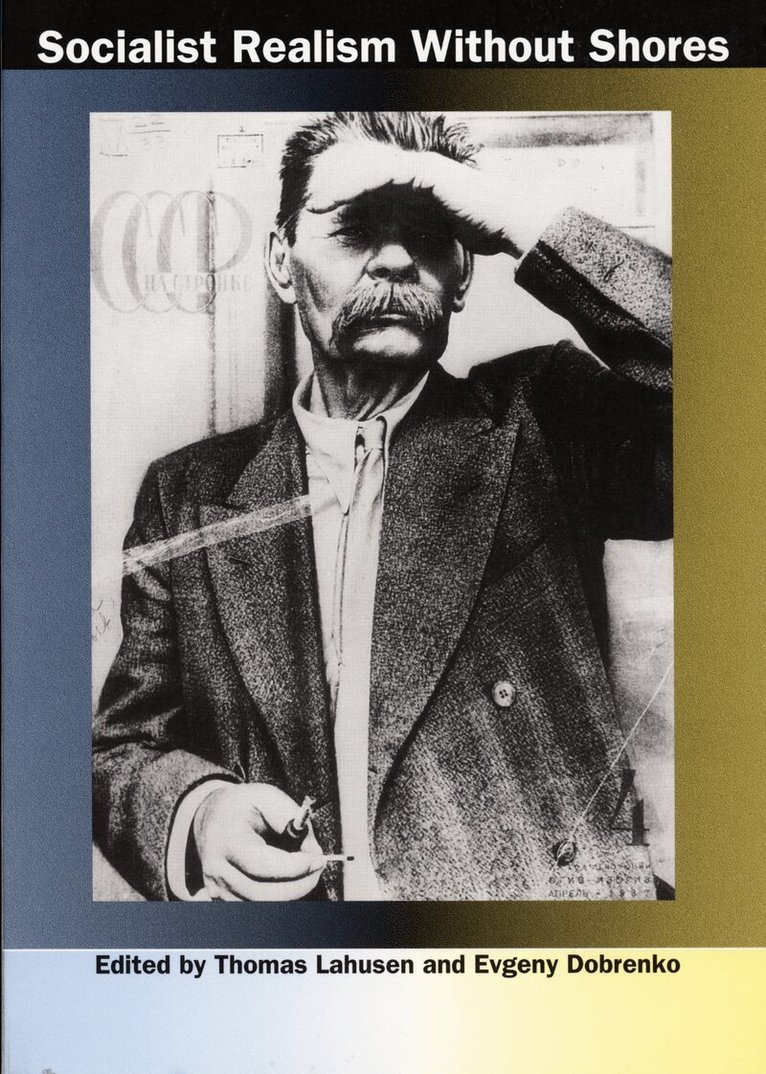
Socialist Realism without Shores offers an international perspective on the aesthetics of socialist realism-an aesthetic that, contrary to expectations, survived the death of its originators and the demise of its original domain. This expanded edition of a special issue of the South Atlantic Quarterly brings together scholars from various parts of the globe to discuss socialist realism as it appears across genres in art, architecture, film, and literature and across geographic divides-from the "center," Russia, to various points at the "periphery"-China, Germany, France, Poland, remote republics of the former USSR, and the United States.The contributors here argue that socialist realism has never been a monolithic art form. Essays demonstrate, among other things, that its literature could accommodate psychoanalytic criticism; that its art and architecture could affect the aesthetic dictates of Moscow that made "Soviet" art paradoxically heterogeneous; and that its aesthetics could accommodate both high art and crafted kitsch. Socialist Realism without Shores also addresses the critical discourse provoked by socialist realism-Stalinist aesthetics, "anthropological" readings; ideology critique and censorship; and the sublimely ironic approaches adapted from sots art, the Soviet version of postmodernism.Contributors. Antoine Baudin, Svetlana Boym, Greg Castillo, Katerina Clark, Evgeny Dobrenko, Boris Groys, Hans GÜnther, Julia Hell, Leonid Heller, Mikhail Iampolski, Thomas Lahusen, RÉgine Robin, Yuri Slezkine, Lily Wiatrowski Phillips, Xudong Zhang, Sergei Zimovets
Häftad, Engelska, 2013
883 kr
Skickas inom 5-8 vardagar
This volume assembles the work of leading international scholars in a comprehensive history of Russian literary theory and criticism from 1917 to the post-Soviet age. By examining the dynamics of literary criticism and theory in three arenas—political, intellectual, and institutional—the authors capture the progression and structure of Russian literary criticism and its changing function and discourse. The chapters follow early movements such as formalism, the Bakhtin Circle, Proletklut, futurism, the fellow-travelers, and the Russian Association of Proletarian Writers. By the cultural revolution of 1928, literary criticism became a mechanism of Soviet policies, synchronous with official ideology. The chapters follow theory and criticism into the 1930s with examinations of the Union of Soviet Writers, semantic paleontology, and socialist realism under Stalin. A more \u201chumanized\u201d literary criticism appeared during the ravaging years of World War II, only to be supplanted by a return to the party line, Soviet heroism, and anti-Semitism in the late Stalinist period. During KhrushchevÆs Thaw, there was a remarkable rise in liberal literature and criticism, that was later refuted in the nationalist movement of the \u201clong\u201d 1970s. The same decade saw, on the other hand, the rise to prominence of semiotics and structuralism. Postmodernism and a strong revival of academic literary studies have shared the stage since the start of the post-Soviet era.For the first time anywhere, this collection analyzes all of the important theorists and major critical movements during a tumultuous ideological period in Russian history, including developments in \u00e9migr\u00e9 literary theory and criticism.
Häftad, Engelska, 2011
408 kr
Skickas inom 5-8 vardagar
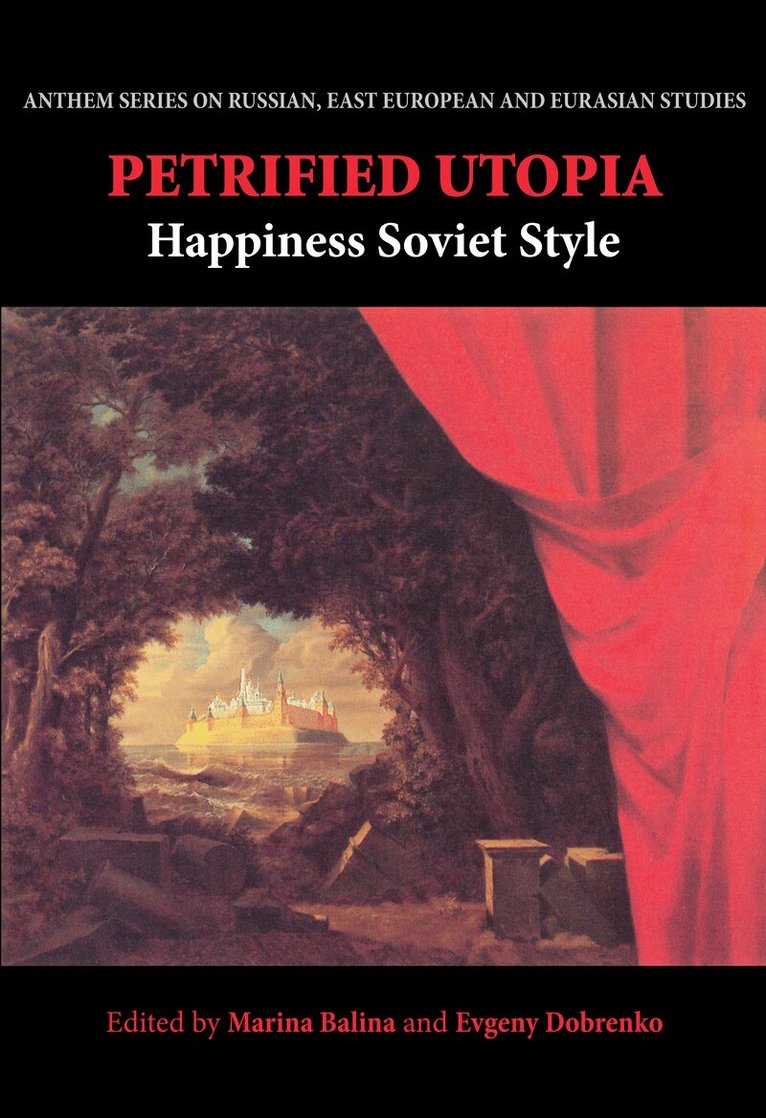
Taken together, these essays redefine the preconceived notion of Soviet happiness as the product of official ideology imposed from above and expressed predominantly through collective experience, and provide evidence that the formation of the concept of individual happiness was not contained by the limitations of important state projects, controlled by state policies and aimed toward the creation of a new society.
Inbunden, Engelska, 2015
1 485 kr
Skickas inom 7-10 vardagar
Russian Literature since 1991 is the first comprehensive, single-volume compendium of modern scholarship on post-Soviet Russian literature. The volume encompasses broad, complex and diverse sources of literary material - from ideological and historical novels to experimental prose and poetry, from nonfiction to drama. Written by an international team of leading experts on contemporary Russian literature and culture, it presents a broad panorama of genres in post-Soviet literature such as postmodernism, magical historicism, hyper-naturalism (in drama), and the new lyricism. At the same time, it offers close readings of the most prominent works published in Russia since the end of the Soviet regime and elimination of censorship. The collection highlights the interdisciplinary context of twenty-first-century Russian literature and can be widely used both for research and teaching by specialists in and beyond Russian studies, including those in post-Cold War and post-communist world history, literary theory, comparative literature and cultural studies.
Häftad, Engelska, 2017
516 kr
Skickas inom 7-10 vardagar
Russian Literature since 1991 is the first comprehensive, single-volume compendium of modern scholarship on post-Soviet Russian literature. The volume encompasses broad, complex and diverse sources of literary material - from ideological and historical novels to experimental prose and poetry, from nonfiction to drama. Written by an international team of leading experts on contemporary Russian literature and culture, it presents a broad panorama of genres in post-Soviet literature such as postmodernism, magical historicism, hyper-naturalism (in drama), and the new lyricism. At the same time, it offers close readings of the most prominent works published in Russia since the end of the Soviet regime and elimination of censorship. The collection highlights the interdisciplinary context of twenty-first-century Russian literature and can be widely used both for research and teaching by specialists in and beyond Russian studies, including those in post-Cold War and post-communist world history, literary theory, comparative literature and cultural studies.
Del 1 - Anthem Series on Russian, East European and Eurasian Studies
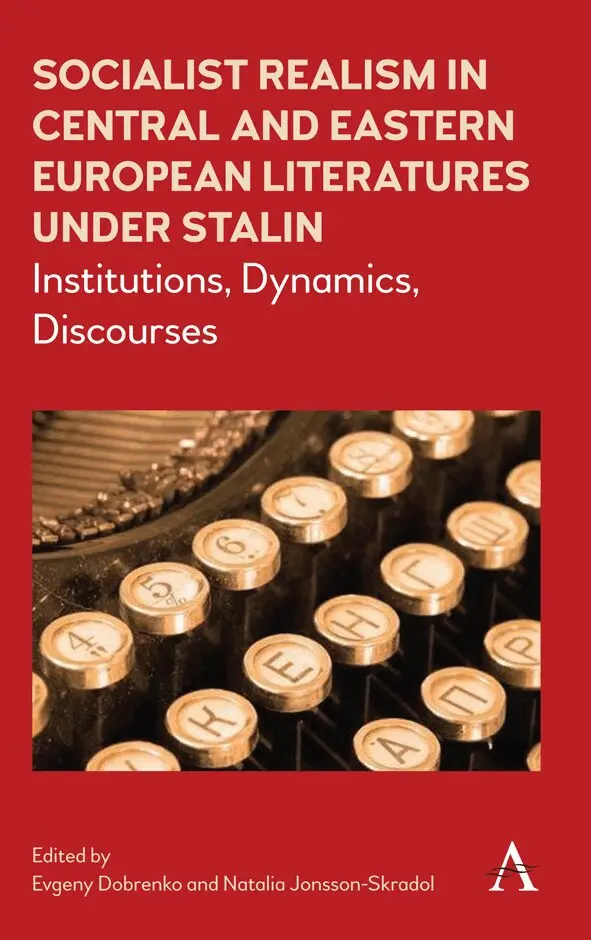
Socialist Realism in Central and Eastern European Literatures under Stalin
Institutions, Dynamics, Discourses
Inbunden, Engelska, 2018
1 773 kr
Skickas inom 5-8 vardagar
Socialist Realism in Central and Eastern European Literatures' is the first published work to offer a variety of alternative perspectives on the literary and cultural Sovietization of Central and Eastern Europe after World War II and emphasize the dialogic relationship between the ‘centre’ and the ‘satellites’ instead of the traditional top-down approach. The introduction of the Soviet cultural model was not quite the smooth endeavour that it was made to look in retrospect; rather, it was always a work in progress, often born out of a give-andtake with the local authorities, intellectuals and interest groups. Relying on archival resources, the authors examine one of the most controversial attempts at a cultural unification in Europe by providing an overview with a focus on specific case-studies, an analysis of distinct particularities with attention to the patterns of negotiation and adaptation that were being developed in the process.
Inbunden, Engelska, 2009
1 116 kr
Skickas inom 5-8 vardagar
Taken together, these essays redefine the preconceived notion of Soviet happiness as the product of official ideology imposed from above and expressed predominantly through collective experience, and provide evidence that the formation of the concept of individual happiness was not contained by the limitations of important state projects, controlled by state policies and aimed toward the creation of a new society.