• Fri frakt över 249 kr
  • •
  • Snabba leveranser
  • •
  • Billiga böcker
Kundservice

Du är på sajten för privatpersoner.

Företag, bibliotek eller offentlig verksamhet?

Du handlar på classic.bokus.com, där alla dina funktioner finns intakta.
Till classic.bokus.com
Bokus logotyp. Gå till startsidan.
  • Erbjudanden
  • Nyheter
  • Student
  • Topplistor
  • Barn & ungdom
  • Bokus Play
  • E-böcker
  • Pocketböcker
  • Spel & pussel

10% rabatt på allt med kod NYSTART10 →

Sidfot

Mina sidor

    Hjälp

    • Kundservice
    • Vanliga frågor och svar
    • Frakt och leverans
    • Retur vid ångerrätt
    • Reklamera vara
    • Betalning
    • Köpvillkor
    • Allmänna villkor
    • Information om webbplatsens tillgänglighet

    Om Bokus

    • Om oss
    • Pressrum
    • För studenter
    • För företag
    • För bibliotek och offentlig verksamhet
    • För leverantörer
    • Hållbarhet

    Populärt

    • Aktuella erbjudanden
    • Presentkort
    • Studentlitteratur
    • Nya böcker
    • Topplistor
    • Signerade böcker
    • Engelska böcker

    Inspiration

    • Boktips
    • BookTok
    • Populära bokserier
    • Barnbokskaraktärer
    • Populära författare
    Logotyp för Bokus
    Följ oss på Facebook (extern länk)Följ oss på Instagram (extern länk)Följ oss på YouTube (extern länk)Följ oss på TikTok (extern länk)
    bokus @ CookiesAnpassa cookiesIntegritetspolicyKöpvillkor
    Till Citymail hemsida (extern länk)Till Budbee hemsida (extern länk)Till Postnord hemsida (extern länk)Till Schenker hemsida (extern länk)Till Early Bird hemsida (extern länk)Till Walleys hemsida (extern länk)
    1. Kultur
    2. Scenkonst och film
    3. Film

    Korean Horror Cinema

    AvAlison Peirse,Daniel Martin

    Häftad, Engelska, 2013

    589 kr

    Beställningsvara. Skickas inom 3-6 vardagar. Fri frakt över 249 kr.

    Beskrivning

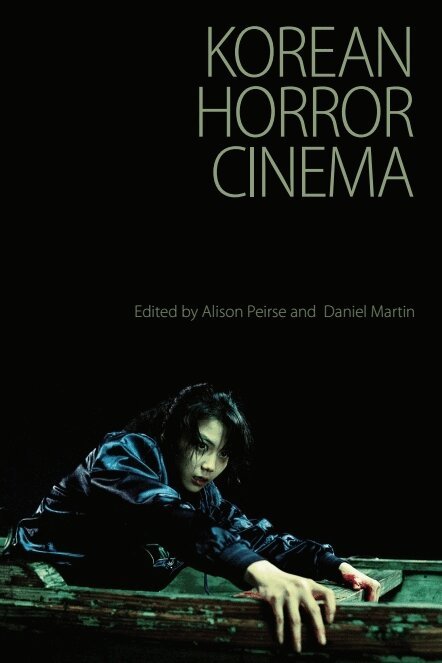
    As the first detailed English-language book on the subject, Korean Horror Cinema introduces the cultural specificity of the genre to an international audience, from the iconic monsters of gothic horror, such as the wonhon (vengeful female ghost) and the gumiho (shapeshifting fox), to the avenging killers of Oldboy and Death Bell. Beginning in the 1960s with The Housemaid, it traces a path through the history of Korean horror, offering new interpretations of classic films, demarcating the shifting patterns of production and consumption across the decades, and introducing readers to films rarely seen and discussed outside of Korea. It explores the importance of folklore and myth on horror film narratives, the impact of political and social change upon the genre, and accounts for the transnational triumph of some of Korea’s contemporary horror films. While covering some of the most successful recent films such as Thirst, A Tale of Two Sisters, and Phone, the collection also explores the obscure, the arcane and the little-known outside Korea, including detailed analyses of The Devil’s Stairway, Woman’s Wail and The Fox With Nine Tails. Its exploration and definition of the canon makes it an engaging and essential read for students and scholars in horror film studies and Korean Studies alike.

    Produktinformation

    • Utgivningsdatum:2013-03-14
    • Mått:156 x 234 x 15 mm
    • Vikt:398 g
    • Format:Häftad
    • Språk:Engelska
    • Antal sidor:256
    • Förlag:Edinburgh University Press
    • ISBN:9780748643097

    Utforska kategorier

    • Film inom Kultur

    Mer om författaren

    Alison Peirse is Programme Leader in Film and Television Studies at the University of Northumbria. She researches international horror film and television and is the author of After Dracula: The 1930s Horror Film (I.B. Tauris). Her work has been published in Gothic Studies, Asian Cinema, Visual Culture in Britain, Studies in European Cinema and Journal of Adaptation in Film and Performance. Daniel Martin is Associate Professor of Film Studies in the School of Humanities and Social Sciences at the Korea Advanced Institute of Science and Technology (KAIST). His recent research concerns the international circulation of films from East Asia. He is the author of Extreme Asia: The Rise of Cult Cinema from the Far East (Edinburgh University Press, 2015), co-editor of Korean Horror Cinema (Edinburgh University Press, 2013).

    Recensioner i media

    The book is written by contributors who understand both Korean and western cultures, which adds credibility to its analysis of Korean horror films in both national and international cinematic contexts. Throughout the book, the reader is introduced to a substantial history of Korean horror cinema and even readers with no knowledge of Korean films and culture will find the book useful. However, scholars and students in the field of Korean Film Studies will find the book essential. It is clearly arranged, accessible, well written and, most of all, its descriptions of Korean horror films are as fascinating as the chilling horror films that captivate us.'

    Innehållsförteckning

    • AcknowledgementsForeword, Julian StringerContributorsIntroduction, Alison Peirse and Daniel MartinPart I: Classic Korean Horror1. Family, Death and the Wonhon in Three Films of the 1960s, Hyangjin Lee2. Creepy Liver-Eating Fox Ladies: The Thousand Year Old Fox and Korea’s Gumiho, Alison Peirse and James Byrne3. War Horror and Anti-Communism: From Piagol to Rainy Days, Mark Morris4. Mother’s Grudge and Woman’s Wail: The Monster-Mother and Korean Horror Film, Eunha OhPart II: Contemporary ‘Domestic’ Horror5. Heritage of Horrors: Reclaiming the Female Ghost in Shadows in the Palace, Yun Mi Hwang6. From Acacia to Uninvited: Adoption Anxiety in Korean Horror Cinema, Hye Seung Chung7. Apartment Horror: Sorum and Possessed, Nikki J. Y. Lee8. The Face(s) of Korean Horror Film: Toward a Cinematic Physiognomy of Affective Extremes, David Scott Diffrient9. Death Bell and High School Horror, Chi-Yun ShinPart III: Contemporary ‘International’ Horror10. Between the Local and the Global: ‘Asian Horror’ in Ahn Byung-ki’s Phone and Bunshinsaba, Daniel Martin11. Diary of a Lost Girl: Victoriana, Intertextuality and A Tale of Two Sisters, Robert L. Cagle12. From A Tale of Two Sisters to The Uninvited: A Tale of Two Texts, Leung Wing-Fai13. Oldboy goes to Bollywood: Zinda and the Transnational Appropriation of South Korean ‘Extreme’ Cinema, Iain Robert Smith14. Park Chan-wook’s Thirst: Passion, Guilt and Exsanguination, Kyu Hyun KimGlossaryBibliographyIndex