• Fri frakt över 249 kr
  • •
  • Snabba leveranser
  • •
  • Billiga böcker
Kundservice

Du är på sajten för privatpersoner.

Företag, bibliotek eller offentlig verksamhet?

Du handlar på classic.bokus.com, där alla dina funktioner finns intakta.
Till classic.bokus.com
Bokus logotyp. Gå till startsidan.
  • Erbjudanden
  • Nyheter
  • Student
  • Topplistor
  • Barn & ungdom
  • Bokus Play
  • E-böcker
  • Pocketböcker
  • Spel & pussel

10% rabatt på allt med kod: NYSTART10 →

Sidfot

Mina sidor

    Hjälp

    • Kundservice
    • Vanliga frågor och svar
    • Frakt och leverans
    • Retur vid ångerrätt
    • Reklamera vara
    • Betalning
    • Köpvillkor
    • Allmänna villkor
    • Information om webbplatsens tillgänglighet

    Om Bokus

    • Om oss
    • Pressrum
    • För studenter
    • För företag
    • För bibliotek och offentlig verksamhet
    • För leverantörer
    • Hållbarhet

    Populärt

    • Aktuella erbjudanden
    • Presentkort
    • Studentlitteratur
    • Nya böcker
    • Topplistor
    • Signerade böcker
    • Engelska böcker

    Inspiration

    • Boktips
    • BookTok
    • Populära bokserier
    • Barnbokskaraktärer
    • Populära författare
    Logotyp för Bokus
    Följ oss på Facebook (extern länk)Följ oss på Instagram (extern länk)Följ oss på YouTube (extern länk)Följ oss på TikTok (extern länk)
    bokus @ CookiesAnpassa cookiesIntegritetspolicyKöpvillkor
    Till Citymail hemsida (extern länk)Till Budbee hemsida (extern länk)Till Postnord hemsida (extern länk)Till Schenker hemsida (extern länk)Till Early Bird hemsida (extern länk)Till Walleys hemsida (extern länk)
    1. Naturvetenskap och teknik
    2. Geovetenskap
    3. Miljövetenskap och miljöpolitik

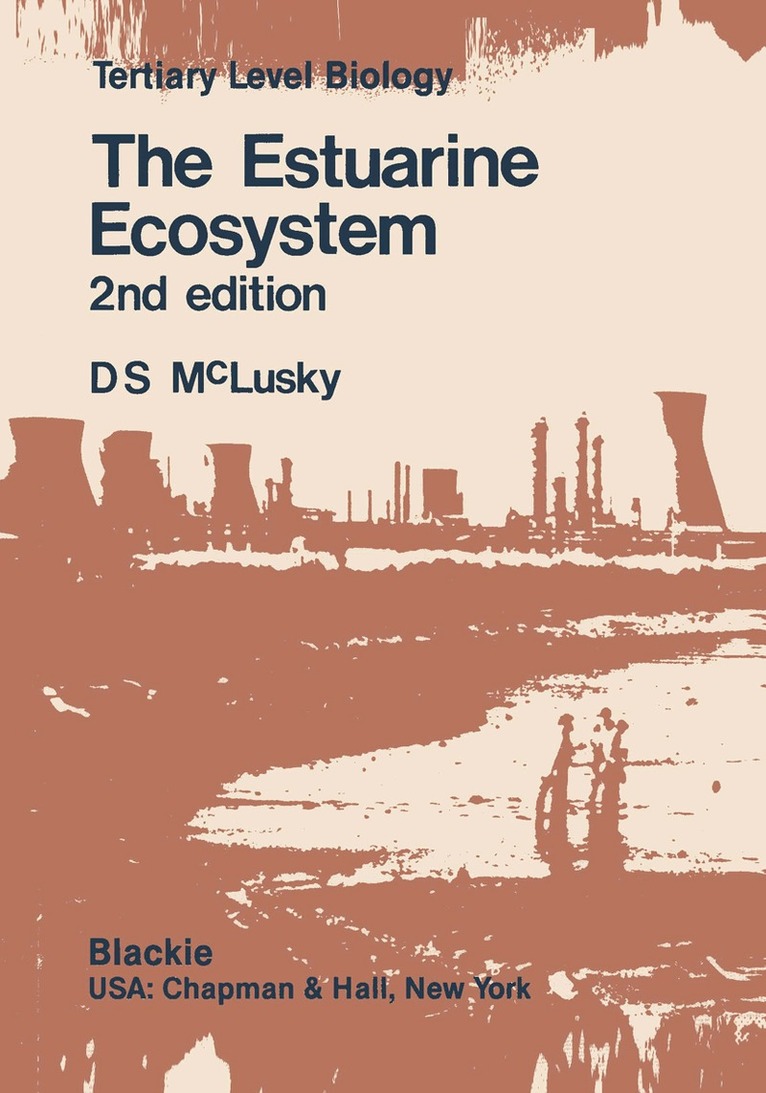
    Estuarine Ecosystem

    AvDonald McLusky

    Häftad, Engelska, 1989

    Del i serien Tertiary Level Biology

    547 kr

    Beställningsvara. Skickas inom 10-15 vardagar. Fri frakt över 249 kr.

    Fler format och utgåvor

    E-bok

    700 kr

    Beskrivning

    For the inhabitants of many of the world's major cities and towns, estuaries provide their nearest glimpse of a natural habitat; a habitat which, despite the attempts of man to pollute it or reclaim it, has remained a fascinating insight into a natural world where energy is transformed from sunlight into plant material, and then through the steps of a food chain is converted into a rich food supply for birds and fish. The biologist has become interested in estuaries as areas in which to study the responses of animals and plants to severe environmental gradients. Gradients of salinity for example, and the problems of living in turbid water or a muddy substrate, prevent most animal species from the adjacent sea or rivers from entering estuaries. In spite of these problems, life in estuaries can be very abundant because estuarine mud is a rich food supply which can support a large number of animals with a large total weight and a high annual production. Indeed estuaries have been claimed to be among the most productive natural habitats in the world. When the first edition of this book appeared, biologists were beginning to realise that the estuarine ecosystem was an ideal habitat in which to observe the processes controlling biological productivity.

    Produktinformation

    • Utgivningsdatum:1989-09-01
    • Mått:148 x 210 x 13 mm
    • Vikt:296 g
    • Format:Häftad
    • Språk:Engelska
    • Serie:Tertiary Level Biology
    • Antal sidor:216
    • Upplaga:1989
    • Förlag:Kluwer Academic Publishers Group
    • ISBN:9780751401646

    Utforska kategorier

    • Miljövetenskap och miljöpolitik inom Naturvetenskap och teknik

    Innehållsförteckning

    • 1 The Estuarine Environment.- 1.1 Introduction.- 1.2 Estuarine circulation.- 1.3 Estuarine sediments.- 1.4 Other physico-chemical factors.- 1.5 Distribution of estuarine organisms.- 1.6 The problems of life in estuaries.- 1.7 The estuarine food web.- 2 Primary Producers: Plant production and its availability.- 2.1 Introduction.- 2.2 Salt marshes.- 2.3 Intertidal plants.- 2.4 Phytoplankton.- 2.5 Detritus.- 2.6 Summation of plant and microbial production in estuaries.- 3 Primary Consumers: Herbivores and detritivores.- 3.1 Introduction.- 3.2 The mud dwellers.- 3.3 The surface dwellers.- 3.4 Meiofauna.- 3.5 Zooplankton.- 3.6 The primary consumer community.- 4 The Secondary Consumers: Carnivores.- 4.1 Introduction.- 4.2 Fish.- 4.3 Invertebrates.- 4.4 Birds.- 4.5 The impact of the secondary consumers.- 5 Estuarine Pollution.- 5.1 Introduction.- 5.2 Mankind’s use of estuaries.- 5.3 Methodologies of studying pollution.- 5.4 Organic enrichment.- 5.5 Industrial contamination.- 5.6 Reclamation and engineering works.- 6 The Management of Estuaries.- 6.1 Introduction.- 6.2 Policies.- 6.3 Planning.- 6.4 Practice.- Reading List.