• Fri frakt över 249 kr
  • •
  • Snabba leveranser
  • •
  • Billiga böcker
Kundservice

Du är på sajten för privatpersoner.

Företag, bibliotek eller offentlig verksamhet?

Du handlar på classic.bokus.com, där alla dina funktioner finns intakta.
Till classic.bokus.com
Bokus logotyp. Gå till startsidan.
  • Erbjudanden
  • Nyheter
  • Student
  • Topplistor
  • Barn & ungdom
  • Bokus Play
  • E-böcker
  • Pocketböcker
  • Spel & pussel

10% rabatt på allt med kod NYSTART10 →

Sidfot

Mina sidor

    Hjälp

    • Kundservice
    • Vanliga frågor och svar
    • Frakt och leverans
    • Retur vid ångerrätt
    • Reklamera vara
    • Betalning
    • Köpvillkor
    • Allmänna villkor
    • Information om webbplatsens tillgänglighet

    Om Bokus

    • Om oss
    • Pressrum
    • För studenter
    • För företag
    • För bibliotek och offentlig verksamhet
    • För leverantörer
    • Hållbarhet

    Populärt

    • Aktuella erbjudanden
    • Presentkort
    • Studentlitteratur
    • Nya böcker
    • Topplistor
    • Signerade böcker
    • Engelska böcker

    Inspiration

    • Boktips
    • BookTok
    • Populära bokserier
    • Barnbokskaraktärer
    • Populära författare
    Logotyp för Bokus
    Följ oss på Facebook (extern länk)Följ oss på Instagram (extern länk)Följ oss på YouTube (extern länk)Följ oss på TikTok (extern länk)
    bokus @ CookiesAnpassa cookiesIntegritetspolicyKöpvillkor
    Till Citymail hemsida (extern länk)Till Budbee hemsida (extern länk)Till Postnord hemsida (extern länk)Till Schenker hemsida (extern länk)Till Early Bird hemsida (extern länk)Till Walleys hemsida (extern länk)
    1. Naturvetenskap och teknik
    2. Teknik och industri
    3. Tillverkningsteknik

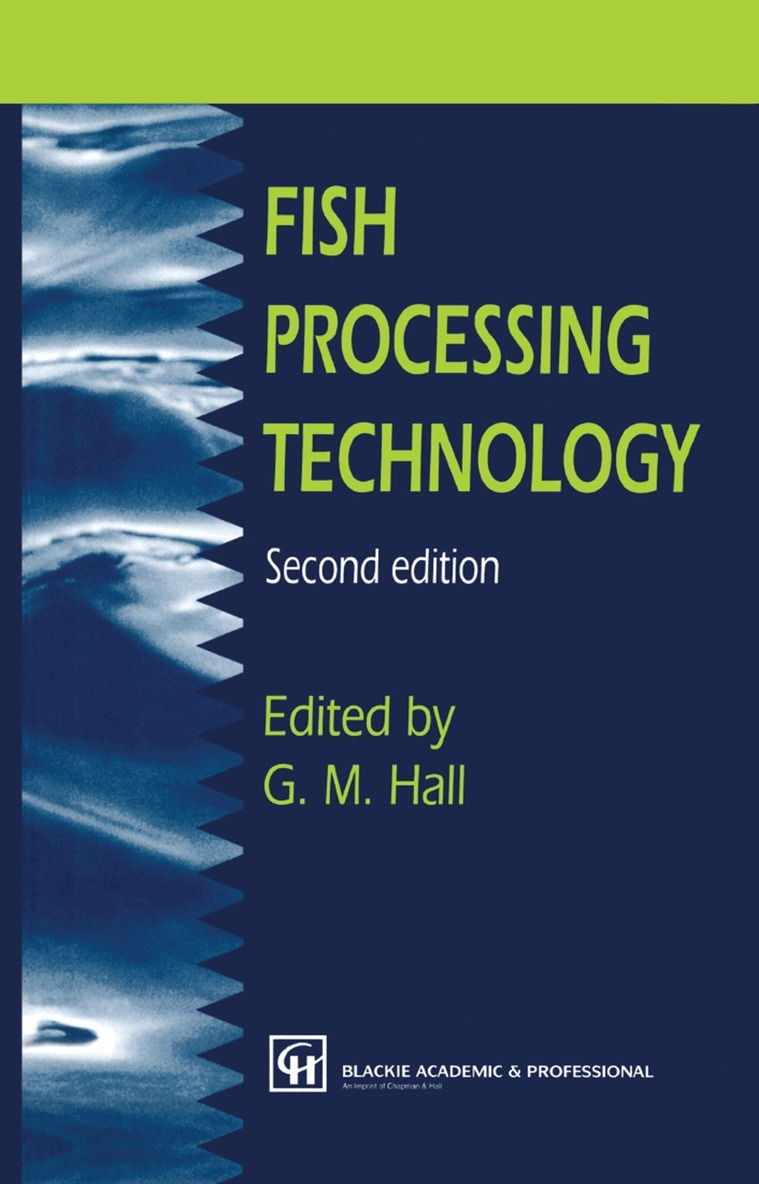
    Fish Processing Technology

    AvGeorge M. Hall

    Inbunden, Engelska, 1997

    3 024 kr

    Beställningsvara. Skickas inom 10-15 vardagar. Fri frakt över 249 kr.

    Fler format och utgåvor

    Häftad

    3 024 kr

    E-bok

    3 874 kr

    Beskrivning

    As with the first edition this book includes chapters on established fish processes and new processes and allied issues. The first five chapters cover fish biochemistry affecting processing, curing, surimi and fish mince, chilling and freezing and canning. These established processes can still show innovations and improved theory although their mature status precludes major leaps in knowledge and technology. The four chapters concerned with new areas relevant to fish processing are directed at the increasing globalisation of the fish processing industry and the demands, from legislation and the consumer, for better quality, safer products. One chapter reviews the methods available to identify fish species in raw and processed products. The increased demand for fish products and the reduced catch of commercially-important species has lead to adulteration or substitu­ tion of these species with cheaper species. The ability to detect these practices has been based on some elegant analytical techniques in electrophoresis.

    Produktinformation

    • Utgivningsdatum:1997-07-31
    • Mått:156 x 234 x 20 mm
    • Vikt:629 g
    • Format:Inbunden
    • Språk:Engelska
    • Antal sidor:292
    • Upplaga:2
    • Förlag:Chapman and Hall
    • ISBN:9780751402735

    Utforska kategorier

    • Tillverkningsteknik inom Naturvetenskap och teknik

    Innehållsförteckning

    • 1 Biochemical dynamics and the quality of fresh and frozen fish.- 1.1 Introduction.- 1.2 Sequential changes during the spawning cycle.- 1.3 The condition of fish.- 1.4 The role of body constituents in governing fish quality and processability.- 1.5 Summary of considerations of biological condition and quality.- References.- 2 Preservation of fish by curing (drying, salting and smoking).- 2.1 Introduction.- 2.2 Water content, water activity (aw) and storage stability.- 2.3 Drying.- 2.4 Salting.- 2.5 Smoking.- References.- 3 Surimi and fish-mince products.- 3.1 Introduction.- 3.2 Fish-muscle proteins.- 3.3 The surimi process.- 3.4 Fish mince.- References.- 4 Chilling and freezing of fish.- 4.1 Introduction.- 4.2 Modified-atmosphere packaging (MAP).- 4.3 Freezing.- 4.4 The application of freezing systems in fish processing.- 4.5 Changes in quality on chilled and frozen storage.- References.- 5 Canning fish and fish products.- 5.1 Principles of canning.- 5.2 Design of packaging for fish products.- 5.3 Process operations and equipment.- 5.4 Cannery operations for specific canned-fish products.- References.- 6 Methods of identifying species of raw and processed fish.- 6.1 Introduction.- 6.2 Requirements for non-sensory methods of fish species identification.- 6.3 Principles of electrophoresis and isoelectric focusing.- 6.4 Fish flesh proteins.- 6.5 Experimental procedures for electrophoretic methods.- 6.6 Alternative protein-based methods of fish species identification.- 6.7 DNA techniques of fish species identification.- 6.8 Fish eggs.- 6.9 General conclusions.- References.- 7 Modified-atmosphere packaging of fish and fish products.- 7.1 Introduction.- 7.2 Microbial flora of fresh fish.- 7.3 Pathogenic flora of fresh fish.- 7.4 Present applications of MAP to fish and fish products.- 7.5 Experimental approach.- 7.6 Future developments.- Acknowledgements.- References.- 8 HACCP and quality assurance of seafood.- 8.1 Introduction.- 8.2 Defining HACCP.- 8.3 Application of QMP.- 8.4 Practical aspects of planning and implementing HACCP systems.- 8.5 HACCP verification.- 8.5.1 Defect definitions.- 8.6 Future developments of seafood quality systems.- References.- 9 Temperature modelling and relationships in fish transportation.- 9.1 Introduction.- 9.2 Transportation of fish.- 9.3 Containers and cooling gels.- 9.4 Safety, quality and spoilage of fish during transportation.- 9.5 Types of predictive modelling in fish transportation.- 9.6 Food Micro Model.- 9.7 Conclusion.- References.