• Fri frakt över 249 kr
  • •
  • Snabba leveranser
  • •
  • Billiga böcker
Kundservice

Du är på sajten för privatpersoner.

Företag, bibliotek eller offentlig verksamhet?

Du handlar på classic.bokus.com, där alla dina funktioner finns intakta.
Till classic.bokus.com
Bokus logotyp. Gå till startsidan.
  • Erbjudanden
  • Nyheter
  • Student
  • Topplistor
  • Barn & ungdom
  • Bokus Play
  • E-böcker
  • Pocketböcker
  • Spel & pussel

10% rabatt på allt med kod: NYSTART10 →

Sidfot

Mina sidor

    Hjälp

    • Kundservice
    • Vanliga frågor och svar
    • Frakt och leverans
    • Retur vid ångerrätt
    • Reklamera vara
    • Betalning
    • Köpvillkor
    • Allmänna villkor
    • Information om webbplatsens tillgänglighet

    Om Bokus

    • Om oss
    • Pressrum
    • För studenter
    • För företag
    • För bibliotek och offentlig verksamhet
    • För leverantörer
    • Hållbarhet

    Populärt

    • Aktuella erbjudanden
    • Presentkort
    • Studentlitteratur
    • Nya böcker
    • Topplistor
    • Signerade böcker
    • Engelska böcker

    Inspiration

    • Boktips
    • BookTok
    • Populära bokserier
    • Barnbokskaraktärer
    • Populära författare
    Logotyp för Bokus
    Följ oss på Facebook (extern länk)Följ oss på Instagram (extern länk)Följ oss på YouTube (extern länk)Följ oss på TikTok (extern länk)
    bokus @ CookiesAnpassa cookiesIntegritetspolicyKöpvillkor
    Till Citymail hemsida (extern länk)Till Budbee hemsida (extern länk)Till Postnord hemsida (extern länk)Till Schenker hemsida (extern länk)Till Early Bird hemsida (extern länk)Till Walleys hemsida (extern länk)
    1. Ekonomi och Ledarskap
    2. Nationalekonomi

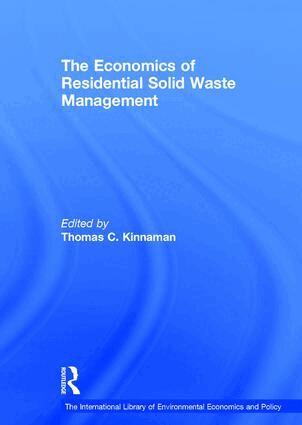
    Economics of Residential Solid Waste Management

    AvThomas C. Kinnaman

    Inbunden, Engelska, 2003

    Del i serien International Library of Environmental Economics and Policy

    2 421 kr

    Beställningsvara. Skickas inom 10-15 vardagar. Fri frakt över 249 kr.

    Beskrivning

    The market of municipal solid waste (MSW) collection and disposal has changed substantially over the past thirty years. This study will help guide both newcomers and past contributors through the fundamental aspects of policies designed to reduce the external costs of MSW collection, and the important empirical relationships that, in the end, govern the selection of MSW policies. The International Library of Environmental Economics and Policy explores the influence of economics on the development of environmental and natural resource policy. In a series of twenty-five volumes, the most significant journal essays in key areas of contemporary environmental and resource policy are collected. Scholars who are recognized for their expertise and contribution to the literature in the various research areas serve as volume editors and write essays that provides the context for the collection. Volumes in the series reflect three broad strands of economic research including 1) Natural and Environmental Resources, 2) Policy Instruments and Institutions and 3) Methodology. The editors, in their introduction to each volume, provide a state-of-the-art overview of the topic and explain the influence and relevance of the collected papers on the development of policy. This reference series provides access to the economic literature that has shaped contemporary perspectives on land use analysis and policy.

    Produktinformation

    • Utgivningsdatum:2003-09-05
    • Mått:169 x 244 x 40 mm
    • Vikt:936 g
    • Format:Inbunden
    • Språk:Engelska
    • Serie:International Library of Environmental Economics and Policy
    • Antal sidor:444
    • Förlag:Taylor & Francis Ltd
    • ISBN:9780754623236

    Utforska kategorier

    • Nationalekonomi inom Ekonomi och Ledarskap
    • Miljövetenskap och miljöpolitik inom Naturvetenskap och teknik

    Mer om författaren

    Thomas C. Kinnaman, Bucknell University, USA Contributors: Vernon L. Smith, Allen K. Miedema, Brian R. Copeland, Terry M. Dinan, Don Fullerton, Thomas C. Kinnaman, Karen Palmer, Margaret Walls, Wenbo Wu, Paul Calcott, Eduardo Ley, Molly K. Macauley, Stephen W. Salant, Barbara J. Stevens, Robert A. Richardson, Joseph Havlicek, Jr, Robin Jenkins, Richard M. Adams, H. Alan Love, Rebecca Judge, Anthony Becker, James D. Reschovsky, Sarah E. Stone, Ada S. Rousso, Shvetank P. Shah, Wayne Carroll, James G. Strathman, Anthony M. Rufolo, Gerard C. S. Mildner, Scott J. Callan, Janet M. Thomas, Karen Palmer, Hilary Sigman, Kelly J.Tiller, Paul M. Jakus, William M. Park, Deborah Vaughn Nestor, Michael J. Podolsky, Menahem Spiegel, Natalie Tawil.

    Innehållsförteckning

    • Contents: Part I: Theoretical Aspects of Policy Alternatives: Dynamics of waste accumulation: disposal versus recycling, Vernon L. Smith; Fundamental economic comparisons of solid waste policy options, Allen K. Miedema; International trade in waste products in the presence of illegal disposal, Brian R. Copeland; Economic efficiency effects of alternative policies for reducing waste disposal, Terry M. Dinan; Garbage, recycling, and illicit burning or dumping, Don Fullerton and Thomas C. Kinnaman; Optimal policies for solid waste disposal taxes, subsidies, and standards, Karen Palmer and Margaret Walls; Policies for green design, Don Fullerton and Wenbo Wu; Can downstream waste disposal policies encourage upstream "Design for Environment"?, Paul Calcott and Margaret Walls; Spatially and intertemporally efficient waste management: the costs of interstate trade restrictions, Eduardo Ley, Molly K. Macauley and Stephen W. Salant. Part II: Empirical Aspects of Policy Alternatives: Scale, market structure, and the cost of refuse collection, Barbara J. Stevens; Economic analysis of the composition of household solid wastes, Robert A. Richardson and Joseph Havlicek, Jr.; Pay-by-the-bag household collection charges to manage municipal solid waste, Robin Jenkins; An economic analysis of household recycling of solid wastes: the case of Portland, Oregon, Seonghoon Hong, Richard M. Adams and H. Alan Love; Motivating recycling: a marginal cost analysis, Rebecca Judge and Anthony Becker; Market incentives to encourage household waste recycling: paying for what you throw away, James D. Reschovsky and Sarah E. Stone; Packaging taxes and recycling incentives: the German green dot program, Ada S. Rousso and Shvetank P. Shah; The organization and efficiency of residential recycling services, Wayne Carroll; The demand for solid waste disposal, James G. Strathman, Anthony M. Rufolo and Gerard C. S. Mildner; Household responses to pricing garbage by the bag, Don Fullerton and Thomas C. Kinnaman; The impact of state and local policies on the recycling effort, Scott J. Callan and Janet M. Thomas; The cost of reducing municipal solid waste, Karen Palmer, Hilary Sigman and Margaret Walls; Household willingness to pay for dropoff recycling, Kelly H.Tiller, Paul M. Jakus and William M. Park; Assessing incentive-based environmental policies for reducing household waste disposal, Deborah Vaughn Nestor and Michael J. Podolsky; Municipal waste disposal: unit-pricing and recycling opportunities, Michael J. Podolsky and Menahem Spiegel; Flow control and rent capture in solid waste management, Natalie Tawil; Garbage and recycling with endogenous local policy, Thomas C. Kinnaman and Don Fullerton; Name index.