• Fri frakt över 249 kr
  • •
  • Snabba leveranser
  • •
  • Billiga böcker
Kundservice

Du är på sajten för privatpersoner.

Företag, bibliotek eller offentlig verksamhet?

Du handlar på classic.bokus.com, där alla dina funktioner finns intakta.
Till classic.bokus.com
Bokus logotyp. Gå till startsidan.
  • Erbjudanden
  • Nyheter
  • Student
  • Topplistor
  • Barn & ungdom
  • Bokus Play
  • E-böcker
  • Pocketböcker
  • Spel & pussel

10% rabatt på allt med kod: NYSTART10 →

Sidfot

Mina sidor

    Hjälp

    • Kundservice
    • Vanliga frågor och svar
    • Frakt och leverans
    • Retur vid ångerrätt
    • Reklamera vara
    • Betalning
    • Köpvillkor
    • Allmänna villkor
    • Information om webbplatsens tillgänglighet

    Om Bokus

    • Om oss
    • Pressrum
    • För studenter
    • För företag
    • För bibliotek och offentlig verksamhet
    • För leverantörer
    • Hållbarhet

    Populärt

    • Aktuella erbjudanden
    • Presentkort
    • Studentlitteratur
    • Nya böcker
    • Topplistor
    • Signerade böcker
    • Engelska böcker

    Inspiration

    • Boktips
    • BookTok
    • Populära bokserier
    • Barnbokskaraktärer
    • Populära författare
    Logotyp för Bokus
    Följ oss på Facebook (extern länk)Följ oss på Instagram (extern länk)Följ oss på YouTube (extern länk)Följ oss på TikTok (extern länk)
    bokus @ CookiesAnpassa cookiesIntegritetspolicyKöpvillkor
    Till Citymail hemsida (extern länk)Till Budbee hemsida (extern länk)Till Postnord hemsida (extern länk)Till Schenker hemsida (extern länk)Till Early Bird hemsida (extern länk)Till Walleys hemsida (extern länk)
    1. Historia och arkeologi
    2. Arkeologi

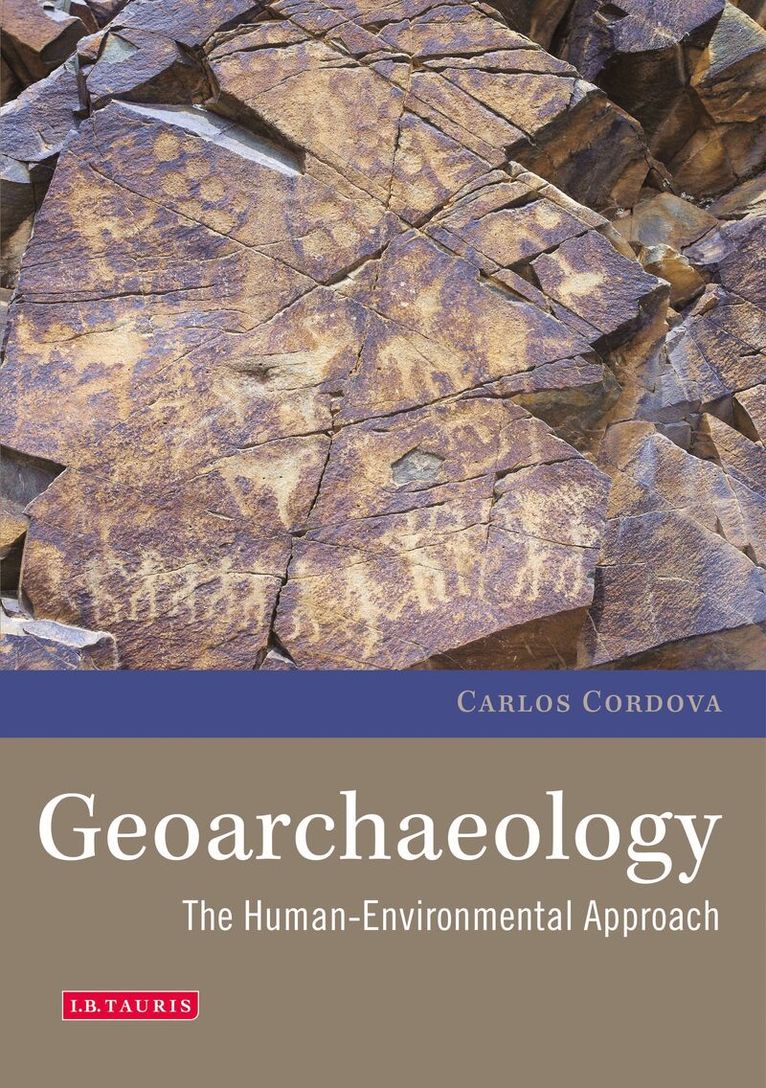
    Geoarchaeology

    The Human-Environmental Approach

    AvCarlos Cordova

    Häftad, Engelska, 2020

    Del i serien Environmental History and Global Change

    493 kr

    Beställningsvara. Skickas inom 10-15 vardagar. Fri frakt över 249 kr.

    Fler format och utgåvor

    E-bok

    529 kr

    E-bok

    530 kr

    Beskrivning

    Geoarchaeology is traditionally concerned with reconstructing the environmental aspects of past societies using the methods of the earth sciences. The field has been steadily enriched by scholars from a diversity of disciplines and much has happened as the importance of global perspectives on environmental change has emerged. Carlos Cordova, provides a fully up-to-date account of geoarchaeology that reflects the important changes that have occurred in the past four decades. Innovative features include: the development of the human-ecological approach and the impact of technology on this approach; how the diversity of disciplines contributes to archaeological questions; frontiers of archaeology in the deep past, particularly the Anthropocene; the geoarchaeology of the contemporary past; the emerging field of ethno-geoarchaeology; the role of geoarchaeology in global environmental crises and climate change.

    Produktinformation

    • Utgivningsdatum:2020-02-20
    • Mått:174 x 248 x 30 mm
    • Vikt:560 g
    • Format:Häftad
    • Språk:Engelska
    • Serie:Environmental History and Global Change
    • Antal sidor:320
    • Förlag:Bloomsbury Publishing PLC
    • ISBN:9780755606771

    Utforska kategorier

    • Arkeologi inom Historia och arkeologi
    • Geografi inom Naturvetenskap och teknik

    Mer om författaren

    Carlos Cordova is Professor of Geography, Oklahoma State University. He obtained his PhD at the University of Texas, under the supervision of Karl Butzer. He has undertaken geoarchaeological research in the North America, Mexico, the Middle East, Southern Africa, and Crimea and the Black Sea Region and is the author of Crimea: An Environmental History (I.B.Tauris, 2016) and Millennial Landscape Change in Jordan: Geoarchaeology and Cultural Ecology (2007).

    Innehållsförteckning

    • List of figuresList of tablesIntroduction Chapter 1 The nature of geoarchaeology The nature of geoarchaeology and its practitionersThe three major traditions in geoarchaeologyThe field and its status in and outside sciencePractice, training, and rapidly evolving subfieldsChapter 2 Theoretical and methodological foundationsIntroductionTheory in geoarchaeologyThe geoarchaeological methodModels of inquiry and interpretationReconstructing the pastThe explanation of a complex and chaotic worldConcluding remarksChapter 3 The geoarchaeological record: Concept and contextsAn epistemological backgroundAn all-inclusive geoarchaeological recordThe contextual levels: site, setting, landscape and environmentModels of interpretationChapter 4 The geoarchaeological record: Interpretation issuesVisualizing time, causality, and contextCausality in natural and cultural transform processesTime-transgressive phenomena and multi-causal effectsArchaeological visibility, invisibility, and absenceThe virtues of off-site geoarchaeologyLegacy effects, relicts, and palimpsestsModern analogs, reference analogs, and modern referencesSampling and interpretation of the recordCorrelation and its issuesChapter 5 The human-environmental tradition in geoarchaeology IntroductionThe ecological paradigm The ecological context in geoarchaeologyGeoarchaeology after Archaeology as Human EcologyThe rise of the Anthropocene and global climate changePerspectives on the anthropic and non-anthropic worldsGeoarchaeology and environmental historyChapter 6 Geoarchaeology and human evolutionIntroductionGeology, climate changes, and biogeographyGeoarchaeology in paleoanthropological researchContextual and issues Case 6.1 Context and scale in the Olduvai hominin recordChapter 7 Geoarchaeology and the anthropization of the world IntroductionThe proto-anthropic period as a gray zoneGeoarchaeology and the pre- and proto-anthropic periodsCase 7.1 Between paleontological and archaeological sites: Geoarchaeological issues in Pre-Clovis mammoth localitiesCase 7.2 The geoarchaeology of early Australian human environments at Lake MungoChapter 8 The geoarchaeology of hunter-gatherer landscapesIntroductionHunter-gatherer societies and their environmental contextsGeoarchaeological approaches to hunter-gatherer landscaapesCase 8.1 Epipaleolithic hunter-gatherers of the Eastern Levant. Sites, settings and landscapes in a rapidly changing environmentCase 8.2: The geoarchaeology of the Archaic period in the Great Plains of North AmericaChapter 9 The record of early agriculture and its diffusion IntroductionAgricultural beginnings: Contextual modelsNeolithic impacts at different scalesGeoarchaeological context and research strategiesCase 9.1 Geoarchaeology of two Near Eastern Neolithic settlements: Ain Ghazal and Ain Abu-Nukhaila, and the first agricultural environmental crisisCase 9.2 The elusive environmental impact of the arrival of pastoralism in Southern Africa.Chapter 10 Complex societal-environmental systems and the collapse phenomenonIntroductionComplex societal-environmental systemsThe rise and collapse phenomenonResearch contextsCase 10.1 Ancient sustainability, risks, management, and centralization in large river basins: Three examples.Case 10.2 The Classic Maya collapse and the degradation of soils in the Maya lowlands: Geoarchaeological models of landscape transformation.Chapter 11 The geoarchaeology of rural landscapesIntroductionThe rural landscape: concepts and environmental approachesGeoarchaeological strategies in rural contextsCase 11.1 The Ancient Greek rural landscape of CrimeaCase 11.2 Xaltocan: The geoarchaeology of a complex lacustrine society before Tenochtitlan. Chapter 12 Human-environmental approaches to soils and paleosolsIntroductionThematic approaches to paleosolsThe