• Fri frakt över 249 kr
  • •
  • Snabba leveranser
  • •
  • Billiga böcker
Kundservice

Du är på sajten för privatpersoner.

Företag, bibliotek eller offentlig verksamhet?

Du handlar på classic.bokus.com, där alla dina funktioner finns intakta.
Till classic.bokus.com
Bokus logotyp. Gå till startsidan.
  • Erbjudanden
  • Student
  • Topplistor
  • Barn & ungdom
  • Bokus Play
  • E-böcker
  • Ljudböcker
  • Pocketböcker
  • Spel och pussel

Pocketfynda! Hundratals böcker för 49 kr/st →

Sidfot

Mina sidor

    Hjälp

    • Kundservice
    • Vanliga frågor och svar
    • Frakt och leverans
    • Retur vid ångerrätt
    • Reklamera vara
    • Betalning
    • Köpvillkor
    • Allmänna villkor
    • Information om webbplatsens tillgänglighet

    Om Bokus

    • Om oss
    • Pressrum
    • För studenter
    • För företag
    • För bibliotek och offentlig verksamhet
    • För leverantörer
    • Hållbarhet

    Populärt

    • Aktuella erbjudanden
    • Presentkort
    • Studentlitteratur
    • Nya böcker
    • Topplistor
    • Signerade böcker
    • Engelska böcker

    Inspiration

    • Boktips
    • BookTok
    • Barnbokskaraktärer
    • Populära författare
    Logotyp för Bokus
    Följ oss på Facebook (extern länk)Följ oss på Instagram (extern länk)Följ oss på YouTube (extern länk)Följ oss på TikTok (extern länk)
    bokus @ CookiesAnpassa cookiesIntegritetspolicyKöpvillkor
    Till Citymail hemsida (extern länk)Till Budbee hemsida (extern länk)Till Postnord hemsida (extern länk)Till Schenker hemsida (extern länk)Till Early Bird hemsida (extern länk)Till Walleys hemsida (extern länk)
    1. Historia och arkeologi
    2. Historia
    3. Historia: särskilda händelser och ämnen
    4. Folkmord och etnisk rensning

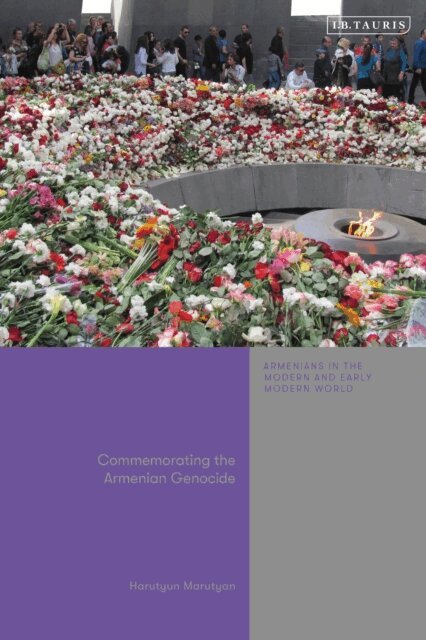
    Commemorating the Armenian Genocide

    AvHarutyun Marutyan

    E-bok
    PDF, Engelska, 2025

    Del i serien Armenians in the Modern and Early Modern World

    1 169 kr

    Läs direkt i Bokus Reader – eller ladda ned till din enhet (PDF kräver ofta zoom och scroll på små skärmar).

    Fler format och utgåvor

    Häftad

    Kommande

    Inbunden

    1 217 kr

    E-bok

    1 166 kr

    Beskrivning

    Commemorated annually on 24 April, Armenian Genocide Remembrance Day is an important part of national identity in both Armenia and the diaspora. This book is a historical and anthropological account of how the genocide is commemorated by Armenians and its evolving significance over time. Beginning with the first demonstrations by survivors in Allied-occupied Constantinople in 1919, to the Stalinist ban on commemoration and the Khrushchev thaw and beyond, the book charts how the politics of the genocide and its official and popular memory fluctuated in Soviet Armenia and the diaspora. The book also provides a detailed account of the rituals involved in the annual march to the Armenian Genocide Memorial in Yerevan and other memory sites, analysing the ways that the collective memory of this foundational event is embodied and continues to reflect and shape Armenian identity today.

    Produktinformation

    • Utgivningsdatum:2025-10-30
    • Språk:Engelska
    • Antal sidor:296
    • Filformat:PDF
    • Kopieringsskydd:LCP
    • ISBN:9780755657230
    • Förlag:Bloomsbury Publishing PLC
    • Serie:Armenians in the Modern and Early Modern World

    Utforska kategorier

    • Folkmord och etnisk rensning inom Historia och arkeologi

    Mer om författaren

    Harutyun Marutyan is Head Researcher of the Department of Cultural Anthropology at the Institute of Archaeology and Ethnography, National Academy of Sciences of Armenia. He is also Chief of Department at the Armenian Genocide Museum-Institute, where he previously served as Director (2018-2023).

    Recensioner i media

    Memory keeps a nation alive, Even if you cut off its heads, an Armenian poet wrote, the nation is like a hydra that will grow back many more. Anthropologist Harutyun Marutyan gives us a forgotten history of how Armenians around the world, and eventually in Soviet Armenia, remembered their martyrs in the Armenian Genocide of 1915. Commemoration is fundamental to the passing on of memory. Even the young architects who designed the Tsitsernakabert Monument to the Genocide did not know what the Yeghern (Genocide) was when they took up the task. In this beautifully written history, we learn how memory was transmitted for the last one hundred years, a story that has not hitherto been told. Like monuments and commemorations, this book is one of the transmitters that keeps the past alive in the present.

    Innehållsförteckning

    • List of FiguresForeword by Levon AbrahamianAcknowledgmentsA Note on Transliteration Introduction 1 April 24, 1915 19 2 Early Efforts and Formation of the Tradition of Commemoration of the Victims of Medz Yeghern · The First Commemorations for the Victims of Medz Yeghern· The Armistice Years and the Revival of Armenian Socio-Cultural Life in Constantinople· Yervant Odian: A Proposition for a Day of Remembrance· The April 11th Board for a Mourning Ceremony of 1919· The 1919 Mourning Ceremony· The Issue of Commemoration of the Victims of the Medz Yeghern in the First Republic of Armenia· Soviet–Turkish Treaties, the Issue of Nationalism, and the Impossibility of Celebrating Remembrance Day During Stalin's Reign· Remembrance of the Medz Yeghern During Stalin's Reign: The Prewar Years· Remembrance of the Medz Yeghern During Stalin's Reign: The War and Post-war Years 3 Developments and Current State of the Medz Yeghern/Armenian Genocide Victims Commemoration Tradition · The Issue of Remembrance of Medz Yeghern in the period of the “Thaw”· The Armenian Church and the Issue of Commemoration of the Memory of the Victims of Medz Yeghern from the 1920s to the 1960s· The Commemoration of the Victims of the Medz Yeghern on April 24 by Diasporan Armenian Communities from the 1920s to the 1950s· Mourning Ceremonies on the Day of Remembrance of the Victims of Medz Yeghern: Conclusions and Assessments· A Path to the Celebration of the Remembrance Day in Soviet Armenia: April 24, 1965· Commemoration of the 50th Anniversary of Medz Yeghern by the Armenian Church· The Specifics of the Commemoration of the Medz Yeghern Remembrance Day in the Diaspora· Further Commemorations of Remembrance Day of the Victims of Medz Yeghern in Soviet Armenia: The Prescription of Remembrance Day in the Law· The Karabakh Movement and the Change in Content of the Remembrance Day of the Victims of the Armenian Genocide· The Day of Remembrance of the Victims of the Armenian Genocide as a Political Factor 4 The Memorial to the Victims of the Armenian Genocide as a Site of Memory: The History of the Construction, the Road, the Cross-Stone Square, and the Remembrance Grove · The “Biography” of the Memorial· How the Decision Was Made to Build the Genocide Memorial· Building of the Memorial· The Memorial: A General Description· The March to the Memorial: The Road· The March to the Memorial: Memorial Sculptures· The March to the Memorial: The Armenian Genocide in the Past and the Present and the Khach'k'ars' Square· The March to the Memorial: The International Recognition of the Armenian Genocide and the Remembrance/Spruce Grove 5 Armenian Genocide Victims' Memorial as a Site of Memory: The Memorial Wall, the Memorial Column, the Platform, the Memorial Hall, and the Museum · The March to the Memorial: Preserving the Memory of the Historical Homeland and the Memorial Wall· The March to the Memorial: The Memorial Wall in the Context of Manifestations of Humanitarianism· The March to the Memorial and the Theme of Struggle and Heroes: The Graves of Freedom Fighters· The March to the Memorial: From Genocide to the Idea of Rebirth and the Memorial Column· The March to the Memorial: Platform· The March to the Memorial: The Enduring Memory of the Genocide and Memorial Hall/Crypt/Temple of Eternity· The March to the Memorial: Museum· The Memorial to the Victims of the Armenian Genocide in the Context of Commemorative Rituals of the Armenian People· Some Conclusions 6 The Motto “I Remember and Demand” and the Challenges Facing the Transmission of Armenian Genocide Memory in the Twenty-First Century · Whom Do I Remember?· What Do I Remember?· How Do I Remember?· What Do I Demand?· From Whom Do I Demand?· How Do I Demand? Conclusion NotesBibliography Index