• Fri frakt över 249 kr
  • •
  • Snabba leveranser
  • •
  • Billiga böcker
Kundservice

Du är på sajten för privatpersoner.

Företag, bibliotek eller offentlig verksamhet?

Du handlar på classic.bokus.com, där alla dina funktioner finns intakta.
Till classic.bokus.com
Bokus logotyp. Gå till startsidan.
  • Erbjudanden
  • Nyheter
  • Student
  • Topplistor
  • Barn & ungdom
  • Bokus Play
  • E-böcker
  • Pocketböcker
  • Spel & pussel

10% rabatt på allt med kod: NYSTART10 →

Sidfot

Mina sidor

    Hjälp

    • Kundservice
    • Vanliga frågor och svar
    • Frakt och leverans
    • Retur vid ångerrätt
    • Reklamera vara
    • Betalning
    • Köpvillkor
    • Allmänna villkor
    • Information om webbplatsens tillgänglighet

    Om Bokus

    • Om oss
    • Pressrum
    • För studenter
    • För företag
    • För bibliotek och offentlig verksamhet
    • För leverantörer
    • Hållbarhet

    Populärt

    • Aktuella erbjudanden
    • Presentkort
    • Studentlitteratur
    • Nya böcker
    • Topplistor
    • Signerade böcker
    • Engelska böcker

    Inspiration

    • Boktips
    • BookTok
    • Populära bokserier
    • Barnbokskaraktärer
    • Populära författare
    Logotyp för Bokus
    Följ oss på Facebook (extern länk)Följ oss på Instagram (extern länk)Följ oss på YouTube (extern länk)Följ oss på TikTok (extern länk)
    bokus @ CookiesAnpassa cookiesIntegritetspolicyKöpvillkor
    Till Citymail hemsida (extern länk)Till Budbee hemsida (extern länk)Till Postnord hemsida (extern länk)Till Schenker hemsida (extern länk)Till Early Bird hemsida (extern länk)Till Walleys hemsida (extern länk)
    1. Ekonomi och Ledarskap
    2. Nationalekonomi

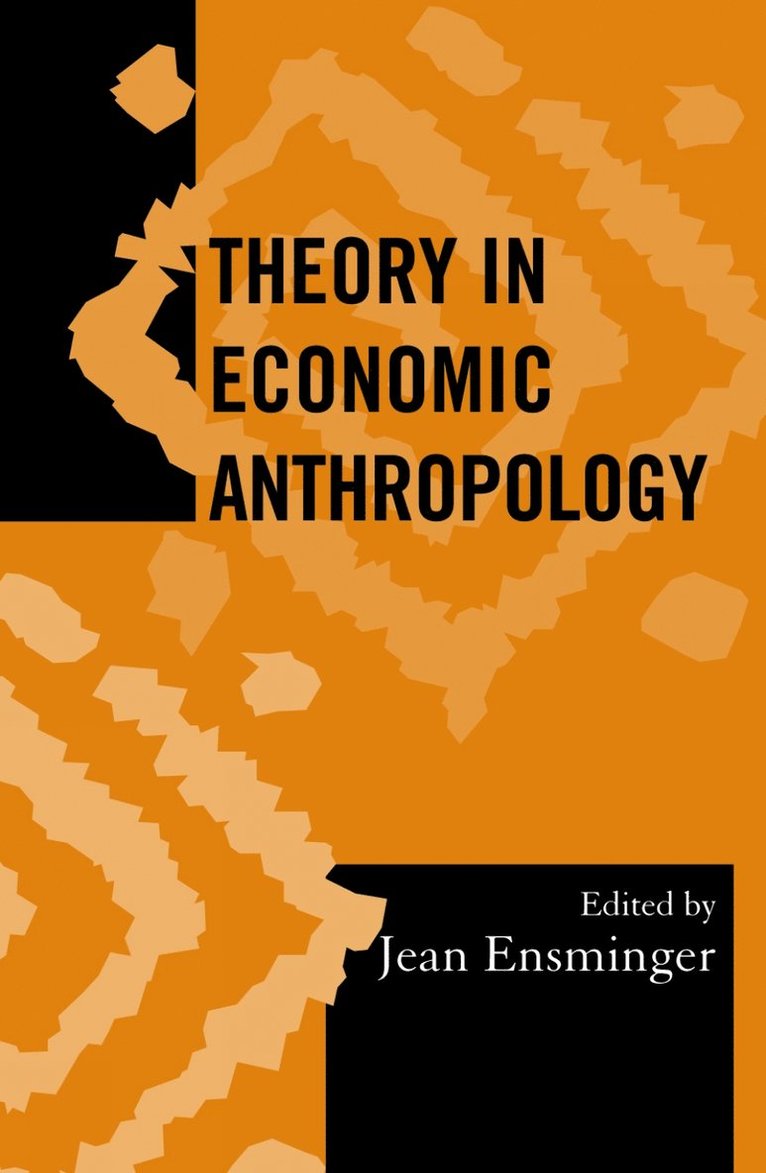
    Theory in Economic Anthropology

    AvJean Ensminger

    Häftad, Engelska, 2001

    Del 18 i serien Society for Economic Anthropology Monograph Series

    604 kr

    Beställningsvara. Skickas inom 10-15 vardagar. Fri frakt över 249 kr.

    Beskrivning

    This new volume from the Society for Economic Anthropology examines the unique contributions of anthropologists to general economic theory. Editor Jean Ensminger and other contributors challenge our understanding of human economies in the expanding global systems of interaction, with models and analyses from cross-cultural research. They examine a broad range of theoretical concerns from the new institutionalism, debates about wealth, exchange, and the evolution of social institutions, the relationship between small producers and the wider world, the role of commodity change and the formal/informal sector, and the role of big theory. The book will be a valuable resource for anthropologists, economists, economic historians, political economists, and economic development specialists. Published in cooperation with the Society for Economic Anthropology. Visit their web page.

    Produktinformation

    • Utgivningsdatum:2001-12-18
    • Mått:154 x 234 x 20 mm
    • Vikt:524 g
    • Format:Häftad
    • Språk:Engelska
    • Serie:Society for Economic Anthropology Monograph Series
    • Antal sidor:336
    • Förlag:AltaMira Press
    • ISBN:9780759102064

    Utforska kategorier

    • Nationalekonomi inom Ekonomi och Ledarskap
    • Antropologi inom Samhälle och politik

    Mer om författaren

    Jean Ensminger is Professor of Anthropology at the California Institute of Technology, who carries out research in the new institutional economics, rational choice theory, experimental economics, and economic development.

    Recensioner i media

    This outstanding book demonstrates the theoretical and empirical importance of economic anthropology for the twenty-first century. Ensminger and her colleagues combine the solid empirical work that anthropology is known for with innovative theoretical trends in economics. The work on institutions and social capital and on experimental economics is most notable to me. The book foreshadows a scientific contribution in these areas that will be very significant in the next decade. It is a pleasure to read the more empirical contributions, by established as well as junior scholars, which demonstate that economic anthropology remains solidly rooted in the tradition of careful, theoretically informed ethnography. This remarkable book should be read by a wide range of scholars and students interested in knowing how economic anthropology can advance social science in the twenty-first century.

    Innehållsförteckning

    • Chapter 1 Introduction: Theory in Economic Anthropology at the Turn of the CenturyPart 2 Part I: The New InstitutionalismChapter 3 Chapter 1: Property Rights and Incentives for Agricultural Growth: Women Farmer's Crop Control and their Use of Agricultural InputsChapter 4 Chapter 2: Transaction Cost Economics: Accomplishments, Problems and PossibilitiesChapter 5 Chapter 3: Experimental Economics: A Powerful New Method for Theory Testing in AnthropologyPart 6 Part II: Rethinking Wealth, Exchange, and the Evolution of Social InstitutionsChapter 7 Chapter 4: Commodity Flows and the Evolution of Complex SocietiesChapter 8 Chapter 5: Economic Transfers and Exchanges: Concepts for Describing AllocationsChapter 9 Chapter 6: Polanyi and the Definition of CapitalismPart 10 Part III: Small Producers Interacting with the Wider WorldChapter 10 Chapter 7: Chayanov and Theory in Economic AnthropologyChapter 11 Chapter 8: Space, Place, and Economic Anthropology: Locating Potters in a Sri Lankan LandscapeChapter 12 Chapter 9: Indians, Markets, and Transnational Studies in Mesoamerican Anthropology: Predicaments and OpportunitiesChapter 14 Part IV: Commodity Chains and the Formal/Informal Sector DistinctionChapter 15 Chapter 10: Transcending the Formal/Informal Distinction: Commercial Relations in Africa and Russia in the Post-1989 WorldChapter 16 Chapter 11: Commodity Chains and the International Secondhand Clothing Trade: Salaula and the Work of Consumption in ZambiaPart 18 Part V: The Role for Big Theory in Economic AnthropologyChapter 19 Chapter 12: When Good Theories Go Bad: Theory in Economic Anthropology and Consumer ResearchChapter 19 Chapter 13: Decision-Making, Cultural Transmission and Adaptation in Economic Anthropology