• Fri frakt över 249 kr
  • •
  • Snabba leveranser
  • •
  • Billiga böcker
Kundservice

Du är på sajten för privatpersoner.

Företag, bibliotek eller offentlig verksamhet?

Du handlar på classic.bokus.com, där alla dina funktioner finns intakta.
Till classic.bokus.com
Bokus logotyp. Gå till startsidan.
  • Erbjudanden
  • Nyheter
  • Student
  • Topplistor
  • Barn & ungdom
  • Bokus Play
  • E-böcker
  • Pocketböcker
  • Spel & pussel

10% studentrabatt med kod TERM26

Sidfot

Mina sidor

    Hjälp

    • Kundservice
    • Vanliga frågor och svar
    • Frakt och leverans
    • Retur vid ångerrätt
    • Reklamera vara
    • Betalning
    • Köpvillkor
    • Allmänna villkor
    • Information om webbplatsens tillgänglighet

    Om Bokus

    • Om oss
    • Pressrum
    • För studenter
    • För företag
    • För bibliotek och offentlig verksamhet
    • För leverantörer
    • Hållbarhet

    Populärt

    • Aktuella erbjudanden
    • Presentkort
    • Studentlitteratur
    • Nya böcker
    • Topplistor
    • Signerade böcker
    • Engelska böcker

    Inspiration

    • Boktips
    • BookTok
    • Populära bokserier
    • Barnbokskaraktärer
    • Populära författare
    Logotyp för Bokus
    Följ oss på Facebook (extern länk)Följ oss på Instagram (extern länk)Följ oss på YouTube (extern länk)Följ oss på TikTok (extern länk)
    bokus @ CookiesAnpassa cookiesIntegritetspolicyKöpvillkor
    Till Citymail hemsida (extern länk)Till Budbee hemsida (extern länk)Till Postnord hemsida (extern länk)Till Schenker hemsida (extern länk)Till Early Bird hemsida (extern länk)Till Walleys hemsida (extern länk)
    1. Samhälle och politik
    2. Sociologi och antropologi
    3. Antropologi

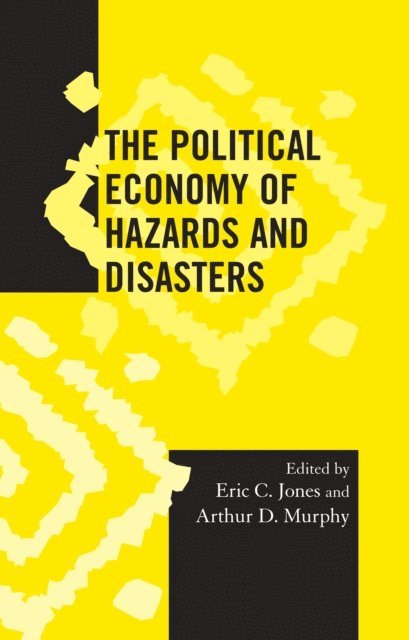
    Political Economy of Hazards and Disasters

    AvEric C. Jones,Arthur D. Murphy

    Inbunden, Engelska, 2009

    Del i serien Society for Economic Anthropology Monograph Series

    1 812 kr

    Beställningsvara. Skickas inom 10-15 vardagar. Fri frakt över 249 kr.

    Beskrivning

    Throughout history, societies have had to decide whom to "sacrifice" and whom to help in times of disaster. This volume examines how elite groups attempt to maintain power through the use of particular economic, political, and ideological instruments and how both ruling elites and common people endeavor to create meaningful traditions while enduring hardship.The Political Economy of Hazards and Disasters demonstrates how vulnerability is economically constructed, primary producers adapt their production regimes, how traders and merchants adapt their practices, and how political economic objectives play out in recovery efforts.

    Produktinformation

    • Utgivningsdatum:2009-04-16
    • Mått:161 x 238 x 26 mm
    • Vikt:705 g
    • Format:Inbunden
    • Språk:Engelska
    • Serie:Society for Economic Anthropology Monograph Series
    • Antal sidor:366
    • Förlag:AltaMira Press
    • ISBN:9780759113091

    Utforska kategorier

    • Antropologi inom Samhälle och politik

    Mer om författaren

    Eric C. Jones is research scientist in the department of anthropology at the University of North Carolina at Greensboro. Arthur D. Murphy is professor in the department of anthropology at the University of North Carolina at Greensboro.

    Recensioner i media

    This book engages the reader by providing two novel perspectives on disaster response tailored to an anthropological audience. First, the chapters present a broad perspective on the culture of response as seen through the lenses of diverse case studies based on archaeological, biological, cultural anthropological, and even linguistic data. The chapters also go beyond a consideration of economic and political factors in the analysis of disaster responses by documenting the impacts of disasters on the daily lives of ordinary persons.

    Innehållsförteckning

    • Part 1 I. Economic Parameters of DisastersChapter 2 Chapter 1. Linking Broad-scale Political Economic Contexts to Fine-scale Economic Consequences in Disaster ResearchChapter 3 Chapter 2. Anthropology and the Political Economy of DisastersPart 4 II. Class-Based Vulnerability in Disaster Exposure, Impact and RecoveryChapter 5 Chapter 3. "The Dam Is Becoming Dangerous and May Possibly Go:" The paleodemography and political economy of the Johnstown flood of 1889Chapter 6 Chapter 4. The invisible toll of Katrina: How social and economic resources are altering the recovery experience among Katrina evacuees in ColoradoChapter 7 Chapter 5. Recovering inequality: Democracy, the market economy and the 1906 San Francisco earthquake and firePart 8 III. The Line between Hazard and Disaster for Primary ProducersChapter 9 Chapter 6. Weak Winters: Dynamic decision-making in the face of extended drought in Ceará, northeast BrazilChapter 10 Chapter 7. The Impact of Volcanic Hazards on the Ancient Olmec and Epi-Olmec Economies in Los Tuxtlas Region, Veracruz, MexicoChapter 11 Chapter 8. If the Pyroclastic Flow Doesn't Kill You, the Recovery Will: Cascading impacts of Mt. Tungurahua's eruptions in rural EcuadorPart 12 IV. Product Distribution in Hazardous SettingsChapter 13 Chapter 9. When the Lights Go Out: Understanding natural hazard and merchant "brownout" behavior in the provincial PhilippinesChapter 14 Chapter 10. Where Others Fear to Trade: Modeling adaptive resilience in ethnic trading networks to famines, maritime warfare and imperial stability in the growing Indian Ocean economy, ca. 1500-1700 CEChapter 15 Chapter 11. Madagascar's Cyclone Vulnerability and the Global Vanilla EconomyPart 16 V. Political Economic Mitigation of DisastersChapter 17 Chapter 12. Learning from Disaster? Mad cows, squatter fires and temporality in repeated crisesChapter 18 Chapter 13. . "Hurricanes Did Not Just Start Happening": Expectations of intervention in the Mississippi Gulf Coast casino industryChapter 19 Chapter 14. From the Phoenix Effect to Punctuated Entropy: The culture of response as a unifying paradigm of disaster mitigation and recovery