• Fri frakt över 249 kr
  • •
  • Snabba leveranser
  • •
  • Billiga böcker
Kundservice

Du är på sajten för privatpersoner.

Företag, bibliotek eller offentlig verksamhet?

Du handlar på classic.bokus.com, där alla dina funktioner finns intakta.
Till classic.bokus.com
Bokus logotyp. Gå till startsidan.
  • Erbjudanden
  • Nyheter
  • Student
  • Topplistor
  • Barn & ungdom
  • Bokus Play
  • E-böcker
  • Pocketböcker
  • Spel & pussel

10% rabatt på allt med kod: NYSTART10 →

Sidfot

Mina sidor

    Hjälp

    • Kundservice
    • Vanliga frågor och svar
    • Frakt och leverans
    • Retur vid ångerrätt
    • Reklamera vara
    • Betalning
    • Köpvillkor
    • Allmänna villkor
    • Information om webbplatsens tillgänglighet

    Om Bokus

    • Om oss
    • Pressrum
    • För studenter
    • För företag
    • För bibliotek och offentlig verksamhet
    • För leverantörer
    • Hållbarhet

    Populärt

    • Aktuella erbjudanden
    • Presentkort
    • Studentlitteratur
    • Nya böcker
    • Topplistor
    • Signerade böcker
    • Engelska böcker

    Inspiration

    • Boktips
    • BookTok
    • Populära bokserier
    • Barnbokskaraktärer
    • Populära författare
    Logotyp för Bokus
    Följ oss på Facebook (extern länk)Följ oss på Instagram (extern länk)Följ oss på YouTube (extern länk)Följ oss på TikTok (extern länk)
    bokus @ CookiesAnpassa cookiesIntegritetspolicyKöpvillkor
    Till Citymail hemsida (extern länk)Till Budbee hemsida (extern länk)Till Postnord hemsida (extern länk)Till Schenker hemsida (extern länk)Till Early Bird hemsida (extern länk)Till Walleys hemsida (extern länk)
    1. Juridik
    2. Rättsvetenskap

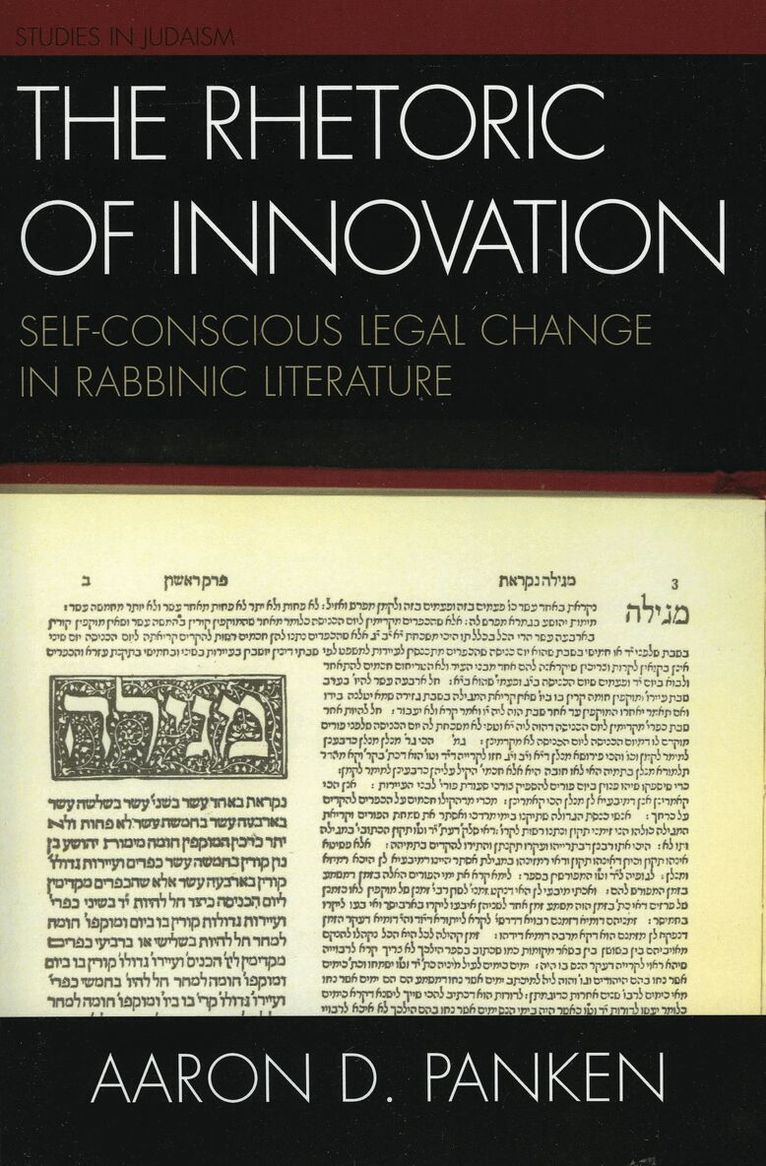
    Rhetoric of Innovation

    Self-Conscious Legal Change in Rabbinic Literature

    AvAaron D. Panken

    Häftad, Engelska, 2005

    Del i serien Studies in Judaism

    772 kr

    Beställningsvara. Skickas inom 10-15 vardagar. Fri frakt över 249 kr.

    Beskrivning

    A profound tension exists between the opposing tendencies of preservation and innovation in rabbinic legal literature. The rabbis made tremendous attempts to safeguard traditions handed down to them from prior generations in the face of significant new challenges. At the same time, these creative religious thinkers boldly invented new practices (or altered old ones) to fit shifting circumstances, designing and utilizing a rich rhetorical vocabulary to allow such necessary innovation.Through critical examination of more than 1,000 occurrences of terms depicting legal innovation, this study maps the contours of legal change reported during the rabbinic period. The Rhetoric of Innovation examines temporal clusters of statements and actions attributed to authority figures in the Tannaitic and Amoraic periods, also reviewing the geographic distribution of these words and their divergent usages in documents edited in Roman Palestine and Babylonia. It also provides significant insight into rabbinic philosophies of legal change, through exploring the various rationales deemed acceptable within the rabbinic corpus. In this respect the book carries a relevant message for modern Jewish life in its consideration of the history of appropriate boundaries and reasons for legal change-questions that recur frequently in Jewish discourse today.

    Produktinformation

    • Utgivningsdatum:2005-06-02
    • Mått:168 x 228 x 31 mm
    • Vikt:603 g
    • Format:Häftad
    • Språk:Engelska
    • Serie:Studies in Judaism
    • Antal sidor:406
    • Förlag:University Press of America
    • ISBN:9780761831662

    Utforska kategorier

    • Rättsvetenskap inom Juridik

    Mer om författaren

    Aaron D. Panken serves as Dean and Director of the Rabbinical Program at Hebrew Union College-Jewish Institute of Religion in New York City, where he teaches Rabbinic and Second Temple Literature. Ordained at HUC-JIR, he earned his Ph.D. in Hebrew and Judaic Studies from New York University and teaches and speaks widely throughout North America and abroad.

    Recensioner i media

    In this thoroughly researched volume, Aaron Panken has uncovered the methods of development employed by the sages of Jewish law in the Talmudic period and the ongoing response of halakhah to changing circumstances and conditions. The volume is marked by careful scholarship and objectivity and is an important contribution to the history of Jewish law.

    Innehållsförteckning

    • Chapter 1 List of TablesChapter 2 PrefaceChapter 3 AcknowledgementsChapter 4 IntroductionChapter 5 AbbreviationsChapter 6 The Reflective Tendency: BarishonahChapter 7 The Innovative Tendency: TakkanotChapter 8 The Conservative Tendency: GezerotChapter 9 ConclusionChapter 10 BibliographyChapter 11 Primary Source IndexChapter 12 Index