• Fri frakt över 249 kr
  • •
  • Snabba leveranser
  • •
  • Billiga böcker
Kundservice

Du är på sajten för privatpersoner.

Företag, bibliotek eller offentlig verksamhet?

Du handlar på classic.bokus.com, där alla dina funktioner finns intakta.
Till classic.bokus.com
Bokus logotyp. Gå till startsidan.
  • Erbjudanden
  • Nyheter
  • Student
  • Topplistor
  • Barn & ungdom
  • Bokus Play
  • E-böcker
  • Pocketböcker
  • Spel & pussel

10% rabatt på allt med kod NYSTART10 →

Sidfot

Mina sidor

    Hjälp

    • Kundservice
    • Vanliga frågor och svar
    • Frakt och leverans
    • Retur vid ångerrätt
    • Reklamera vara
    • Betalning
    • Köpvillkor
    • Allmänna villkor
    • Information om webbplatsens tillgänglighet

    Om Bokus

    • Om oss
    • Pressrum
    • För studenter
    • För företag
    • För bibliotek och offentlig verksamhet
    • För leverantörer
    • Hållbarhet

    Populärt

    • Aktuella erbjudanden
    • Presentkort
    • Studentlitteratur
    • Nya böcker
    • Topplistor
    • Signerade böcker
    • Engelska böcker

    Inspiration

    • Boktips
    • BookTok
    • Populära bokserier
    • Barnbokskaraktärer
    • Populära författare
    Logotyp för Bokus
    Följ oss på Facebook (extern länk)Följ oss på Instagram (extern länk)Följ oss på YouTube (extern länk)Följ oss på TikTok (extern länk)
    bokus @ CookiesAnpassa cookiesIntegritetspolicyKöpvillkor
    Till Citymail hemsida (extern länk)Till Budbee hemsida (extern länk)Till Postnord hemsida (extern länk)Till Schenker hemsida (extern länk)Till Early Bird hemsida (extern länk)Till Walleys hemsida (extern länk)
    1. Filosofi och religion
    2. Filosofi
    3. Filosofiska discipliner

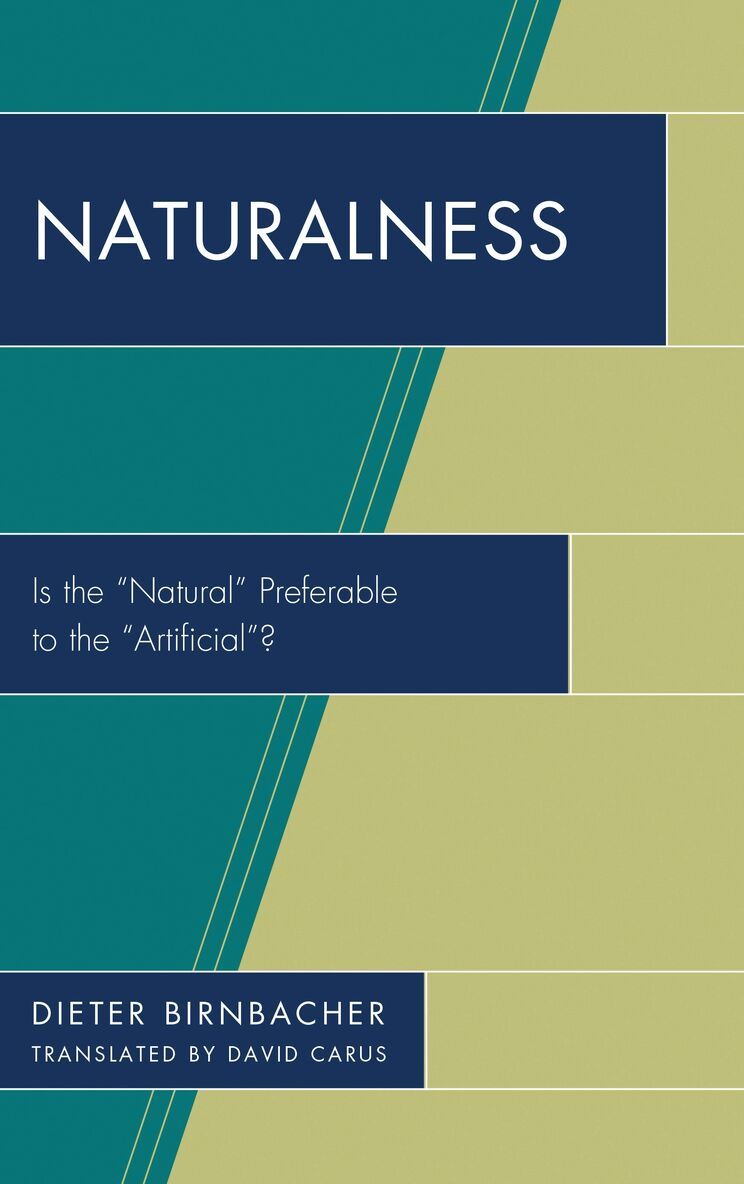
    Naturalness

    Is the “Natural” Preferable to the “Artificial”?

    AvDieter Birnbacher

    Inbunden, Engelska, 2014

    980 kr

    Beställningsvara. Skickas inom 10-15 vardagar. Fri frakt över 249 kr.

    Fler format och utgåvor

    E-bok

    1 057 kr

    Beskrivning

    In Naturalness, Dieter Birnbacher delves into an argument common in everyday thinking and ethics—the argument of naturalness. This argument suggests that what is natural is in some ways superior to what is artificial, due to repeated positive connotations associated with the natural. This book presents both a phenomenology and a critique. For the former, Naturalness reviews the role of naturalistic arguments in various domains of everyday language and reasoning as well as in political and ethical debates, especially regarding controversial issues in preservation. For the latter, it critically discusses the persuasiveness of naturalness, both intellectually and morally, and how it is currently no more than an expression of conservatism and resistance to change in basic orientations.

    Produktinformation

    • Utgivningsdatum:2014-04-15
    • Mått:161 x 237 x 18 mm
    • Vikt:399 g
    • Format:Inbunden
    • Språk:Engelska
    • Antal sidor:186
    • Förlag:University Press of America
    • ISBN:9780761863496
    • Översättare:David Carus

    Utforska kategorier

    • Filosofiska discipliner inom Filosofi och religion

    Mer om författaren

    Dieter Birnbacher is a professor of philosophy at the University of Düsseldorf, Germany; president of the Central Ethics Commission of the Bundesärztekammer (German Medical Association); and a member of Leopoldina, German National Academy of Sciences.

    Recensioner i media

    Dieter Birnbacher's survey of arguments about the concept of "naturalness" originally appeared in Germany in 2006, and its publication, now in English, is a welcome addition to the literature.... I recommend this book to anyone working in the field of environmental philosophy.... There is much to learn from Birnbacher.

    Innehållsförteckning

    • Preface1. Natural and Artificial: Introductory Distinctions1.1 Naturalness and Artificiality as Points of Orientation1.2 Genetic and Qualitative Naturalness1.3 Dimensions of Naturalness in a Genetic Sense1.4 Dimensions of Naturalness in a Qualitative Sense2. Naturalness as a Value2.1 Has Naturalness become Discredited as a Normative Principle?2.2 The Naturalness Bonus in Everyday Morality2.3 Naturalness Arguments in Applied Ethics2.4 “Natural”: Positive Connotations and their Background2.5 The Structure of Naturalness Arguments2.6 The Task of the Following Chapters3. Naturalness as a Norm3.1 Nature as a Basis for Moral Norms?3.2 Is the Argument of “Naturalistic Fallacy” valid?3.3 Different Approaches to Criticizing Ethical Naturalism3.4 The Projective Character of Normative Images of Nature3.5 Learning from Nature3.6 Conclusions4. Naturalness in the Ethics of Nature: What Type of Nature is Worth Protecting?4.1 Naturalness and other Values of Nature4.2 Can the Value of Protection be Applied to its Necessary Conditions?4.3 Nature as an Anti-World4.4 The Conservation of Naturalness in the Genetic Sense: Originality4.5 Faking Nature4.6 Naturalness in a Qualitative Sense—an Aesthetic or also an Ethical Principle?4.7 Does the Recognition of the Value of Naturalness Demand a Non-Anthropocentric Ethic?4.8 Conclusions5. To What Extent should we be Allowed to Alter our Individual Natural Contingency?5.1 The Religious and other Reasons for the Sacrosanctity of Given Nature5.2 Natural and Artificial: Boundary Issues5.3 Which Alterations resulting from Intervention are Ethically Problematic?5.4 Naturalness in Dealing with Ourselves—An Independent Value?5.5 The “Naturalization” of Human Dignity5.6 Conclusions6. Naturalness Arguments in Reproductive Medicine6.1 Gradations of Artificiality6.2 What Role do Naturalness Arguments Play in Reproductive Medicine?6.3 Naturalness Preferences versus Naturalness Principles6.4 Sex Selection as a Test Case of Biopolitics6.5 Principles of Naturalness in the Debate on Reproductive Cloning6.6 The Dignity of the Species and Naturalness6.7 Conclusions7. Naturalness as a Boundary to Transforming Human Nature7.1 The Idea of a Species Ethics7.2 What does “Human Nature” mean?7.3 “Posthumanism”?7.4 The Openness of Human Nature7.5 Images of Humanity as Intrinsic Values?7.6 ConclusionsBibliographyIndex of Names