• Fri frakt över 249 kr
  • •
  • Snabba leveranser
  • •
  • Billiga böcker
Kundservice

Du är på sajten för privatpersoner.

Företag, bibliotek eller offentlig verksamhet?

Du handlar på classic.bokus.com, där alla dina funktioner finns intakta.
Till classic.bokus.com
Bokus logotyp. Gå till startsidan.
  • Erbjudanden
  • Nyheter
  • Student
  • Topplistor
  • Barn & ungdom
  • Bokus Play
  • E-böcker
  • Pocketböcker
  • Spel & pussel

10% rabatt på allt med kod NYSTART10 →

Sidfot

Mina sidor

    Hjälp

    • Kundservice
    • Vanliga frågor och svar
    • Frakt och leverans
    • Retur vid ångerrätt
    • Reklamera vara
    • Betalning
    • Köpvillkor
    • Allmänna villkor
    • Information om webbplatsens tillgänglighet

    Om Bokus

    • Om oss
    • Pressrum
    • För studenter
    • För företag
    • För bibliotek och offentlig verksamhet
    • För leverantörer
    • Hållbarhet

    Populärt

    • Aktuella erbjudanden
    • Presentkort
    • Studentlitteratur
    • Nya böcker
    • Topplistor
    • Signerade böcker
    • Engelska böcker

    Inspiration

    • Boktips
    • BookTok
    • Populära bokserier
    • Barnbokskaraktärer
    • Populära författare
    Logotyp för Bokus
    Följ oss på Facebook (extern länk)Följ oss på Instagram (extern länk)Följ oss på YouTube (extern länk)Följ oss på TikTok (extern länk)
    bokus @ CookiesAnpassa cookiesIntegritetspolicyKöpvillkor
    Till Citymail hemsida (extern länk)Till Budbee hemsida (extern länk)Till Postnord hemsida (extern länk)Till Schenker hemsida (extern länk)Till Early Bird hemsida (extern länk)Till Walleys hemsida (extern länk)
    1. Psykologi och pedagogik
    2. Pedagogik
    3. Skolväsen och utbildningssystem
    4. Läroplaner och kursplaner

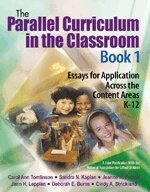
    Parallel Curriculum in the Classroom, Book 1

    Essays for Application Across the Content Areas, K-12

    AvCarol Ann Tomlinson,Sandra N. Kaplan

    Inbunden, Engelska, 2005

    1 119 kr

    Beställningsvara. Skickas inom 3-6 vardagar. Fri frakt över 249 kr.

    Fler format och utgåvor

    Häftad

    643 kr

    Beskrivning

    Enrich your understanding and application of the Parallel Curriculum Model! The Parallel Curriculum: A Design to Develop High Potential and Challenge High-Ability Learners remains a groundbreaking publication offering an innovative model for rich curriculum development across varying ability levels. Its four parallel approaches to curriculum development were designed to challenge all students to greater expertise across content areas while helping teachers challenge and develop their own expectations. The Parallel Curriculum in the Classroom, Book 1 delves more deeply into the classroom application of the Parallel Curriculum Model, providing in-depth examinations of how to:Design appropriate curriculum using the Parallel Curriculum Model Effectively apply focusing questions when planning for each of the parallels Modify the curriculum and classroom environment for students to learn from multiple perspectives Extend opportunities with the Curriculum of Identity Plan curriculum and instruction using Ascending Intellectual Demand For teachers, curriculum and instruction directors, staff developers, and administrators, The Parallel Curriculum in the Classroom, Book 1 makes designing and planning with the Parallel Curriculum Model clear. Challenge and reward yourself and your students with this promising new model!

    Produktinformation

    • Utgivningsdatum:2005-10-20
    • Mått:215 x 279 x 12 mm
    • Vikt:570 g
    • Format:Inbunden
    • Språk:Engelska
    • Antal sidor:128
    • Förlag:SAGE Publications Inc
    • ISBN:9780761929710

    Utforska kategorier

    • Läroplaner och kursplaner inom Psykologi och pedagogik

    Mer om författaren

    Carol Ann Tomlinson‘s career as an educator includes 21 years as a public school teacher. She taught in high school, preschool, and middle school, and worked with heterogeneous classes as well as special classes for students identified as gifted and students with learning difficulties. Her public school career also included 12 years as a program administrator of special services for advanced and struggling learners. She was Virginia’s Teacher of the Year in 1974. She is professor of educational leadership, foundations, and pol­icy at the University of Virginia’s Curry School of Education; a researcher for the National Research Center on the Gifted and Talented; a codirec­tor of the University of Virginia’s Summer Institute on Academic Diversity; and president of the National Association for Gifted Children. Special interests through­out her career have included curriculum and instruction for advanced learners and struggling learners, effective instruction in heterogeneous settings, and bridging the fields of general education and gifted education. She is author of over 100 articles, book chapters, books, and other professional development materials, including How to Differentiate Instruction in Mixed-Ability Classrooms, The Differentiated Classroom: Responding to the Needs of All Learners, Leadership for Differentiated Schools and Classrooms, the facilitator’s guide for the video staff development sets called Differentiating Instruction, and At Work in the Differentiated Classroom, as well as a professional inquiry kit on differentiation. She works throughout the United States and abroad with teachers whose goal is to develop more responsive heterogeneous classrooms. Sandra N. Kaplan has been a teacher and administrator of gifted programs in an urban school district in California. Currently, she is clinical professor in learning and instruction at the University of Southern California’s Rossier School of Education. She has authored articles and books on the nature and scope of differenti­ated curriculum for gifted students. Her primary area of concern is modifying the core and differentiated curriculum to meet the needs of inner-city, urban, gifted learners. She is a past president of the California Association for the Gifted (CAG) and the National Asso­ciation for Gifted Children (NAGC). She has been nationally recognized for her con­tributions to gifted education. Jeanne H. Purcell is the consultant to the Connecticut State Depart­ment of Education for gifted and talented education. She is also director of UConn Mentor Connection, a nationally recognized summer mentorship program for talented teenagers that is part of the NEAG Center for Talent Development at the University of Con­necticut. Prior to her work at the State Department of Connecticut, she was an administrator for Rocky Hill Public Schools (CT); a pro­gram specialist with the National Research Center on the Gifted and Talented, where she worked collaboratively with other researchers on national issues related to high-achieving young people; an instructor of Teaching the Talented, a graduate-level program in gifted education; and a staff developer to school districts across the country and Canada. She has been an En­glish teacher, community service coordinator, and teacher of the gifted, K-12, for 18 years in Connecticut school districts and has published many articles that have appeared in Educational Leadership, Gifted Child Quarterly, Roeper Review, Educa­tional and Psychological Measurement, National Association of Secondary School Principals’ Bulletin, Our Children: The National PTA Magazine, Parenting for High Potential, and Journal for the Education of the Gifted. She is active in the National Association for Gifted Children (NAGC) and serves on the Awards Committee and the Curriculum Committee of NAGC, for which she is the co-chair for the annual Curriculum Awards Competition. Jann Leppien served as a gifted and talented coordinator in Montana prior to attending the University of Connecticut, where she earned her doctorate in gifted education and worked as a research assistant at the National Research Center for the Gifted and Talented. She has been a teacher for 24 years, spending 14 of those years working as a classroom teacher, enrichment specialist, and coordinator of the Schoolwide Enrichment Model in Montana. She is past president of the Montana Association for Gifted and Tal­ented Education. Currently, she is an associate professor in the School of Education at the University of Great Falls in Montana. Leppien teaches graduate and under­graduate courses in gifted education, educational research, curriculum and assess­ment, creativity, and methods courses in math, science, and social studies. Her research interests include teacher collaboration, curriculum design, underachievement, and planning instruction for advanced learners. Leppien works as a consultant to teachers in the field of gifted education and as a national trainer for the Talents Unlimited Program. She is coauthor of The Multiple Menu Model: A Par­allel Guide for Developing Differentiated Curriculum. She is active in the National Association for Gifted Children (NAGC), serving as a board member and newsletter editor of the Curriculum Division, and a board member of the Association for the Education of Gifted Underachieving Students. Deborah E. Burns began her teaching career in 1973 as a Title I reading and mathematics teacher in a rural K-8 school in Michigan. She has worked as a K-8 classroom teacher, as a middle school language arts spe­cialist, and as a program coordinator for a seven-district consortium. She has taught in preschool, summer, and Saturday programs, in resource rooms, a psychiatric ward, an orphanage, and at the university level. She has written grants, professional development modules, journal articles, assessments, program evaluations, curriculum units, and three books. She has also designed and implemented class­room-based research studies and conducted program and teacher evaluations. For the past 15 years, she has been employed by the University of Connecticut’s NEAG School of Education as a program director, an assistant professor, a research scien­tist, associate professor in residence, and most recently in Cheshire as curriculum coordinator for the district. She is an active member of the National Association for Gifted Children (NAGC) and has been a board member for the past five years. She is a member of the Curriculum Division and is co-chair of the annual Curriculum Awards Competition. Burns earned her bachelor’s degree in elementary edu­cation from Michigan State University in 1973. She pursued her graduate studies at Western Michigan University in clinical reading instruction and received her MEd from Ashland College in 1978 in remedial reading, administration, and supervision. She pursued additional graduate studies at Ohio State University involving ad­ministration, special education, and gifted education and received her PhD in educational psychology and gifted education from the University of Connecticut in 1987. Cindy A. Strickland has been a teacher for twenty-five years and has worked with students of all ages, from kindergarten to master’s degree. A member of the ASCD Differentiation Faculty Cadre, Cindy works closely with Carol Ann Tomlinson and has coauthored several books and articles with her. In the past eight years, Cindy’s consulting work has taken her to forty-six states, five provinces, and three continents where she has provided workshops on topics relating to differentiation, the Parallel Curriculum Model (PCM), and gifted education. Cindy’s publications include Staff Development Guide for the Parallel Curriculum; The Parallel Curriculum Model, 2nd edition; The Parallel Curriculum Model in the Classroom: Applications Across the Content Areas; and In Search of the Dream: Designing Schools and Classrooms That Work for High Potential Students from Diverse Cultural Backgrounds.Publications in differentiation include Professional Development for Differentiated Instruction: An ASCD Toolkit, Exploring Differentiated Instruction, Tools for High-Quality Differentiated Instruction: An ASCD Toolkit, the ASCD online course Success with Differentiation, the book Differentiation in Practice: A Resource Guide for Differentiating Curriculum, Grades 9–12, and a unit in the book Differentiation in Practice: A Resource Guide for Differentiating Curriculum, Grades 5–9.

    Recensioner i media

    "These essays help educators think more fully and deeply about the PCM model, about the curriculum development process, and about the students who would benefit from a rich, multifaceted, expert-oriented curriculum."—From Book 1

    Innehållsförteckning

    • Introducing the Parallel Curriculum Model in the Classroom by Carol Ann Tomlinson and Sandra KaplanAbout the BookUsing the Model and Units for Professional DevelopmentAcknowledgments1. In Praise of Protocols: Navigating the Design Process Within the Parallel Curriculum Model by Deborah E. BurnsCurriculum as a Road MapThe Purpose, Problems, and Process of Curriculum WritingThe Goal and Sequence of This EssayThe Beginning: Agreeing on the Components of a Curriculum PlanThe Challenge of Writing Well-Aligned PCM CurriculumSupporting the Work of Creative ProfessionalsThe Parallel Curriculum Model ProtocolsConclusion2. The Importance of the Focusing Questions in Each of the Curriculum Parallels by Jann H. LeppienThe Nature of a Discipline and How It Relates to the Focusing QuestionsEarly in the Curriculum Planning ProcessUsing the Core Curriculum’s Purpose, Characteristics, and Questions to Guide Curricular DecisionsUsing the Curriculum of Connections’ Purpose, Characteristics, and Questions to Guide Curricular DecisionsUsing the Curriculum of Practice’s Purpose, Characteristics, and Questions to Guide Curricular DecisionsUsing the Curriculum of Identity’s Purpose, Characteristics, and Questions to Guide Curricular DecisionsIn Closing3. Using the Four Parallel Curricula as a Comprehensive Curriculum Model: Philosophy and Pragmatism by Sandra N. KaplanThe Philosophical RationaleThe Pragmatic RationaleConclusion4. Exploring the Curriculum of Identity in the PCM Model by Jeanne PurcellWhat Is the Curriculum of Identity?What’s In It for Me?ConclusionReferences5. Ascending Intellectual Demand Within and Beyond the Parallel Curriculum Model by Carol Tomlinson, Sandra Kaplan, and Kelly HedrickWhat Is Ascending Intellectual Demand?How Does Ascending Intellectual Demand Relate to Other Guides for Challenge?How Is Ascending Intellectual Demand Different Than Other Approaches to Challenge?Using Ascending Intellectual Demand to Plan Curriculum and InstructionWhen and Where Do Teachers Apply Ascending Intellectual Demand?A Word of CautionWhy Does Ascending Intellectual Demand Matter?ReferencesIndex