• Fri frakt över 249 kr
  • •
  • Snabba leveranser
  • •
  • Billiga böcker
Kundservice

Du är på sajten för privatpersoner.

Företag, bibliotek eller offentlig verksamhet?

Du handlar på classic.bokus.com, där alla dina funktioner finns intakta.
Till classic.bokus.com
Bokus logotyp. Gå till startsidan.
  • Erbjudanden
  • Nyheter
  • Student
  • Topplistor
  • Barn & ungdom
  • Bokus Play
  • E-böcker
  • Pocketböcker
  • Spel & pussel

10% rabatt på allt med kod: NYSTART10 →

Sidfot

Mina sidor

    Hjälp

    • Kundservice
    • Vanliga frågor och svar
    • Frakt och leverans
    • Retur vid ångerrätt
    • Reklamera vara
    • Betalning
    • Köpvillkor
    • Allmänna villkor
    • Information om webbplatsens tillgänglighet

    Om Bokus

    • Om oss
    • Pressrum
    • För studenter
    • För företag
    • För bibliotek och offentlig verksamhet
    • För leverantörer
    • Hållbarhet

    Populärt

    • Aktuella erbjudanden
    • Presentkort
    • Studentlitteratur
    • Nya böcker
    • Topplistor
    • Signerade böcker
    • Engelska böcker

    Inspiration

    • Boktips
    • BookTok
    • Populära bokserier
    • Barnbokskaraktärer
    • Populära författare
    Logotyp för Bokus
    Följ oss på Facebook (extern länk)Följ oss på Instagram (extern länk)Följ oss på YouTube (extern länk)Följ oss på TikTok (extern länk)
    bokus @ CookiesAnpassa cookiesIntegritetspolicyKöpvillkor
    Till Citymail hemsida (extern länk)Till Budbee hemsida (extern länk)Till Postnord hemsida (extern länk)Till Schenker hemsida (extern länk)Till Early Bird hemsida (extern länk)Till Walleys hemsida (extern länk)
    1. Medicin
    2. Andra medicinska specialiteter
    3. Klinisk psykologi
    4. Psykoterapi som behandlingsmetod

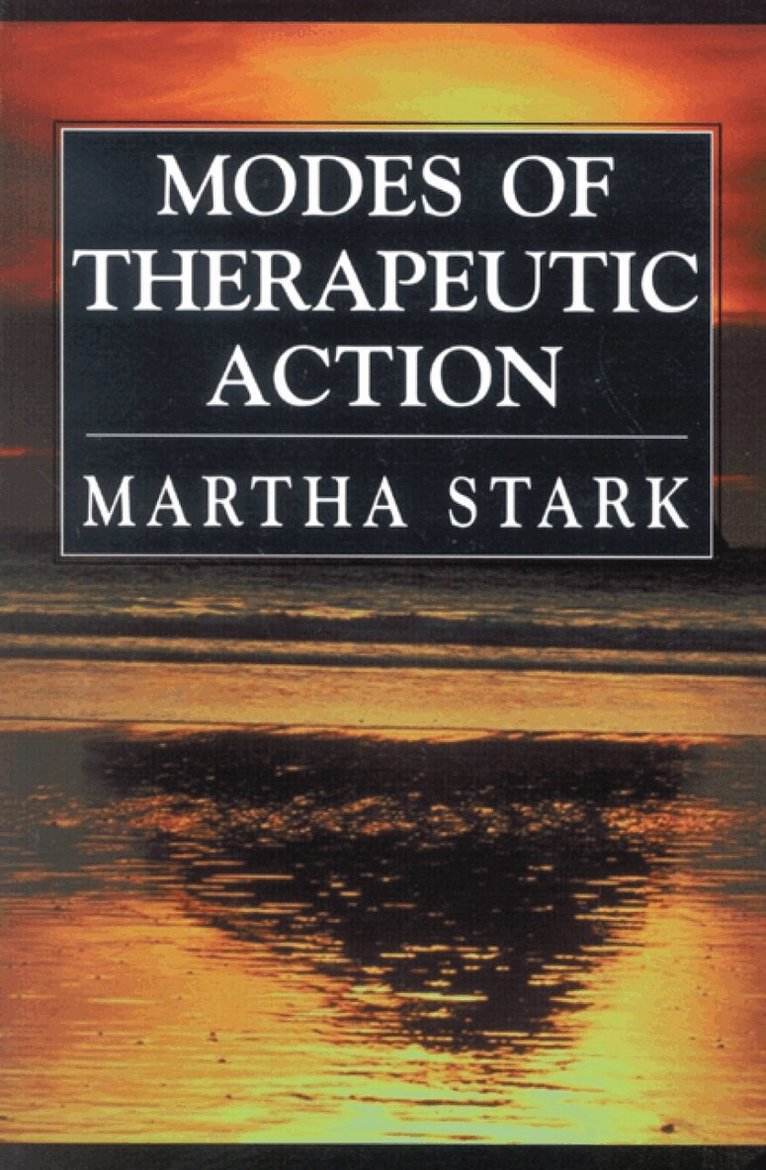
    Modes of Therapeutic Action

    AvMartha Stark

    Häftad, Engelska, 2000

    522 kr

    Beställningsvara. Skickas inom 10-15 vardagar. Fri frakt över 249 kr.

    Fler format och utgåvor

    Inbunden

    1 080 kr

    E-bok

    561 kr

    Beskrivning

    How do we position ourselves, moment by moment, in relation to our patients and how do these positions inform both what we come to know about our patients and how we intervene? Do we participate as neutral object, as empathic self-object, or as authentic subject? Do we strive to enhance the patient's knowledge, to provide a corrective experience, or to work at the intimate edge? In an effort to answer these and other clinically relevant questions about the process of psychotherapeutic change, Martha Stark has developed a comprehensive theory of therapeutic action that integrates the interpretive perspective of classical psychoanalysis (Model 1), the corrective-provision perspective of self psychology and those object relations theories emphasizing the internal 'absence of good' (Model 2), and the relational perspective of contemporary psychoanalysis and those object relations theories emphasizing the internal 'presence of bad' (Model 3). Model I is about knowledge and insight. It is a one-person psychology because its focus is on the patient and the internal workings of her mind. Model 2 is about corrective experience. It is a one-and-a-half-person psychology because its emphasis is not so much on the relationship per se, but on the filling in of the patient's deficits by way of the therapist's corrective provision; what ultimately matters is not who the therapist is, but, rather, what she can offer. Model 3 is about relationship, the real relationship. It is a two-person psychology because its focus is on patients and therapists who relate to each other as real people; it is about mutuality, reciprocity, and intersubjectivity. Whereas Model 2 is about 'give' and involves the therapist's bringing the best of who she is into the room, Model 3 is about 'give-and-take' and involves the therapist's bringing all of who she is into the room. As Dr. Stark repeatedly demonstrates in numerous clinical vignettes, the three modes of therapeutic actionDknowledge, experience, and relationshipDare not mutually exclusive but mutually enhancing. If, as therapists, we can tolerate the necessary uncertainty that comes with the recognition that there is an infinite variety of possibilities for change, then we will be able to enhance the therapeutic potential of each moment and optimize our effectiveness as clinicians.

    Produktinformation

    • Utgivningsdatum:2000-12-01
    • Mått:152 x 229 x 23 mm
    • Vikt:599 g
    • Format:Häftad
    • Språk:Engelska
    • Antal sidor:384
    • Förlag:Jason Aronson Publishers
    • ISBN:9780765702500

    Utforska kategorier

    • Psykoterapi som behandlingsmetod inom Medicin

    Mer om författaren

    Martha Stark, M.D., a graduate of the Harvard Medical School and the Boston Psychoanalytic Institute, is a psychiatrist/psychoanalyst in private practice in Newton Centre, Massachusetts. Dr. Stark is on the faculty of both the Boston Psychoanalytic Institute and the Massachusetts Institute for Psychoanalysis. She is also a Clinical Instructor in Psychiatry at the Harvard Medical School, has a teaching appointment at the Massachusetts Mental Health Center, and is on the faculty of the Center for Psychoanalytic Studies at the Massachusetts General Hospital.

    Recensioner i media

    Martha Stark has brought together the three fundamental theories about how therapy works that prevail in our field at present, and has shrewdly drawn out the virtues of each. Her own integrated conception is at once sophisticated and practical. Therapists of every level of experience will profit from it. Engaging and convincing clinical vignettes bring Stark's concepts alive, illustrating them in a way that resonates with a practitioner's experience. Modes of Therapeutic Action is a no-nonsense, deeply human, eminently useful study of what really thappens in a successful psychotherapy.