Research and Psychotherapy
The Vital Link
AvLester Luborsky,Ellen Luborsky
638 kr
Beställningsvara. Skickas inom 10-15 vardagar. Fri frakt över 249 kr.
Du är på sajten för privatpersoner.
AvLester Luborsky,Ellen Luborsky
638 kr
Beställningsvara. Skickas inom 10-15 vardagar. Fri frakt över 249 kr.
Lester Luborsky, Ph.D., is professor emeritus of psychology in psychiatry at the University of Pennsylvania, where he has engaged in psychotherapy research for the past forty years. He is author of eight books and close to 400 articles and chapters. He has received numerous professional awards, including the Gold Medal Award for Lifetime Achievement in the Applications of Psychology from the American Psychological Foundation and the Sigourney Award for Research in Psychoanalysis from the American Psychoanalytic Association. He was recently honored by the Society for Psychotherapy Research with a celebration of his contributions to psychotherapy research.Ellen Luborsky, Ph.D., is a clinical psychologist in private practice, with training from the Cornell Medical Center and the N.Y.U. Postdoctoral Program in Psychotherapy and Psychoanalysis. She also consults and speaks on topics related to early development. She is the author, with Susan Klebanoff, of a book on depression for teens. She has also written articles on psychotherapy research and on play therapy.
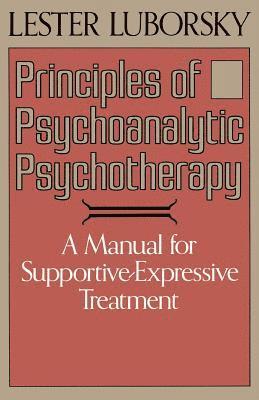
Among this book's many contributions, two are particularly stellar. First, the book provides a treatment manual that conveys what the therapist ought to do, say, and assess and how to watch, listen, and formulate what transpires in the session. In the therapy business, treatment manuals are not that novel these days. However, a manual for psychodynamic therapy that contains concrete assessment guidelines and explicit directives on how to use the information during ongoing treatment is quite special. The manual presents principles to guide the therapist in concrete ways and describes processes and therapist-patient exchanges that make the treatment replicable for research or practice. Second, the book elaborates four methods that Luborsky has developed toidentify core conflicts, the context in which symptoms appear, pretreatment health and sickness, and therapeutic alliance (core conflictual relationship theme, symptom-context method, Health-Sickness Rating Scale, and helpingalliance methods, respectively). Finally and perhaps foremost, the book provides a model of integrating research and practice? namely, developing and using validated measures of key constructs, obtaining data that are pertinent to individual patients, and tracking progress by using
Du är på sajten för privatpersoner.
AvLester Luborsky,Ellen Luborsky
638 kr
Beställningsvara. Skickas inom 10-15 vardagar. Fri frakt över 249 kr.
Lester Luborsky, Ph.D., is professor emeritus of psychology in psychiatry at the University of Pennsylvania, where he has engaged in psychotherapy research for the past forty years. He is author of eight books and close to 400 articles and chapters. He has received numerous professional awards, including the Gold Medal Award for Lifetime Achievement in the Applications of Psychology from the American Psychological Foundation and the Sigourney Award for Research in Psychoanalysis from the American Psychoanalytic Association. He was recently honored by the Society for Psychotherapy Research with a celebration of his contributions to psychotherapy research.Ellen Luborsky, Ph.D., is a clinical psychologist in private practice, with training from the Cornell Medical Center and the N.Y.U. Postdoctoral Program in Psychotherapy and Psychoanalysis. She also consults and speaks on topics related to early development. She is the author, with Susan Klebanoff, of a book on depression for teens. She has also written articles on psychotherapy research and on play therapy.
Among this book's many contributions, two are particularly stellar. First, the book provides a treatment manual that conveys what the therapist ought to do, say, and assess and how to watch, listen, and formulate what transpires in the session. In the therapy business, treatment manuals are not that novel these days. However, a manual for psychodynamic therapy that contains concrete assessment guidelines and explicit directives on how to use the information during ongoing treatment is quite special. The manual presents principles to guide the therapist in concrete ways and describes processes and therapist-patient exchanges that make the treatment replicable for research or practice. Second, the book elaborates four methods that Luborsky has developed toidentify core conflicts, the context in which symptoms appear, pretreatment health and sickness, and therapeutic alliance (core conflictual relationship theme, symptom-context method, Health-Sickness Rating Scale, and helpingalliance methods, respectively). Finally and perhaps foremost, the book provides a model of integrating research and practice? namely, developing and using validated measures of key constructs, obtaining data that are pertinent to individual patients, and tracking progress by using