• Fri frakt över 249 kr
  • •
  • Snabba leveranser
  • •
  • Billiga böcker
Kundservice

Du är på sajten för privatpersoner.

Företag, bibliotek eller offentlig verksamhet?

Du handlar på classic.bokus.com, där alla dina funktioner finns intakta.
Till classic.bokus.com
Bokus logotyp. Gå till startsidan.
  • Erbjudanden
  • Nyheter
  • Student
  • Topplistor
  • Barn & ungdom
  • Bokus Play
  • E-böcker
  • Pocketböcker
  • Spel & pussel

10% rabatt på allt med kod NYSTART10 →

Sidfot

Mina sidor

    Hjälp

    • Kundservice
    • Vanliga frågor och svar
    • Frakt och leverans
    • Retur vid ångerrätt
    • Reklamera vara
    • Betalning
    • Köpvillkor
    • Allmänna villkor
    • Information om webbplatsens tillgänglighet

    Om Bokus

    • Om oss
    • Pressrum
    • För studenter
    • För företag
    • För bibliotek och offentlig verksamhet
    • För leverantörer
    • Hållbarhet

    Populärt

    • Aktuella erbjudanden
    • Presentkort
    • Studentlitteratur
    • Nya böcker
    • Topplistor
    • Signerade böcker
    • Engelska böcker

    Inspiration

    • Boktips
    • BookTok
    • Populära bokserier
    • Barnbokskaraktärer
    • Populära författare
    Logotyp för Bokus
    Följ oss på Facebook (extern länk)Följ oss på Instagram (extern länk)Följ oss på YouTube (extern länk)Följ oss på TikTok (extern länk)
    bokus @ CookiesAnpassa cookiesIntegritetspolicyKöpvillkor
    Till Citymail hemsida (extern länk)Till Budbee hemsida (extern länk)Till Postnord hemsida (extern länk)Till Schenker hemsida (extern länk)Till Early Bird hemsida (extern länk)Till Walleys hemsida (extern länk)
    1. Naturvetenskap och teknik
    2. Teknik och industri
    3. Byggnadsteknik

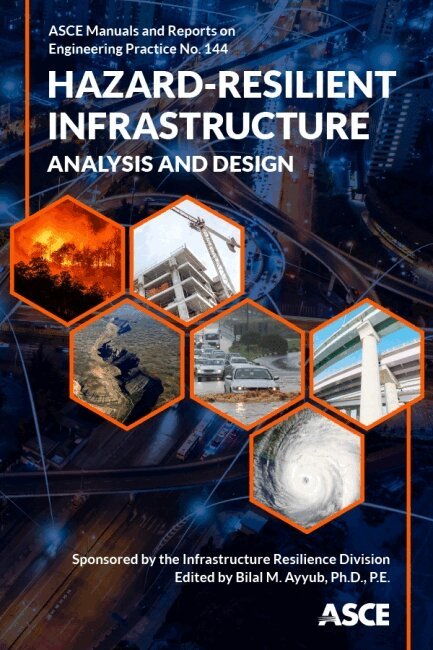
    Hazard-Resilient Infrastructure

    Analysis and Design

    AvBilal M. Ayyub

    Inbunden, Engelska, 2021

    Del i serien ASCE Manuals and Reports on Engineering Practice (MOPs)

    1 486 kr

    Beställningsvara. Skickas inom 5-8 vardagar. Fri frakt över 249 kr.

    Beskrivning

    Sponsored by the Infrastructure Resilience Division of ASCEA large portion of the world's population, infrastructure, and wealth is concentrated in locations prone to natural disasters such as earthquakes, droughts, floods, and storms, so infrastructure resilience and sustainability as system characteristics are necessary for societal endurance and survival. Enhancing infrastructure at the element, system, network, and community levels will lead not only to massive savings and conservation of resources through efficiencies but also through risk reduction to life, property, and environment, and expeditious recovery in case of natural disasters.Hazard-Resilient Infrastructure: Analysis and Design, MOP 144, provides guidance and an underlying framework for creating consistency across hazards, systems, and sectors in the design of new infrastructure systems. The book also discusses enhancing the resilience of existing systems and relates this framework to the economics associated with system lifecycle, including organizational and socioeconomic considerations.This MOP uses probabilistic methods for risk analysis and management of infrastructure projects to address uncertainties within a planning horizon timeframe effectively. This approach includes identifying and analyzing hazards, system failures, associated probabilities and consequences including direct and indirect losses, failure and recovery profiles quantification of resilience, effects on communities, economics of resilience, and technologies for enhancing resilience for new, as well as existing infrastructure. Examples and cases studies are also included.Engineers, planners, researchers, and other community stakeholders will benefit from this manual as they make assessment, and planning and design decisions related to all types of hazards and infrastructure.

    Produktinformation

    • Utgivningsdatum:2021-06-30
    • Mått:9 x 6 x undefined mm
    • Format:Inbunden
    • Språk:Engelska
    • Serie:ASCE Manuals and Reports on Engineering Practice (MOPs)
    • Antal sidor:294
    • Förlag:American Society of Civil Engineers
    • ISBN:9780784415757

    Utforska kategorier

    • Byggnadsteknik inom Naturvetenskap och teknik

    Innehållsförteckning

    • Chapter 1. Introduction 11.1. Needs and Significance 11.2. Objective and Scope 21.3. Infrastructure Systems and Hazards 21.4. Structure of the Manual of Practice 51.5. Topics Warranting Additional Analysis 61.5.1. Dependencies and Interdependencies 61.5.2. Non-stationary Hazards and Adaptive Design Concepts 71.5.3. Infrastructure Resilience and Sustainability 71.6. Uses and Users 91.7. Data and Knowledge Sources 91.8. References 10Chapter 2. A Methodology for Assessing Hazard-Resilience of Infrastructure 12.1. Introduction 12.2. Infrastructure and Lifeline Systems 32.3. Overall Methodology 42.3.1. Context Definition 52.3.2. Hazard Identification and Characterization 82.3.3. Failure Probability Estimation and Fragility Curves 92.3.4. Resilience Assessment 102.3.5. Exposure and Loss Analysis 102.3.6. Economic Valuation and Loss Accumulation 122.3.7. Risk Quantification as Loss Exceedance Rates or Probabilities 132.3.8. Extremes and Uncertainty Analysis 142.3.9. Resilience Engineering and Design 152.3.10. Lifecycle Analysis 152.3.11. Risk-Informed Decision Making for Resilience Engineering 162.3.12. Community Socio-Economics 162.4. Performance Targets of Infrastructure Systems 182.5. Information and Data Sources 182.6. Examples and Applications: Transportation Infrastructure 182.6.1. Introduction 182.6.2. Background and Methodology 192.6.3. System Assessment 212.6.3.1. Infrastructure Resilience Dimensions 212.6.3.2. Transportation System Functionality 212.6.3.3. System Service Provision and Operability 232.6.3.4. Continuity of Service Temporarily Lost 242.6.3.5. Social and Economic Activity 242.6.3.6. Community 262.6.4. Governance and Management 262.6.4.1. Community Performance Targets 272.6.4.2. Infrastructure System Performance Targets 272.6.4.3. Feedback 272.6.4.4. Economics and Resilience 282.6.4.5. Regional, Social and Economic Loss 282.6.5. Observations and Conclusions 282.7. References 28Chapter 3. Resilience Assessment Methods 13.1. Background: Uncertainty and Risk 23.2. Resilience Assessment and Quantification Scope: Models and Methods 33.3. Fundamental Models for Quantifying Resilience 53.3.1. Resilience-Triangle Model 53.3.2. Availability-based Resilience Model 73.3.3. Simplified Resilience Model 103.4. Resilience Assessment of a Single System or Facility 113.4.1. Selected Methods for a Single System or Facility 113.4.2. Assessment Examples of a Single System or Facility 123.4.2.1. Operational Resilience of a Medical City 123.4.2.2. Accident Resilience of Existing Nuclear Power Plants 183.5. System Resilience Assessment Methods 203.5.1. Analytical Considerations 203.5.2. Infrastructure Resilience Analysis Method (IRAM) 203.5.2.1. Working Definition of Resilience 213.5.2.2. Quantification and Metrics 213.5.2.3. Resilience Capacities 233.5.2.4. Assessment Process 243.5.3. A Case Study: Freight Railroads 263.5.3.1. State Analysis Objectives and Define System 263.5.3.2. Specify the Scenario 273.5.3.3. Select Performance Measures 283.5.3.4. Obtain Data 293.5.3.5. Quantify and Perform Metric Calculations 303.5.3.6. Analyze Resilience Capacities 313.5.4. Observations and Limitations 313.6. System of Systems Assessment Methods 323.6.1. Distinguishing Attributes of Systems of Systems 323.6.2. Taxonomy for Resilience Assessment 343.6.3. Method for SoS Resilience Assessment 353.6.3.1. Definition Phase 363.6.3.2. Abstraction Phase 363.6.3.3. Implementation Phase 373.6.4. Model-based Exploratory Analysis 373.6.5. Examples of SoS Resilience Assessment 383.7. Infrastructure Network Topological Vulnerability and Resilience Methods 423.7.1. Terminology 423.7.2. Methods for Quantifying Network Resilience 433.7.2.1. Defining Network Topology 443.7.2.2. Analyzing Network Topology 453.7.2.3. Assessing Unweighted and Weighted Networks 463.7.2.4. Assessing Vulnerability and Robustness 463.7.2.5. Evaluating Resilience Metric for a Network 473.7.3. Resilience of a Metro Network as an Example 493.7.4. Recovery Strategies of Networked Infrastructure 553.7.4.1. Physical Recovery Modeling 553.7.4.2. Service Recovery Modeling 563.7.4.3. Resilience Quantification for Recovery Purposes 573.7.4.4. Regional Recovery Optimization 583.7.4.5. Resilience-informed Infrastructure Recovery Example 583.8. References 61Chapter 4. Resilience Economics and Risk Management 14.1. Planning Horizon and Discount Rates 14.2. Standard Approaches for Evaluating Investments 24.2.1. Benefit-Cost Analysis Using Net Present Value 54.2.2. Life-Cycle Cost Analysis 74.2.3. Savings-to-Investment Ratio 84.2.4. Internal Rate of Return 94.2.5. Decision Trees and Real Options 104.2.6. Sensitivity Analysis with Monte Carlo Techniques 124.3. Cost Considerations 144.4. Expected Loss Considerations 144.4.1. Empirical methods 154.4.2. Input-Output (IO) and Computable General Equilibrium (CGE) methods 154.5. Optimization 174.5.1. A Portfolio Approach for Decision Making 174.5.2. Example: Economic Burden Model of Hazards 194.6. References 20Chapter 5. Designing for Resilience 15.1. Introduction 15.2 Design Bases and Principles 25.3 Design Steps 65.4. Case Studies 75.4.1. Existing Building near the U.S. Gulf Coast – Flood Hazard 75.4.2. Mid-rise Building, Boston, MA – Flood Hazard 135.4.3. High-rise Building, San Francisco, CA – Seismic Hazard 205.5. Summary 235.6. References 23Chapter 6. Community Socio-economics 16.1. Motivating Factors and Benefits 16.2. Socio-economic Needs and Metrics 36.3. Case Studies 116.3.1. Simplified Hypothetical Case Study: Urban Train Station in Anywhere, USA 116.3.2. Real Case Study: New York's Response to Hurricane Sandy 136.3.3. Real Case Study: City of Trees, City Re-Leaf Project, Manchester, UK 156.3.4. Real Case Study: Comprehensive Urban Resilience Masterplan for the City of Beirut, Lebanon 186.3. References 21Chapter 7. Emerging Resilience-Enabling Technologies 17.1. Introduction 17.2. Advanced and Smart Materials 27.2.1. Multi-functional Fiber and Polymer Composites 27.2.2. Textile Reinforced Composites 47.2.3. Super Elastic Materials 67.2.4. Self-Healing Materials 77.2.5. Bio-inspired Materials 87.3. Advanced Construction Technology 107.3.1. Building Information Modeling (BIM) 117.3.2. Artificial Intelligence and Machine Learning 127.3.3. 3-D Printing 147.4. Advanced Sensing Technology 167.4.1. Fiber Optic Sensors 177.4.2. Digital Image Sensing 197.4.3. LiDAR 207.4.4. Wireless Sensor Network 217.4.5. Satellite Images 227.4.6. Augmented Reality 227.4.7. Unmanned Aerial Systems (UAS) 237.5. Field Implementation of Emerging Technologies 247.6. References 28Appendix A. Terminology