• Fri frakt över 249 kr
  • •
  • Snabba leveranser
  • •
  • Billiga böcker
Kundservice

Du är på sajten för privatpersoner.

Företag, bibliotek eller offentlig verksamhet?

Du handlar på classic.bokus.com, där alla dina funktioner finns intakta.
Till classic.bokus.com
Bokus logotyp. Gå till startsidan.
  • Erbjudanden
  • Nyheter
  • Student
  • Topplistor
  • Barn & ungdom
  • Bokus Play
  • E-böcker
  • Pocketböcker
  • Spel & pussel

10% rabatt på allt med kod: NYSTART10 →

Sidfot

Mina sidor

    Hjälp

    • Kundservice
    • Vanliga frågor och svar
    • Frakt och leverans
    • Retur vid ångerrätt
    • Reklamera vara
    • Betalning
    • Köpvillkor
    • Allmänna villkor
    • Information om webbplatsens tillgänglighet

    Om Bokus

    • Om oss
    • Pressrum
    • För studenter
    • För företag
    • För bibliotek och offentlig verksamhet
    • För leverantörer
    • Hållbarhet

    Populärt

    • Aktuella erbjudanden
    • Presentkort
    • Studentlitteratur
    • Nya böcker
    • Topplistor
    • Signerade böcker
    • Engelska böcker

    Inspiration

    • Boktips
    • BookTok
    • Populära bokserier
    • Barnbokskaraktärer
    • Populära författare
    Logotyp för Bokus
    Följ oss på Facebook (extern länk)Följ oss på Instagram (extern länk)Följ oss på YouTube (extern länk)Följ oss på TikTok (extern länk)
    bokus @ CookiesAnpassa cookiesIntegritetspolicyKöpvillkor
    Till Citymail hemsida (extern länk)Till Budbee hemsida (extern länk)Till Postnord hemsida (extern länk)Till Schenker hemsida (extern länk)Till Early Bird hemsida (extern länk)Till Walleys hemsida (extern länk)
    1. Ekonomi och Ledarskap
    2. Ledarskapsböcker

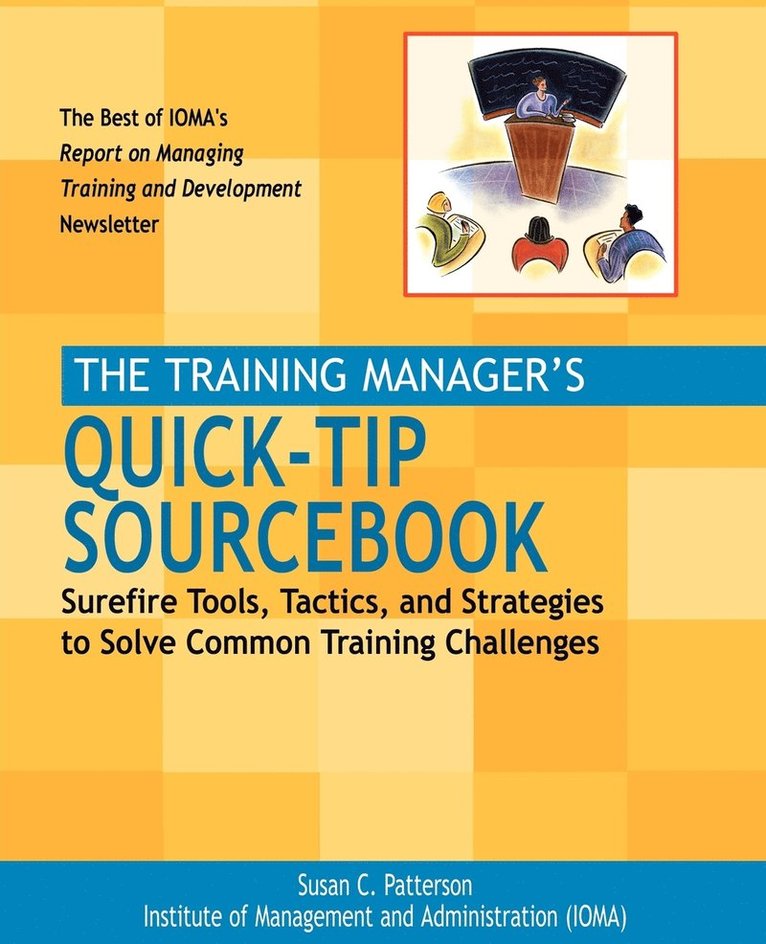
    Training Manager's Quick-Tip Sourcebook

    Surefire Tools, Tactics, and Strategies to Solve Common Training Challenges

    AvSusan C. Patterson,Institute of Management and Administration (IOMA)

    Inbunden, Engelska, 2003

    712 kr

    Beställningsvara. Skickas inom 5-8 vardagar. Fri frakt över 249 kr.

    Beskrivning

    The Training Manager's Quick-Tip Sourcebook is a comprehensive guide that distills the best thinking and planning from experts in the field of training and development. This handy resource offers you proven solutions to a variety of training challenges, including quick steps for taking the pulse of your training programs, analyzing training costs, and identifying return on investment pitfalls. In addition, the book contains easy-to-use tools and strategies that tell you how to* Build a solid training business plan* Sell your training plan to management* Conduct a quick and accurate needs assessment* Compute training costs and ROI* Understand and use e-learning in the most appropriate way* Translate training into performance improvement* Expand your training department's reach in thoughtful and innovative ways

    Produktinformation

    • Utgivningsdatum:2003-01-07
    • Mått:185 x 247 x 28 mm
    • Vikt:789 g
    • Format:Inbunden
    • Språk:Engelska
    • Antal sidor:296
    • Förlag:John Wiley & Sons Inc
    • ISBN:9780787962524

    Utforska kategorier

    • Ledarskapsböcker inom Ekonomi och Ledarskap

    Mer om författaren

    Susan C. Patterson researches, writes, and edits three national monthly newsletters: IOMA's Report on Training and Development, IOMA's Report on Training Programs, and HR Department Management Report. The Institute of Management and Administration (IOMA) publishes a broad range of high-quality products for business professionals. Each of the products serves two purposes: to improve the efficiency of subscribers and to enhance the financial performance of the firm or organization.

    Recensioner i media

    "This is definitely a book you want to add to your reference library." (IACET, February 9, 2003)

    Innehållsförteckning

    • List of Tables, Exhibits, and Figures. Introduction. Chapter 1. Planning. Developing Your Vision Statement. Building Credibility. A Five-Step Business Plan. What's Your Budget for That? How to Build a Business Case for e-Learning. How to Develop a Training RFP. Chapter 2. Diagnosis. What Methods, When. A Quick, Consultative Approach to Needs Assessment. What If the Problem Isn't You? Taking the "Pulse" of Your Training Programs. How to Use Research to Avoid "Snake Oil" Training. Chapter 3. Selling Your Training. Seven-Step Process for Selling Your Training Programs. Getting Management Off the Bench. Three Steps to Take Training from the Periphery to Business Partner. Chapter 4. The True Costs of Training. Glen Head's Thirteen Steps to Analyzing Student Training Costs. The Five Most Effective Training Cost-Control Strategies. Chapter 5. Training Return on Investment. True ROI: Going Beyond Smile Sheets. A Five-Step ROI Process. Three ROI Pitfalls. Comparing the ROI of Classroom Versus Online Training. Measuring the "Soft" Results of Training. Measuring the ROI of Management Training. Chapter 6. E-Learning. Three Criteria That Will Tell You When e-Learning Will Work. Five Things to Consider Before You Consider e-Learning. How to Get Support from Your IT Department. How to Assess the Cost of e-Learning. Use the Distance Learners' Bill of Rights to Make Learners "Stick". Tips to Ensure e-Learning Transfer. What's an LMS, and Do You Need One? Case Studies of Successful e-Learning Initiatives. Chapter 7. Performance Improvement. The Five Principles of Successful Human Performance Technology. Gloria Gery's "TurboTax" Model for Performance Improvement. Best Practices in Performance Improvement. Performance Support in Practice. Chapter 8. Expanding Your Reach. Training and Knowledge Management. Should You Join a Training Consortium? Coaching and Mentoring. What If You Train People Before You Hire Them? How to Do Your Training on Someone Else's Dollar. Chapter 9. Training That Means Business. New-Hire Orientation-Your First Shot at Training. Training as a Recruitment Tool. Training's Role in Employee Development. Training's Role in Preventing Employment Litigation. Diversity Training as a Competitive Strategy. How to Evaluate Online Safety Training. Measuring the Effectiveness of Violence Prevention Training. How to Avoid Discrimination in Training. Chapter 10. Five Strategies for Running a Small Training Department (Carol P. McCoy). Establish Credibility and Build Support for Training. Determine Priority Training Needs and Focus Training on High-Impact Areas. Determine the Best Resource Strategy and Manage Resources Wisely. Develop the Right Skills to Manage a Small Training Department. Avoid Common Pitfalls. Summary. Glossary. Index. About the Authors.