• Fri frakt över 249 kr
  • •
  • Snabba leveranser
  • •
  • Billiga böcker
Kundservice

Du är på sajten för privatpersoner.

Företag, bibliotek eller offentlig verksamhet?

Du handlar på classic.bokus.com, där alla dina funktioner finns intakta.
Till classic.bokus.com
Bokus logotyp. Gå till startsidan.
  • Erbjudanden
  • Nyheter
  • Student
  • Topplistor
  • Barn & ungdom
  • Bokus Play
  • E-böcker
  • Pocketböcker
  • Spel & pussel

10% rabatt på allt med kod: NYSTART10 →

Sidfot

Mina sidor

    Hjälp

    • Kundservice
    • Vanliga frågor och svar
    • Frakt och leverans
    • Retur vid ångerrätt
    • Reklamera vara
    • Betalning
    • Köpvillkor
    • Allmänna villkor
    • Information om webbplatsens tillgänglighet

    Om Bokus

    • Om oss
    • Pressrum
    • För studenter
    • För företag
    • För bibliotek och offentlig verksamhet
    • För leverantörer
    • Hållbarhet

    Populärt

    • Aktuella erbjudanden
    • Presentkort
    • Studentlitteratur
    • Nya böcker
    • Topplistor
    • Signerade böcker
    • Engelska böcker

    Inspiration

    • Boktips
    • BookTok
    • Populära bokserier
    • Barnbokskaraktärer
    • Populära författare
    Logotyp för Bokus
    Följ oss på Facebook (extern länk)Följ oss på Instagram (extern länk)Följ oss på YouTube (extern länk)Följ oss på TikTok (extern länk)
    bokus @ CookiesAnpassa cookiesIntegritetspolicyKöpvillkor
    Till Citymail hemsida (extern länk)Till Budbee hemsida (extern länk)Till Postnord hemsida (extern länk)Till Schenker hemsida (extern länk)Till Early Bird hemsida (extern länk)Till Walleys hemsida (extern länk)
    1. Psykologi och pedagogik
    2. Pedagogik
    3. Pedagogisk psykologi

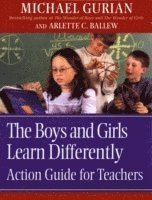
    Boys and Girls Learn Differently Action Guide for Teachers

    AvMichael Gurian,Arlette C. Ballew

    Häftad, Engelska, 2003

    144 kr

    Beställningsvara. Skickas inom 5-8 vardagar. Fri frakt över 249 kr.

    Beskrivning

    The landmark book Boys and Girls Learn Differently! outlines the brain-based educational theories and techniques that can be used to transform classrooms and help children learn better. Now The Boys and Girls Learn Differently Action Guide for Teachers presents experiential learning techniques that teachers can use to create an environment and enriched curriculum that take into account the needs of the developing child's brain and allows both boys and girls to gain maximum learning opportunities. This important and easy-to-use guide is based on the latest scientific scholarship on the differences between boy's and girl's brains, neurological development, hormonal effects, behavior, and learning needs and offers information on what all children need to be able to learn effectively. Michael Gurian and his colleagues applied these recent discoveries in the field during a two-year Gurian Institute pilot program in Missouri that led to measurably better academic performance and improved behavior.

    Produktinformation

    • Utgivningsdatum:2003-03-10
    • Mått:178 x 236 x 18 mm
    • Vikt:358 g
    • Format:Häftad
    • Språk:Engelska
    • Antal sidor:240
    • Förlag:John Wiley & Sons Inc
    • ISBN:9780787964856

    Utforska kategorier

    • Pedagogisk psykologi inom Psykologi och pedagogik
    • Pedagogisk metodik inom Psykologi och pedagogik

    Mer om författaren

    Michael Gurian is an educator, family therapist, and author of three national best-sellers, The Wonder of Boys, The Wonder of Girls, and Boys and Girls Learn Differently! He is cofounder of the Michael Gurian Institute (www.gurianinstitute.com) where, along with institute staff, teachers are trained in brain-based and gender innovations. He can be reached at www.michaelgurian.com Arlette C. Ballew is a writer and editor who specializes in experiential learning, training, education, and human resource development. She is the coauthor of seven volumes of Pfeiffer & Company's Training Technologies Series and of Earthquake Survival: Activities and Leaders Guide; the coeditor of the four volumes of Theories and Models in Applied Behavioral Science; and the developer of many experiential training activities, educational and training packages, leader's guides, and workbooks.

    Innehållsförteckning

    • Acknowledgments xvIntroduction 1Applying Brain-based Research 1Boys and Girls Learn Differently! 2Using this Guide 2The Contents of this Guide 31 Background: How the Brain Learns 7Inherent Differences between Boys’ and Girls’ Brains 8Developmental and Structural Differences 9Chemical and Hormonal Differences 10Functional Differences 11Differences in Processing Emotion 13Why there are Differences between Male and Female Brains 14A Brief History of Brain Differences 14Hormones in Utero and at Puberty 15How Brain-based Differences Affect Boys and Girls 16Learning-Style Differences 16Learning Differences and the Intelligences 21Applying Brain-based Gender Research 23Academic Performance and Classroom Behavior 23Reading and Writing Competence 24Test Scores 24Psychological, Learning, and Behavioral Disorders 25Maturity, Discipline, and Behavior 26Educational Aspirations 26Athletics and Extracurricular Activities 27Cultural Gender Bias 27Sexual Abuse and Violence 282 Bonding and Attachment 29Preschool and Kindergarten 29Handling Children’s Emotional Stress 30Bonding and Attachment Solutions 30Elementary School 34Bonding and Attachment Activities 34Handling Students’ Emotional Stress 37The Role of the Mentor 40Middle School 42The Early Adolescent’s Drop in Self-Esteem 42Handling Students’ Emotional Stress 44Community Collaboration 47High School 50Showing Interest in Students 50Communication and Conflict Resolution 51Peer Leadership, Not Peer Pressure 52Mentoring 533 Discipline and Related Issues 55Boys and Aggression Nurturance 55Preschool and Kindergarten 56Dealing with Aggressive Behavior 56Elementary School 59Learning from Past Mistakes 59Discipline Techniques After an Offending Act 61Techniques to Prevent Undisciplined Behavior 64Conflict and Anger Management 66Motivational Techniques 68Character Education 68Dealing with Cruelty, Hazing, and Violence 70The Role of Media 73Middle School 74Strategies for Providing Discipline 74Community Collaboration 77Character Education 78High School 79Techniques to Prevent Undisciplined Behavior 79Character Education and Service Projects 81Helping Young Males to Manage Aggression 82Techniques to Encourage Learning 834 Math, Science, and Spatial Learning 83Preschool and Kindergarten 83Self-Directed Activities 85Integrated Use of the Physical Environment 85Games to Encourage Logical-Mathematical Thinking 87Elementary School 89Techniques to Encourage Learning 89Using Manipulatives Whenever Possible 90Mixing Modalities and Strategies 92Use of Computers and Other Media 93Middle School 94Techniques to Encourage Learning 95Boys and Girls Need Some of the Same Things 96Computer Science and Gender in Middle School and High School 96High School 995 Language, Reading, Writing, and Social Science 103Preschool and Kindergarten 103Using Movement, Manipulatives, and Props 103Elementary School 105Techniques to Encourage Learning 105Using Manipulatives 108Providing Various Learning Modalities 109Middle School 110Techniques to Encourage Learning 111High School 115Teaching Reading 115Teaching Language 116Teaching Social Science 1186 Physical Learning and Nutrition 121The Need for Physical Activity 121Preschool and Kindergarten 122Developing Fine Motor Skills 122The Outdoor Classroom 122Elementary School 124Movement and Motor Skills 124Sports and Athletics 125The Outdoor Classroom 126Middle School and High School 127Sports and Athletics 127Mixed-Gender Sports 128The Outdoor Classroom 129Nutrition and Learning 129Obesity 129Carbohydrates, Proteins, and the School Day 130Fatty Acids 1317 Special Education 133A Program for Reading and Writing 133Preschool and Kindergarten 134Bonding and School-Home Alliances 134Use of Psychotropic Medication 135Elementary School 137Techniques to Encourage Learning 137Spatial Stimulants, Movement, and Multisensory Approaches 139The Multisensory Approach to Reading Problems 141Middle School 141Factors in the Need for Special Education 141Techniques to Encourage Learning 142The Underachiever 144High School 145Techniques to Encourage Learning 1458 Planning your Own Experiential Activities 147Introducing Experiential Learning 147The Natural Learning Process 148The Teacher as Facilitator 151Experiential Learning Techniques 152Important Factors in Planning Experiential Learning 155Purpose(s) 155Students 155Timing 156Involvement 156Preferred Input Modes 156Instructions 157Modes of Expression 157Psychological Safety 157Equipment, Manipulatives, and Props 157Planning Activities and Games to Enhance Learning 158Developmental Themes for Creating Learning Techniques and Activities 1599 Structural Innovations 165Preschool and Kindergarten 165Innovations to Encourage Learning 165Parent-Involvement Programs 166Elementary School 167Use of School Time 167Class Size and Number of Teachers 168Use of Group Dynamics and Group Work 169Standardized Testing 170Middle School 171Separate-Sex Education 171Psychosocial Education 173Rites of Passage 174Uniforms and Dress Codes 175Other Innovations to Encourage Learning 176High School 178Class Size 178Team Teaching and Homerooms 178Use of School Time 179Uniforms and Dress Codes 180Innovations Students Want 181Full Psychosocial Education 184Rites of Passage 188Counterinnovations 189Appendix: Working with Parents 191Preschool and Kindergarten 191Elementary School 192Middle School 192High School 193References and Resources 195Publications 195Organizations, Programs, and Services 198The Authors 201The Gurian Institute 203Index 205