• Fri frakt över 249 kr
  • •
  • Snabba leveranser
  • •
  • Billiga böcker
Kundservice

Du är på sajten för privatpersoner.

Företag, bibliotek eller offentlig verksamhet?

Du handlar på classic.bokus.com, där alla dina funktioner finns intakta.
Till classic.bokus.com
Bokus logotyp. Gå till startsidan.
  • Erbjudanden
  • Nyheter
  • Student
  • Topplistor
  • Barn & ungdom
  • Bokus Play
  • E-böcker
  • Pocketböcker
  • Spel & pussel

10% rabatt på allt med kod: NYSTART10 →

Sidfot

Mina sidor

    Hjälp

    • Kundservice
    • Vanliga frågor och svar
    • Frakt och leverans
    • Retur vid ångerrätt
    • Reklamera vara
    • Betalning
    • Köpvillkor
    • Allmänna villkor
    • Information om webbplatsens tillgänglighet

    Om Bokus

    • Om oss
    • Pressrum
    • För studenter
    • För företag
    • För bibliotek och offentlig verksamhet
    • För leverantörer
    • Hållbarhet

    Populärt

    • Aktuella erbjudanden
    • Presentkort
    • Studentlitteratur
    • Nya böcker
    • Topplistor
    • Signerade böcker
    • Engelska böcker

    Inspiration

    • Boktips
    • BookTok
    • Populära bokserier
    • Barnbokskaraktärer
    • Populära författare
    Logotyp för Bokus
    Följ oss på Facebook (extern länk)Följ oss på Instagram (extern länk)Följ oss på YouTube (extern länk)Följ oss på TikTok (extern länk)
    bokus @ CookiesAnpassa cookiesIntegritetspolicyKöpvillkor
    Till Citymail hemsida (extern länk)Till Budbee hemsida (extern länk)Till Postnord hemsida (extern länk)Till Schenker hemsida (extern länk)Till Early Bird hemsida (extern länk)Till Walleys hemsida (extern länk)
    1. Psykologi och pedagogik
    2. Pedagogik
    3. Pedagogisk teori och filosofi

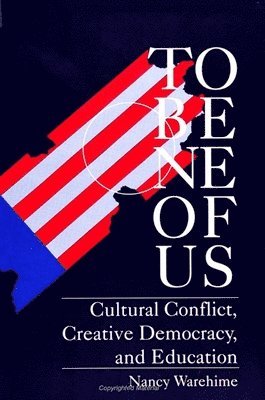
    To Be One of Us

    Cultural Conflict, Creative Democracy, and Education

    AvNancy Bevin Warehime

    Häftad, Engelska, 1993

    Del i serien SUNY series, The Philosophy of Education

    332 kr

    Tillfälligt slut

    Beskrivning

    In the context of the growing debate over the relationship between humanities education and the future of liberal democracy, To Be One of Us surveys in dialectical fashion several contemporary humanist thinkers, and analyzes their diverse philosophical positions in relation to John Dewey's claim that "creative democracy" is the "task before us." The cultural roots of these diverse positions are compared on the basis of their normative conceptions of moral authority.The first section of the text contains analyses of Allan Bloom's conservative platonism, and of several critiques of his discourse of crisis. The second section is an exploration of Rorty's liberal pragmatism and its implications for education and democracy, and of the critique of Rorty which emanates from his political left. Finally, West's "prophetic pragmatism" is examined, and presented as the philosophical position best suited to "creative democracy," given prevailing social, economic, and political realities.

    Produktinformation

    • Utgivningsdatum:1993-03-30
    • Mått:152 x 229 x 25 mm
    • Vikt:408 g
    • Format:Häftad
    • Språk:Engelska
    • Serie:SUNY series, The Philosophy of Education
    • Antal sidor:190
    • Förlag:State University of New York Press
    • ISBN:9780791413227

    Utforska kategorier

    • Pedagogisk teori och filosofi inom Psykologi och pedagogik

    Mer om författaren

    Nancy Warehime is Assistant Professor of Philosophy at Nebraska Wesleyan University

    Recensioner i media

    "Anyone who ventures to discuss the moral implications of a given subject matter such as education, is asking for trouble. Much safer, the 'wise' will tell us, to keep distanced from the subject matter, to be reportorial rather than involved, or to let others work on the 'implications.' Fortunately for her readers, Dr. Warehime rejects such advice. She is not only a map-maker but a participant in what is happening on the terrain she has pictured for us. Not to put too fine a point on it, she takes sides. She sees 'education as an agent of moral development and the formation of a good society,' an approach by no means universally accepted or even respected in some quarters. Out of a jumble of competing moral claims—in a world where those who claim not to be raising moral claims should be most suspect—she arrives at a position of her own, and by the integrity of her investigation is urging her readers to do the same. So while these pages are, formally, an 'academic exercise,' they are more than an exclusively academic exercise. They are (if one can say it without being misunderstood) an exercise of the spirit, of the whole person." — from the Foreword by Robert McAfee Brown"I like everything about this book: I like the topic, I like the writing style, I like its scope and depth. But mostly I like the powerful and passionate way in which the humanities are placed at the heart of education and culture. By emphasizing the political nature of the debates within the Humanities, this book acknowledges that the choices we make about meaning and value have practical consequences, and that these consequences have as much to do with who has power in our society as they do with morality per se. " — Philip L. Smith, The Ohio State University

    Innehållsförteckning

    • Foreword by Robert McAfee Brown Acknowledgments Preface Introduction: The Crisis in Humanities Education and Liberal Democracy: Three Views 1. The Conservative Discourse of Crisis in the 1980s IntroductionWalter Jackson BateWilliam BennettLynne CheneyThe Educational Philosophy Shared by Bate, Bennett, and CheneyAnalysis: Allan Bloom's The Closing Of The American Mind (Part 1)Analysis: Allan Bloom's The Closing Of The American Mind (Part 2)Analysis: Allan Bloom's The Closing Of The American Mind (Part 3)What Does Allan Bloom Want? 2. "What on Earth is Going on Here?" Some Responses to Allan Bloom's Discourse of Crisis Martha NussbaumA Confirmation of Nussbaum's Critique: The Work of Kosuke KoyamaRichard RortyBenjamin BarberContemporary French Philosophy and Barber's Concept of Democracy: Some Common ThemesStanley AronowitzA Critique of Technocratic RationalityWhat Knowledge Is of Most Worth? The Multiplicity of Modern Consciousness 3. The Crisis of the Humanities: A Consequence of Pragmatism? IntroductionRorty's Revival of PragmatismAnalysis: "Hermeneutics, General Studies, and Teaching"Analysis: "Solidarity or Objectivity?"Analysis: "The Priority of Democracy to Philosophy"Analysis: Contingency, irony, and solidarityRichard Rorty: Rebel or Metamorphosed Neoconservative? (A Comparison with Camus) 4. "What is the Difference that Makes a Difference Here?" Some Responces to Richard Rorty's Liberal Pragmatism IntroductionCornel WestRichard BernsteinNancy FraserFrank LentricchiaHenry GirouxRorty and Camus on Human Nature and Utopia: A Contrast 5. Prophetic Pragmatism and Education for Creative Democracy IntroductionCornel West: The Prophetic TraditionAnalysis: Prophesy Deliverance!: "Sources and Tasks of Afro-American Critical ThoughtGramsci's Theory of Hegemony: Platonic and Prophetic RootsWest's Genealogy of Racism: A Confirmation of Gramsci's TheoryCultural Hegemony and Humanities EducationWhat, Then, Is To Be Done? Prophetic Pragmatism, Traditions of Resistance, and DemocracyEducation for Creative Democracy: A Possibility in Today's University? 6. Diversity, Equality, and Creative Democracy Bibliography Name Index Subject Index